

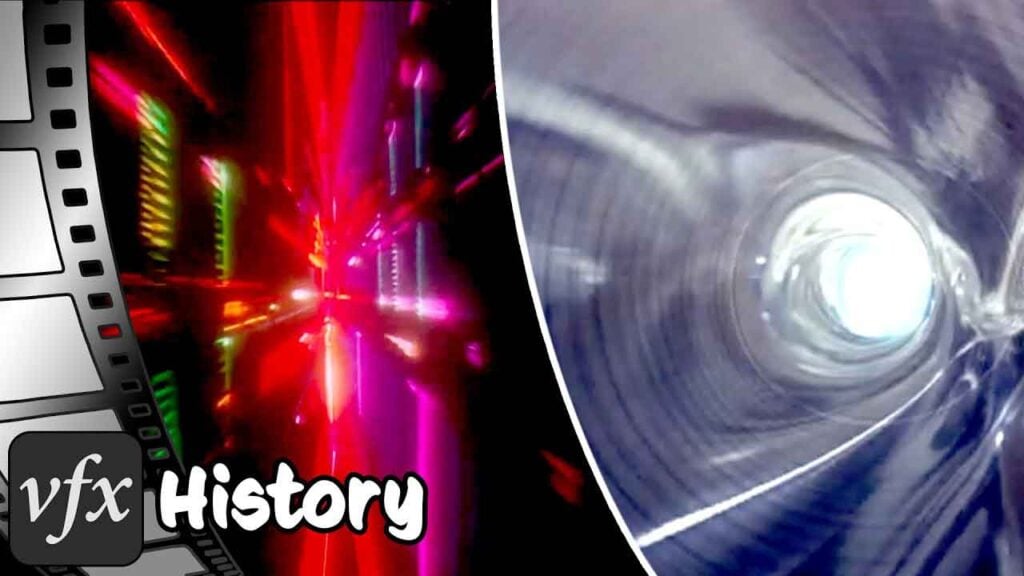
VFX History: Slit Scan

How did 2001: A Space Odyssey, Star Wars, Doctor Who and Star Trek: The Next Generation create mind-bending visuals decades before CGI? The secret is Slitscan, a terrifyingly complex technique that literally turns time into space.
In this deep dive into VFX history, I explore the origins of the Slitscan technique. From its humble beginnings in 19th-century “strip photography” used for horse racing and mapping, to the genius of John Whitney and Douglas Trumbull, we look at how a mechanical slit, a long-exposure camera, and patience created the most iconic “trippy” visuals in cinema.
I’ll cover:
- The Stargate Sequence from 2001 imagined by Stanley Kubrick and Arthur C Clarke, then made real by Doug Trumbull.
- How Bernard Lodge adapted both the technique and a Rostrum camera to create Doctor’s Who’s title sequence.
- John Dykstra’s method for the jump to hyperspeed for Star Wars.
- ILM’s John Knoll pushed the concept even further, creating a three dimensional version to stretch the Enterpise and then also created the famous look of warp speed, with it’s rainbow stars.
Bonus Section
Then, just to torture myself, I recreated the Slitscan process (or is it Slit Scan?) inside Adobe After Effects, using the echo effect and essential graphics.
Download the project file here
Can’t see this video? Click here!
Enjoying the news? Sign up for the Creative COW Newsletter!
Sign up for the Creative COW newsletter and get weekly updates on industry news, forum highlights, jobs, inspirational tutorials, tips, burning questions, and more! Receive bulletins from the largest, longest-running community dedicated to supporting professionals working in film, video, and audio.
Enter your email address, and your first and last name below!


Responses