

Preserving UNESCO World Heritage with URSA Cine Immersive

The Explorers turned to France’s cultural landmarks, capturingParis and the Château de Chambord in Apple Immersive for Vision Pro
From documenting remote expeditions to capturing iconic locations around the world, The Explorers has built a reputation for high resolution storytelling. The Paris based team of explorers, media professionals, scientists and artists is producing what they call “the first planet inventory,” showcasing Earth’s diversity through visual storytelling.
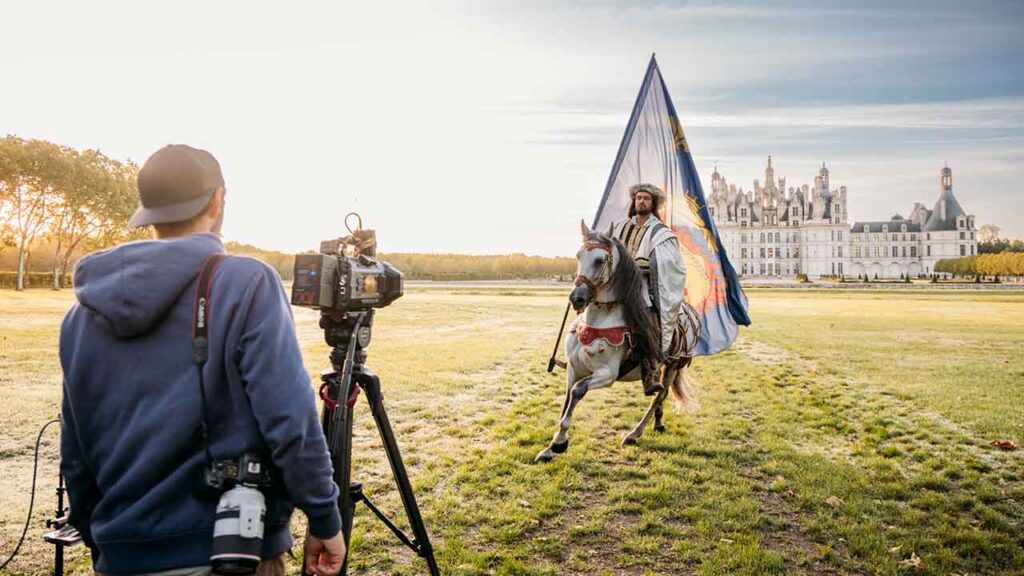
When the team explored Apple Immersive production, they brought that approach to two contrasting French locations: the streets of Paris and the Château de Chambord, a UNESCO World Heritage site and one of the Renaissance’s most iconic architectural achievements.
“We wanted to test the URSA Cine Immersive and workflow in contrasting environments,” said Olivier Chiabodo, founder of The Explorers. “Paris in June and July, then Chambord in September. It let us build real experience before moving on to larger projects.”
Immersive first in Paris
The team treated the Paris shoot as a cinematic walk through monuments and street life. Locations were chosen for strong foreground detail, natural motion in the frame and the ability to stage short sequences that would remain comfortable to view in a headset. Two Paris moments in particular crystallized the potential of Apple Immersive as a format for The Explorers.
“Riding the Eiffel Tower elevator and filming in a three star chef’s kitchen were real wow moments for us,” Chiabodo said. “The confined elevator, with the city dropping away, and the shoulder to shoulder proximity to culinary work made familiar places feel new when the viewer is placed inside the scene.”
“After watching the immersive footage in Apple Vision Pro, those scenes delivered emotions we had never felt with 2D,” Chiabodo said. “Traditional formats use the frame to guide viewers, while immersive puts you right in the heart of the space. That shift changes how you feel the story.”
While Paris served as the team’s initial exploration, Chambord followed as a client commission, translating early lessons into a more structured production.
Shooting dual formats
At Chambord, the chateau dominated both the frame and the mood. “When you are in a chateau, you are in contemplative territory,” Chiabodo said. “The château is the star, so we had to find a narrative that added energy without fighting the space. Paris pushed in the other direction. The streets were crowded, the foreground was always busy and the natural motion of people and traffic drove the story.”
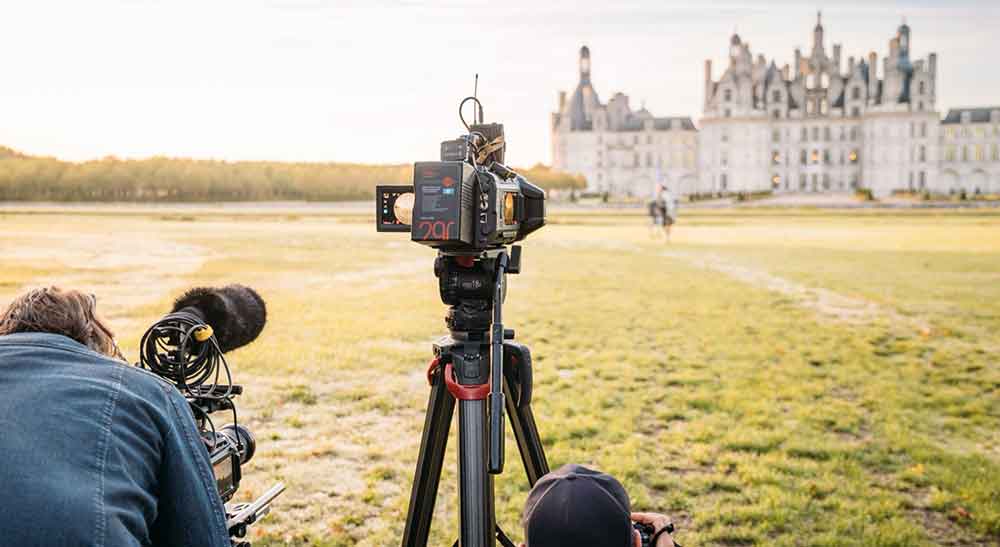
Chambord as a production required both immersive and traditional outputs. “We shot two formats, Apple Immersive and 12K large format,” Chiabodo explained.
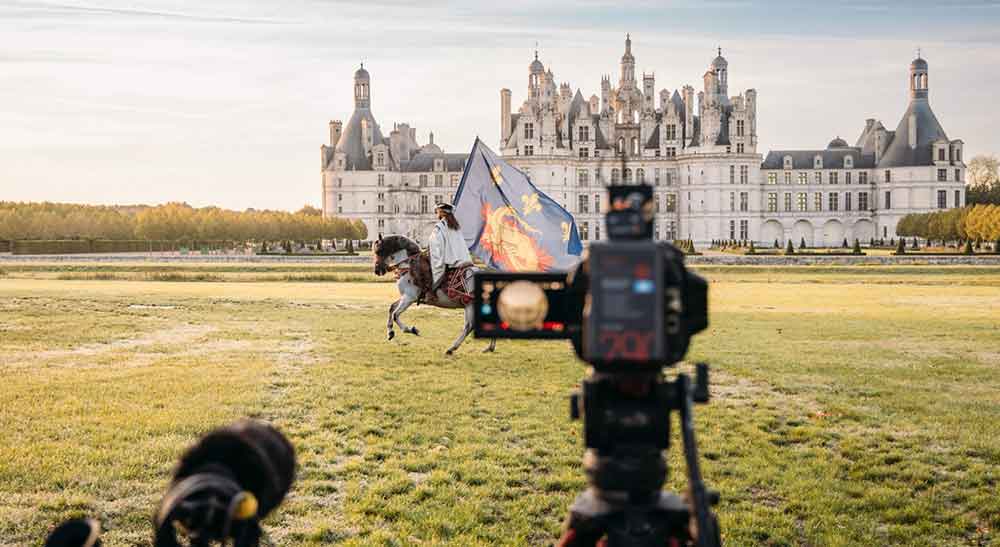
The team shot handled Apple Immersive on the URSA Cine Immersive and captured the traditional coverage using the URSA Cine 12K LF digital film camera. Shooting both in parallel meant the team could produce headset-ready immersive pieces and a conventional documentary edit from the same time on location.
“We had to adjust the way we blocked, lit and moved the camera based upon the format, and for immersive the included slow, controlled moves, nothing abrupt,” Chiabodo said. “The staging had to respect what the camera could do.”
“We paired the URSA Cine 12K LF 16mm and 50mm lenses and shot in 12K which gave us a lot of freedom in post,” he said. “If we needed to reframe, we can crop and still retain the image quality needed for a 4K or 8K finish. Likewise, if you want to avoid cropping, you can shoot 4K and 8K in camera without changing field of view, which is a real advantage of the RGBW sensor and in-sensor scaling.”
Coverage extended beyond interiors and courtyards. The team also filmed the grounds, particularly the deer that roam the park, to place viewers in seasonal landscapes and to gather conventional footage for exhibition screens and broadcast use. The chateau has plans for a dedicated on site space where visitors can experience the immersive film and will use the 12K material at international exhibitions.
Practical considerations
The work in Paris and Chambord also gave The Explorers a clearer sense of what immersive productions demand in practice.
“The first thing is where you put the camera,” said Director of Photography Gregory Martoglio. “With immersive, you are not just choosing a frame, you are choosing the place where the viewer will stand. As such, I tried to pick positions where the action could cross naturally in front of the camera and where the viewer has time to understand the space.”
Movement is the next consideration when shooting for Apple Vision Pro. “You have to be careful with motion,” he said. “We avoided fast pans and sudden changes. If we moved it was with a clear motivation, and at a speed that felt natural for the body. As such, your blocking has to reflect that.”
He also stresses planning for light and exposure shifts. “At Chambord we were going from interiors to exteriors and into the forest very quickly,” Martoglio said. “We used preset modes so we could move fast and still fix transitions later in post as everything you capture is in 12-bit Blackmagic RAW. You do not always have time to stop and adjust every setting in the field.”
His last piece of advice is to think about post from the start. “Immersive captured is two 8K streams at 90 frames a second,” Martoglio said. “You need real computing powe, and you need to keep the image clean. Edge blending and masking aren’t something you fix later; they’re part of the shot design from the start, to keep the viewer anchored inside the story.”
For Chambord, The Explorers delivered a four minute Apple Immersive film for onsite viewing, a nine minute 12K loop for exhibition screens, a two minute edit for general promotion and the rushes are archived for future use. “We deliver in SDR, HDR and down to HD. The client can distribute everything,” Chiabodo said. Immersive masters were exported in ProRes for Apple and in Apple Immersive Video Utility (AIVU) for direct playback on the device.
“Experience Paris” will be available on The Explorers app for Apple Vision Pro.
Enjoying the news? Sign up for the Creative COW Newsletter!
Sign up for the Creative COW newsletter and get weekly updates on industry news, forum highlights, jobs, inspirational tutorials, tips, burning questions, and more! Receive bulletins from the largest, longest-running community dedicated to supporting professionals working in film, video, and audio.
Enter your email address, and your first and last name below!


Responses