


Maybe It’s Time to Think About the Content-Consuming Public

“Ohhh … you stopped wanting. Ahhh, not needing.” – Gitano Sabatoni, “Two Bits,” Miramax, 1995
Aristotle was right back around 343 BC (give or take a few years) when he advanced the postulate that nature abhors a vacuum.
Seems like only yesterday we were complaining about our cable TV bundle that we were paying $150 +/- just knowing we were being taken to the cleaners because we only watched three – five (?) channels.
Everything else? Total waste … IMO!

So, we went through the long, arduous task of ending our contract with them and kept our home fiber and wireless connections to the world.
Obviously, we weren’t alone. Back a few quarters ago, 2.2M folks cut their TV cord, 2.9 percent of all subscribers.

Death Kneel – It’s pretty common knowledge that pay TV is past its peak and on a slow, agonizing subscription decline. Even as subscribers jump ship, the networks stay on board as long as possible with low-cost unscripted shows and as many ads as the video pipeline will hold.
They’re like rats abandoning a sinking ship.
O.K., it didn’t all happen at once. Liechtman reported that at the end of the first quarter of this year, 73.7M US households still subscribed to some form of pay TV.
Incidentally, there are a lot of new streaming services that would love to have that many subscribers.
All the growth will come from streaming video
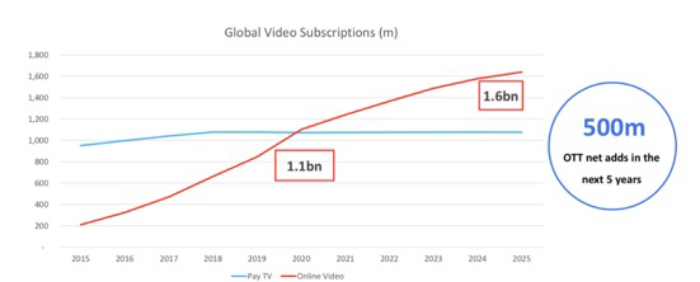
Subscription Growth – During the early days of streaming – especially during the pandemic – adding subscriptions was delightfully easy for streamers/studios. But it’s impossible to ever achieve 100 percent penetration and growth, so streamers are shifting from growth above everything else to profit margins.
Leading OTT services/subscribers:
- Netflix 231 million
- Amazon Prime Video 200 million
- Disney+ 138 million
- Tencent Video 124 million
- iQIYI: 106 million
- Max 86.8 million
- Hulu 43 million
- Paramount 32.8 million
Of course, those aren’t all of the services, and the subscriber numbers change day by day, hour by hour.
But Wall Street “expert’s” siren call of the billions of dollars, euros, yuan, etc., that can be made convinced more than 200 services around the globe that steaming was like the California gold rush of the 1800s … subscribers were just sitting around waiting for you to sign them up for your anytime, anyplace, any screen service.
And, according to Statista, the streaming market has done well in recent years and should show modest growth in the years ahead:
- 2018 – streaming market value was $42.4B
- 2019 – market was valued at $50.5B
- 2020 – market rose to $59.1B
- 2021 – valued at $72.2B
- 2022 – streaming value was 84.3B
- 2023 – it’s projected to reach $90.8B
- 2024 – market is forecast to reach $98.8B
- 2025 – market will top $106.8B
2026 – global market is estimated to be worth $115B

Streaming Ease – After finally freeing yourself from your pay TV bundle and have begun streaming content that is economic (per service), life almost feels like a relaxing tubing adventure on a calm stream.
Your entertainment life has almost turned into a summer break … floating down your stream watching your new, interesting content when you want. It’s only costing you $6 – $15 for your service plus your $50+/- home fiber connection.
Of course, you need that anyway to stay in touch with the office, partners, friends, whatever; so it’s a standard part of your household budget … not your entertainment budget.
You’re really happy with your core video services Netflix, Prime; but depending on your viewing tastes/habits, you’ve burned through all of the series and/or new movies they offer (binged) or your friend, neighbor or social media connection tells you about the new stuff on one of the other services- Disney+, Max, Paramount+, BritBox, Canal+, etc. and you have to add their service to your entertainment lists
No problem, it’s “only” $10 here, $10 there and as WBD’s David Zaslav said his organization’s content is more valuable than everyone else’s, so you sign up for his $15 package.
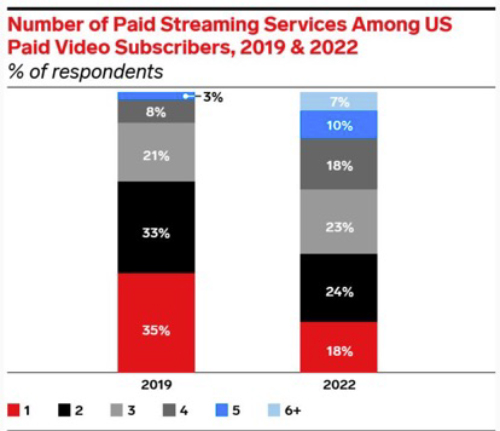
Easy Addition – The freedom of picking and choosing which streaming service that you decided to use was almost irresistible to consumers–especially when adding another only cost you $10 +/- a month. As the number rose, so did the home entertainment budget as well as the difficulty in finding a specific show/movie you wanted.
Suddenly, you’re looking at a major monthly entertainment bill that almost costs as much as the pay TV bundle you left.
That sucks!
Now you have 5-7 entertainment silos that do their darndest to figure out and recommend shows/movies you’d like to watch on their service but don’t have a clue about what might interest you in someone else’s tower.

Sifting – Today, you have all the ingredients you need to enjoy entertainment at home with the show/movie you want and when you want to watch it. The only thing you have to do is sift through 4-6 services and 10s, 100s of shows/movies. Suddenly things got difficult and frustrating.
So, you spend 8-10 minutes popping into and out of each of the services, sifting through all of their really special content, trying to find the one project that will really satisfy you right now.
Then … settling!
Of course, there’s an answer and the studios know what it is.
They’ll go back to “the bundle.”
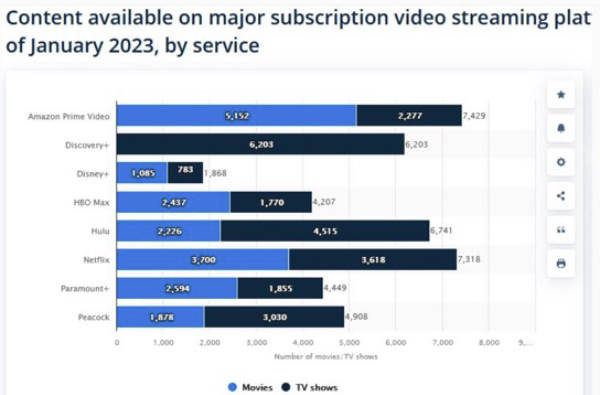
New, Unique – Streaming video services struggle to differentiate themselves by touting the depth of shows/movies they offer for a very low cost as well as their steady stream of new/unique ontent. But that doesn’t necessarily mean their content is interesting to you.
You know, the Disney bundle – Disney +, Hulu, ESPN+. thousands of shows/movies, original/new releases, live sports and lots more including a nice price increase for all that great content.
No, don’t waste your time. Pick WBD’s fantastic bundle that was previously HBO then HBO Max and finally Max. It’s the one-stop shop for your scripted, unscripted viewing – Warner Bros, Discovery, DC, CNN, Looney Tunes, CW and more; yes, more with a great price increase.
Why bother with them when there’s Paramount +…. Showtime, Paramount and OMG a monthly subscription
price increase.
Netflix is just a steady flow of new shows/movies from around the globe and their so-so games. They didn’t raise their price really. Nope, they simply eliminated the starter subscription fee … go big or go home.
Prime is priced about the same as before including your MGM content, a decent flow of new movies/series and free delivery of stuff.
Apple TV + doesn’t really have a bundle and our daughter doesn’t mind because she’s got the best entertainment experience ever with Apple One that lets her choose six services – iTunes, apps, books, iCloud, fitness, news and the list goes on – for one “reasonable” subscription fee.
But you still had to jump from application to application and pay the higher fee. So, control the things you can control … drop a service until they come up with new content, you’re interested in.
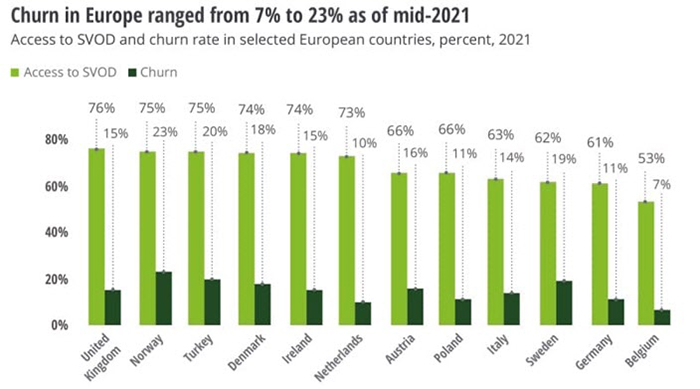
Churn – Watch everything you want to watch on one service, drop them and add another source until the other folks release new content you just have to see. Churn is inevitable when adding/dropping services is so easy and viewers options are so widely available.
Actually, that’s one of the real features of streaming services they offer. It’s not only easy to sign up, but also easy to cancel … you hardly feel guilty about it.
When they have new content you want, drop one of your others and climb back onboard.
Churn hits Netflix and Prime hardest because they already have 20 and 21 percent respectively of all of the U.S. streaming subscribers.
In addition, Netflix is preferred by 47 percent of all U.S. subscribers.
The preference is so strong that even after they clamped down on password sharing – which “everyone” said would be a disaster – they actually increased subscriptions by 200K.
At their beginnings; Netflix, Prime and Apple all targeted the global streaming market. Netflix has about 239M global subscribers while Amazon has 200M subscribers around the world.
Admittedly, Apple had a slight head start with more than 1.46B iPhone, Mac and iPad users around the globe.
Deloitte Global predicted that the global churn rate was about 30 percent, 150M paid subscribers annually.
The company estimates it costs about $200 to acquire a new subscriber, so churn is problematic.
To keep subscribers during the “lull” periods, VOD services decided to supplement their incomes with ads.

Lower Cost – It’s surprising when you tell folks we’ll let you watch our content at a significant discount if you accept a few ads in the process. Suddenly, a reasonable number of interesting/informative ads seems like a helluva good idea.
It turns out that despite how people love to claim that they hate ads, they really like saving money more.
Actually, the moment subscription services began offering ad-supported options, we made the move, switching Netflix, Prime and Disney+ to ad-supported versions.
Then we added FAST services – Pluto and Tubi as regulars with a dash of FreeVee.

Mix, Match – Consumers around the globe are putting together their own home entertainment service using subscription, ad-supported and FAST services to match their entertainment tastes with their budget. Finding a specific show/movie continues to be a major frustration for consumers.
Of course, there are things they don’t like according to Morning Consult and other audience analysis services about the ads they have to view:
- 4 out of 5 dislike the volume of ads, especially when compared to pay TV (15-20 minutes of ads in an hour program)
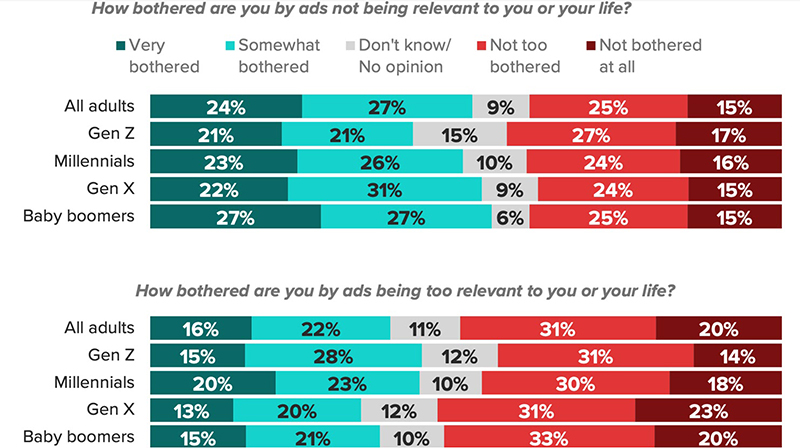
- 79 percent of U.S. adult viewers are bothered by repetitive ads
- 51 percent are bothered by irrelevant ads
- 64 percent find targeted ads as invasive
- 16 percent prefer “binge” ads
- 12 percent prefer home screen ads
Because the ads are on a streaming service, there are resolutions.
According to Deloitte, most consumers say that four-eight minutes of ads are acceptable and the leading streaming services – Netflix, Prime, Disney+, Max agree.
Because they are dealing directly with the subscriber/viewer, streaming services gather a lot of personal and preference information which helps them create new content that will appeal to them and enables their recommendation engines to suggest genre and shows/movies that will be (or should) of interest to them.
The data also enables advertisers to discard the old CPM (cost per 1000 impressions) show/movie ad
measurement technique and create ads that appeal to specific customers and/or prospects.
Trust us, we don’t miss the constant barrage of “if you’re in an accident” ads or ads about personal ailment medicines which we have to google to find out exactly what they are before we breathe a sigh of relief that we don’t suffer from that.
Suddenly, you see ads on your screen that are interesting, educational and even fun to watch as you take a short break from the comedic, horror, war, historical show/movie.
And there were just enough of the ads that we felt we had “paid” for our discounted service.
We also like the suggestion that executives at The Trade Desk (media buying platform) made to advertisers to have multiple versions of their ads so the same ad can be rotated, and you don’t feel you’re seeing the same thing again and again and…
Much as we hate to admit it, in this area AI will become an important tool for streamers and advertisers.
You’ll get the show/movie offered to you even before you realize that’s what you want to watch, and it will have just the right number and types of ads you actually want to see.

Balance – Streaming produces a lot of information about the user/viewer which can help content creators with their project development and minimize the feeling for the viewer that you’re just an object marketer that is throwing stuff at you and hoping some of it will stick. People appreciate it when ads are relevant … just not too relevant.
Freakin Awesome!
Advertisers will eventually get the idea that the added front-end cost really pays off at the cash register.
Streamers will understand that helping them understand the viewer more is actually good for both of them.
Best of all, you get the stuff you want to watch, when you want to watch it and on the screen you have at hand.
But the biggest challenge with streaming is something consumers can’t fix.
We pay for three AVOD services and have two FAST services. You may have three SVOD services, two AVOD services and one FAST service.
Everyone is beginning to suffer from subscription fatigue – modest monthly financial outlay while constantly wasting time wondering which VOD silo has the show/movie you want to watch – and getting more irritated with each passing minute.
Admit it. The old pay TV bundle with built-in program guide was great and it’s only now that you appreciate it.
That might be why Fox is stubbornly sticking with the pay TV bundle.
Sure, the cable bundle audience – Insider Intelligence says 50% of households – continues to shrink, but it’s still 65M households in the U.S.
But Fox racked up $1.77B in Q2 of this year and a profit of $369M for the same period.
That’s more than most streamers!
The other main pay TV channels – NBC, ABC, CBS – also trimmed costs and turned a decent profit during the same period by cutting back on scripted shows and focusing on game and reality shows.
But it’s time for streamers to perhaps/hopefully put aside some of their pride/bravado and admit joining forces for the common good – of the consumer – is a good idea.
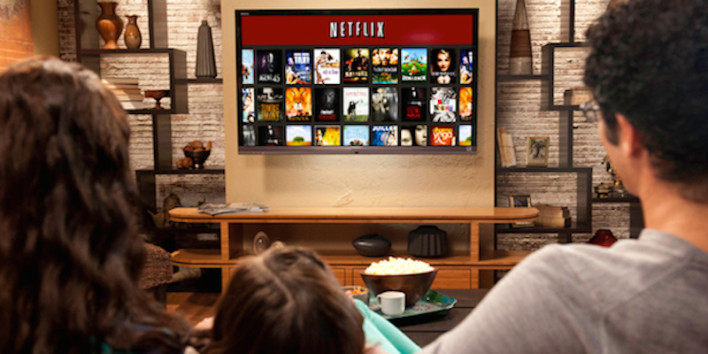
Your Bundle – People are less interested in the streaming service providing the show/movie than they are in the project itself. Ultimately, the industry will learn how to play nicely together and give the paying viewer (ads or money) what they want.
You know, instead of a Disney bundle, WBD bundle, Paramount bundle join forces and offer people a super bundle. One fiber/wireless provider, one “adjusted” subscription fee even if you have to sign up for a year.
All of the services would save money in hardware, service management, accounting and more importantly, economically grow their subscriptions and reduce churn.

In Two Bits, Gitano Sabonti was right when he said,“Hey, it’s all the difference in the world.”
Sure, save a lot of frustration in our house even though we’d have to relearn how to use the TV remote.
Enjoying the news? Sign up for the Creative COW Newsletter!
Sign up for the Creative COW newsletter and get weekly updates on industry news, forum highlights, jobs, inspirational tutorials, tips, burning questions, and more! Receive bulletins from the largest, longest-running community dedicated to supporting professionals working in film, video, and audio.
Enter your email address, and your first and last name below!

Responses