

Indie Feature The Cashier Shot with Blackmagic Design Cameras

Neo noir influences captured with Blackmagic URSA Cine 12K LF and Blackmagic PYXIS 12K.
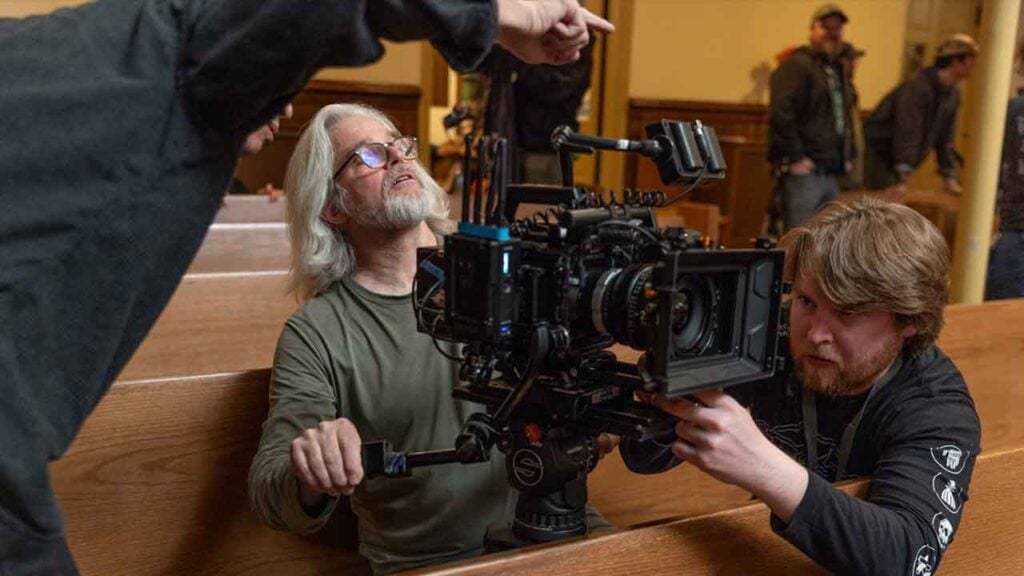
Blackmagic Design today announced that the upcoming feature “The Cashier” was shot using Blackmagic Design digital film cameras, including the Blackmagic URSA Cine 12K LF and the Blackmagic PYXIS 12K. The film was also edited and graded using DaVinci Resolve Studio editing, grading, visual effects (VFX) and audio post production software.
Written and directed by Andy Edmunds, “The Cashier” follows a clumsy domestic terrorist who unexpectedly buys a winning lottery ticket, sending a diverse group of characters into collision as they navigate greed, faith, and redemption. “I like to imagine if Quentin Tarantino got together with Aaron Sorkin and made an R rated Hallmark movie, it would be a lot like this film,” quipped Edmunds.
With extensive experience in other filmmaking roles, Edmunds was ready to make the leap into directing. He contacted Cinematographer Kunitaro Ohi directly as he prepared for his feature debut, setting a collaborative tone early. “Andy has been a behind the scenes person on a lot of narrative projects, but we have only met in passing a few times” said Ohi. “When it was time for him to make his feature debut, he was kind enough to reach out. I appreciate the level of hands on thoughtfulness he brings, and it definitely ingratiated me to the project.”
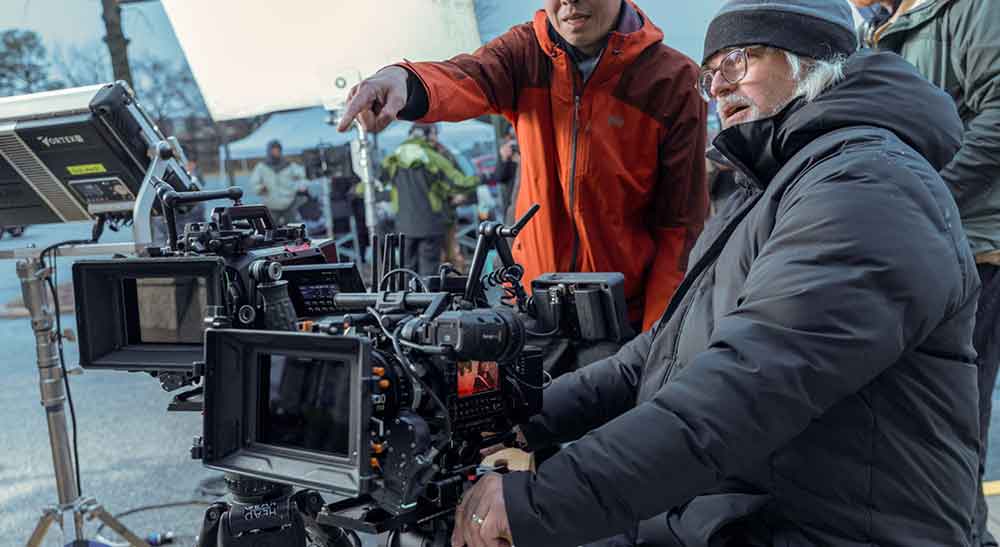
Ohi said the decision to shoot with the latest generation of Blackmagic Design cameras was driven by what he felt was a major technological leap forward for Blackmagic Design in long form narrative work. “I think it was about time that Blackmagic cameras were finally given the spotlight,” Ohi noted. “I’d used the Pocket Cinema Camera 6K for secondary shots on a previous feature length film, and an early generation URSA on a short film. The images were great, but I always felt like the cameras needed a few more features to make the leap I needed.”
“With the release of the URSA Cine 12K LF and the PYXIS 12K, that all changed,” Ohi continued. “With the form factor and the dynamic range, everything I needed in order to shoot a long form narrative was finally available. It was also great timing that with the release of the PYXIS 12K, I was starting prep for ‘The Cashier’. That gave me the encouragement I needed and the tools to take a chance on the new camera systems.”
What ultimately made Ohi sign on to the film was both the script and Edmunds’ approach. “Though the script adheres to a genre template, the film has a very unconventional sense of humor and tone that’s hard to describe,” said Ohi. “Andy insisted that the film always swings weirder and deeper, even more so than what’s already in the script. I thought it was a great project to challenge myself on both a technical and conceptual level.”
On set, Ohi pointed to image quality and usability as standouts. “The dynamic range of the sensors is comparable to camera systems 10 times the price,” Ohi said. “The menus are feature filled, but simple enough that even I was able to navigate through them. I’m a bit of a Luddite DP, so even I was shocked by how intuitive the menu ended up being. Overall, the image coming out of the camera exceeded my expectations; great highlight roll off, a robust codec, and fantastic light sensitivity. Never once did I feel like I was compromising in terms of the image coming out of the camera.”
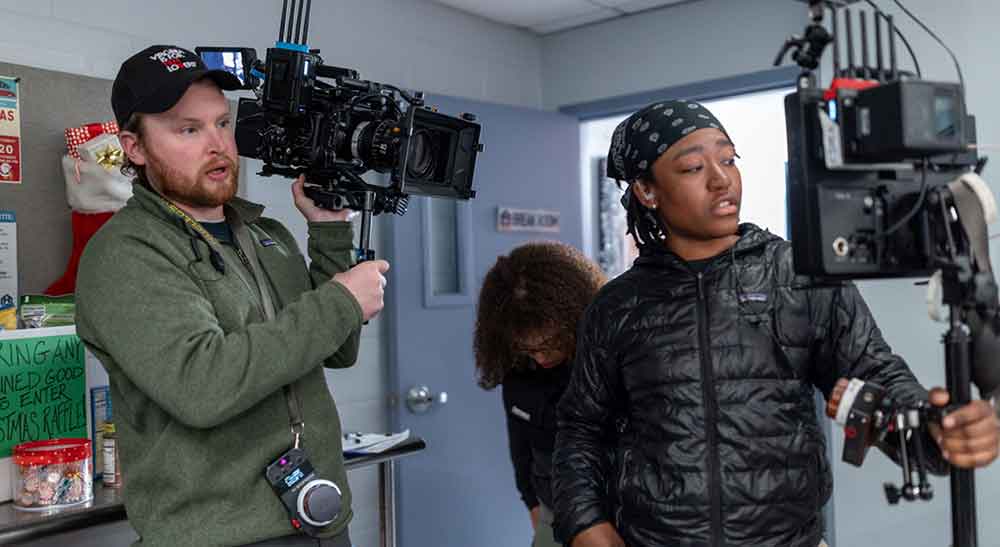
Ohi also said that while the PYXIS 12K was used as the B camera, he never approached it like a typical B camera. “It’s a wonderful compliment to the URSA Cine 12K LF. The sensors are identical,” Ohi said. “To be honest, I didn’t even think of it as a B camera. On numerous occasions, I treated both cameras interchangeably, and the angles were determined by where each camera was best suited.”
“We decked the PYXIS out as if it were a standard motion picture camera,” Ohi continued. “After adding all the accessories, the camera was still light enough that the B camera operator didn’t need any additional balancing when going handheld.”
B camera operator Bunt Young also praised the images and flexibility. “The PYXIS creates excellent images,” said Young. “The sensor is marvelous, and the lightweight, adaptable format of the PYXIS 12K body is perfect.”
The film’s visual style was built as a mix of neo noir lighting and off kilter camera angles, drawing influence from contemporary South Korean cinema. “The team consistently referenced the Coen Brothers and Park Chan-wook for framing and lighting,” continued Ohi. “Hal Ashby’s ‘Being There’ was also a huge North Star for us when it came to cultivating a consistently strange tone.”
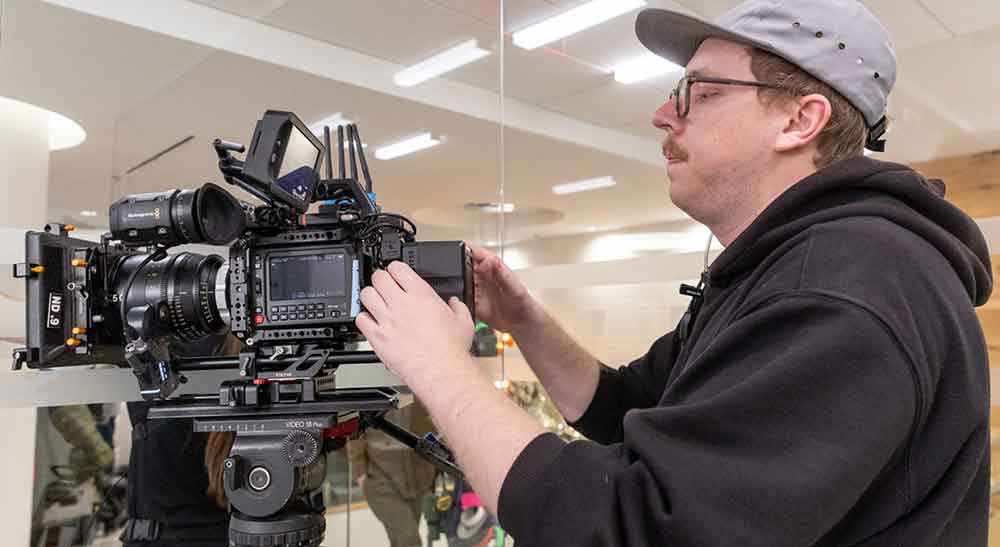
For lensing, the production used a combination of Sigma Cine Primes and Tokina Vista Primes, shooting at 8K 16:9 for a 1.85:1 finish. Due to a compressed prep timeline, the production used the film LUT provided in camera for monitoring. “If we were in a particularly challenging situation, I would turn off the LUT and monitor the log image to make sure that the camera was capturing the appropriate exposure.”
Ohi was pleased with how the URSA Cine 12K LF and the PYXIS 12K held up even challenging situations. “There was a boardroom location with wall to wall windows during a midwinter shoot in Richmond, VA, where the team needed to hold a consistent window to room balance as daylight fell,” added Ohi. “The dynamic range of the cameras and their ability to handle low or contrasting light made what might have been a challenging day into something much easier. As sunset rolled in, we were able to keep the same window to room exposure with the aid of a few panel lights cranked down to literally one percent. Both my gaffer and key grip couldn’t believe it. My Gaffer Shane Guild commented dryly, ‘Am I out of a job?’”
Post production was completed in Richmond, with Editors Rex M. Teese and Matthew West cutting the film in DaVinci Resolve Studio. Teese also generated dailies using DaVinci Resolve Studio, keeping the project in a consistent pipeline from on set through editorial. Final color will be completed in DaVinci Resolve Studio by West.
“The Cashier” is currently in post, with festival and distribution plans to be announced.
Enjoying the news? Sign up for the Creative COW Newsletter!
Sign up for the Creative COW newsletter and get weekly updates on industry news, forum highlights, jobs, inspirational tutorials, tips, burning questions, and more! Receive bulletins from the largest, longest-running community dedicated to supporting professionals working in film, video, and audio.
Enter your email address, and your first and last name below!


Responses