

IBC2026 Show Report

The International Broadcasting Convention has long been Europe’s equivalent of the USA’s April NAB Show, smaller in size than NAB but retaining the same focus on broadcast production hardware, software and cloudware. IBC was first held in 1967 at the Lancaster Gate hotel in London, progressing to larger venues before moving to the RAI Amsterdam convention center in 1992. The following report outlines some of the products making their IBC debut, selected as reflecting current trends in mediatech innovation.

AJA Video Systems introduced Kona IP25 support for Colorfront’s Transkoder and On-Set Dailies software. The integration allows production and post professionals using AJA’s ST 2110 I/O card and Colorfront software to take advantage of the advanced throughput that SMPTE ST 2110 provides to streamline local and remote dailies, transcoding and streaming. The software instantly recognizes the card, enabling Colorfront users to view and access Kona IP25’s settings from RGB to YUV, 4:4:4 12-bit, and beyond.
Brainstorm introduced enhancements to its Suite 7 graphics software. The new additions add AI tools as well as enhancing the performance of the render engine. InfinitySet can now track talents for keying without need for a green screen. AI-based body-tracking can identify and follow an onscreen presenter for automated live interaction with 3D graphics components.
Bridge Technologies announce that its VB440 IP signal monitor is now available for software-based deployment on a shared commercial off-the-shelf computer and within cloud-native environments. Instead of deploying dedicated hardware for every monitoring function, users can spin up additional VB440 software instances on demand.
Cartoni’s HyperRoll, a new collaboration between Cartoni and director Stefano Pedretti, is a compact wheeled camera rig designed to deliver cinematic motion without the need for bulky equipment. It integrates 10 customisable shooting modes into a single tool and allows users to switch styles from full professional rigs to mobile-phone film-making. Available in single, dual and triple configurations, along with a telescopic extension, it connects to a universal or camera-specific cage.
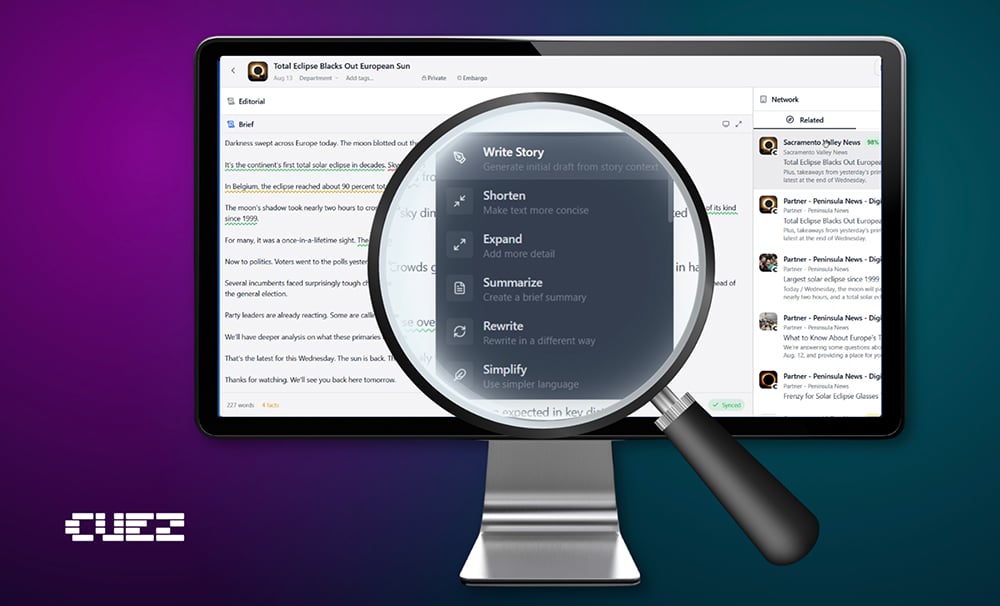
Cuez announced the expansion of its cloud-based broadcast production platform with the impending introduction of Cuez Admin, plus additions to the capabilities of the established Storydesk, Rundown and Automator. These are designed to address the fragmentation broadcasters face when targeting viewers via multiple delivery formats. The enhanced Cuez platform connects newsroom operations, station group infrastructure, and studio automation, into a unified workflow. This centralisation eliminates manual handoffs while remaining open to industry standards and broadcasting hardware. Cuez now integrates with any AI model through the MCP open standard. Newsrooms can apply AI to workflows including news ingest, story creation, fact-checking, metadata management, searching related stories through embeddings, and report generation. Cuez Admin provides centralized management for media companies operating multiple stations and subsidiaries. Cuez Storydesk is a cloud-based story-centric newsroom system which aggregates news from multiple sources such as news wires, email inboxes, and RSS feeds, delivering stories directly to the platform where journalists work. Cuez Rundown takes cloud collaboration all the way into the story itself. The script becomes a single document where concurrent users see each other’s cursors and edits in real time, within the same item. The update also introduces slash commands that let producers insert story blocks, assign presenters, or add inline instructions, without using menus; a mouse-free environment. Cuez Automator transforms the rundown into timed studio automation, controlling equipment during live broadcast without manual intervention.
Deltacast showed the latest version of its Delta-stadium content management system for sports venues. Version 4.0 introduces full synchronization for video outputs beyond 4x4K60 or 1x8K60. It allows the creation and control of graphics and video content on ultra-large LED displays.
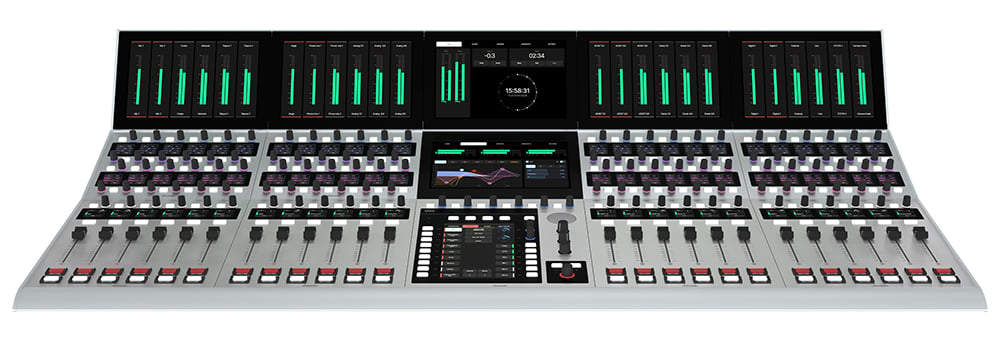
DHD produces modular audio mixers which separate the control surface and the audio processing cores into independent modules. The control surface becomes a touchpoint rather than housing the complete system. The DHD MX3 extends this flexibility. Each MX3 module is a self-contained network device which links via Ethernet along a single cable per console column. MX3 consoles can be specified from a range of elements, typically a central module plus six-fader expansion modules. Audio-over-IP has long been a central aspect of DHD’s Series 52 mixers, including compatibility with AES67/Ravenna, Dante, and SMPTE 2110 protocols to handle very large channel capacities. MX3 retains that versatility, supplemented by secure standard IP networking between desktop control panels and local or remote signal processing cores; this replaces the DHD APC (audio/power/control) protocol used in current Series 52 systems. MX3 modules can be housed in a frame with optional over-bridge modules, plus optional displays mounted above the over-bridge. Modules may be added, exchanged, or repaired if or whenever required. Displays throughout the surface show what the adjacent controls currently do, following the selected view. Also demonstrated were control consoles from DHD’s established Series 52 range running latest-generation 10.4 firmware, plus the new Discovery tray app, Routing App and MIDI App. AI-based audio noise reduction also made its IBC debut as a purchasable option for XD3 Quad Core processors.
Evertz’ Vue Vision combines the real-time control and visualization capabilities of Vue with Magnum-OS Analytics by extracting metrics from decoded sources and making that information available directly on the Vue interface. Configurable tools and widgets allow operators to validate source health, investigate potential issues and access more information without moving between separate monitoring and control tools. For live event and sports production, Vue Vision can help operators visualize, analyze and validate multiple incoming feeds.
EVS introduced XT-S, a software-defined multi-application server platform designed to give live production teams greater flexibility. Joining EVS’ LiveCeption series and XT-VIA server, the XT-S takes a different approach to live production by providing a common platform that runs multiple applications. XT-S initially supports LiveCeption replay and UHD zoom. Extra applications are expected to follow.
Fujifilm’s new UA22x4.8 is a portable zoom lens for 2/3-inch broadcast cameras, covering 4.8-106 mm in a body weighing 2.17 kg. Applications include remote newsgathering and sports broadcasting.
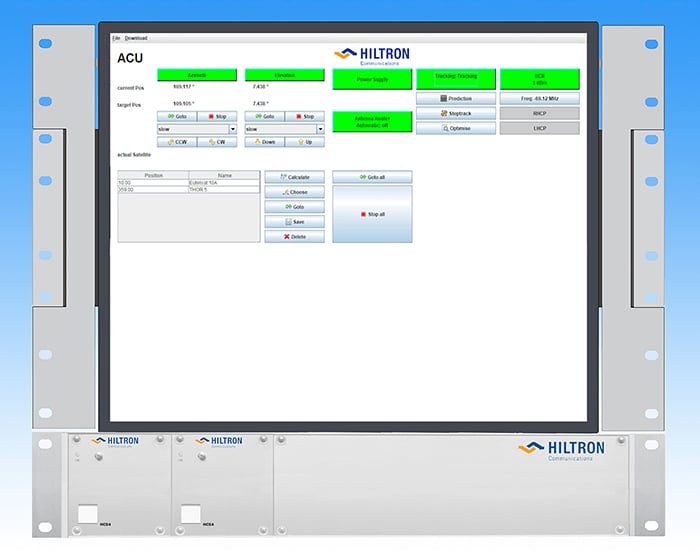
Hiltron Communications introduced its HACUX-IDU2 17-inch touchscreen option for the company’s HCS4 satcom system controller and HACU antenna control unit. The 8U high touchscreen panel is designed to mount in a 19-inch rack at a convenient location for the operator. All HCS4 and HACU system parameters are displayed on the panel and can be adjusted, if necessary, without need for an external keyboard or pointing device. Also exhibited was the the HMAM-XY motorized antenna mount which is designed to perform high-precision tracking of LEO and MEO satellites. Prime focus reflectors of up to 2.5 metres diameter for frequencies up to Ka-band can be attached. Quick feed changes allowing multiband operation are available as option.
Hitomi Broadcast’s Spectra helps to confirm that color remains accurate as pictures move through complex production and distribution routes. “In the pressure of set-up, errors in a video source can be missed because there is a recognisable picture,” comments Hitomi director Russell Johnson. “If the color path is wrong, that problem can travel through the workflow and affect the final programme.” Spectra generates a defined set of test colors at the source, sends them through the normal programme route and analyzes them at the end. By comparing the received colors with the expected result, it can highlight incorrect LUTs, unexpected conversions and routing errors between SDR and HDR paths. MatchBox Panorama also made its IBC debut following its launch earlier this year. It provides a view of timing throughout the entire production workflow of a live broadcast.
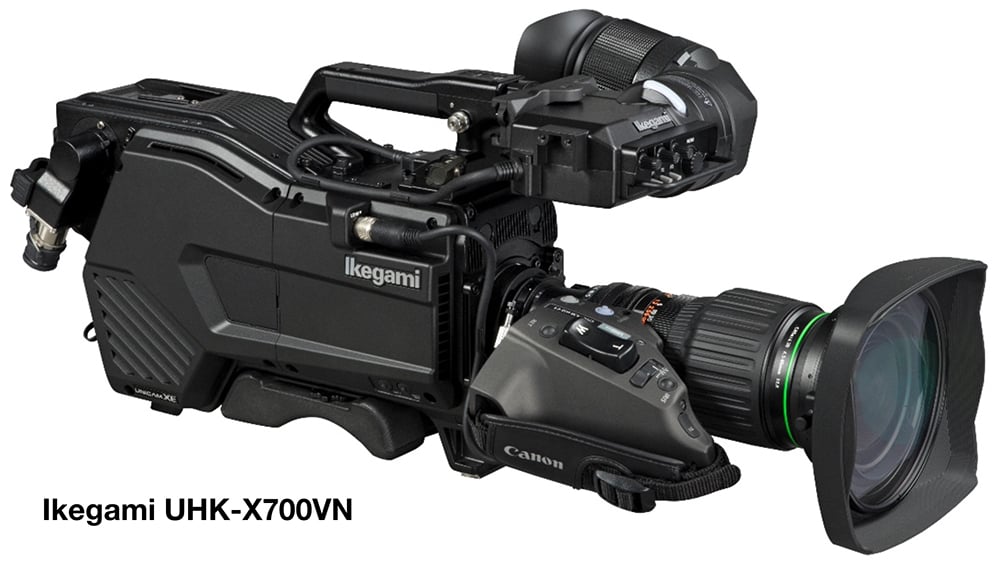
Ikegami announced four additions its UNICAM XE range of UHD cameras with the introduction of the UHK-X700VN, UHK-X750VN, UHK-X600VN and UHK-X650VN. Developed from the established UHK-X700/X750/X600/X650 broadcast and professional video production cameras, the VN versions offer new creative features normally associated with digital cinematography: seamless depth of field adjustability, Bokeh effects and seamless exposure adjustment. Integral to all four VN models is an advanced variable neutral-density filter which allows camera operators to maintain their existing iris setting and depth of field while precisely controlling exposure, regardless of changes in the amount of incoming light. This supports a wide range of creative applications, including naturally blurring the background to emphasize the subject. Applications include reducing interference patterns when shooting LED walls in news studios or in virtual production environments. An automated mode delivers continuous exposure control across an exceptionally wide range by enabling simultaneous control of the variable neutral-density filter, lens iris and electronic gain. Also making their IBC debut were two new Ikegami viewfinders. The VFE-P07D is a monocular OLED viewfinder with an integral ultra-compact 3.5-inch TFT LCD monitor display for use with shoulder-mounting and studio-format cameras in the UNICAM XE series. The monitor screen can face forwards, be tilted through more than 120 degrees or turned laterally through 180 degrees. Waveform, vectorscope and audio metering tools can accessed easily. The VFE-P711AD is a 7-inch high resolution OLED viewfinder compatible with all UNICAM-XE and UNICAM-HD cameras. Developed from the LCD-based VFL-P700AD, the OLED version can also be used as a field monitor for an external 3G-SDI feed.
IHSE’s Draco Vario HDMI extender gives users real-time access to HDMI-compatible computers from a remote workstation, including monitor, keyboard, mouse, loudspeakers and other peripheral devices. The Draco Vario XS DisplayPort 1.2 is the first of IHSE’s new family of extenders based on the JPEG XS video codec. It works with existing Draco Vario classic FHD extenders, allowing 2160p and 1080p sources to be viewed simultaneously on the same UHD display.
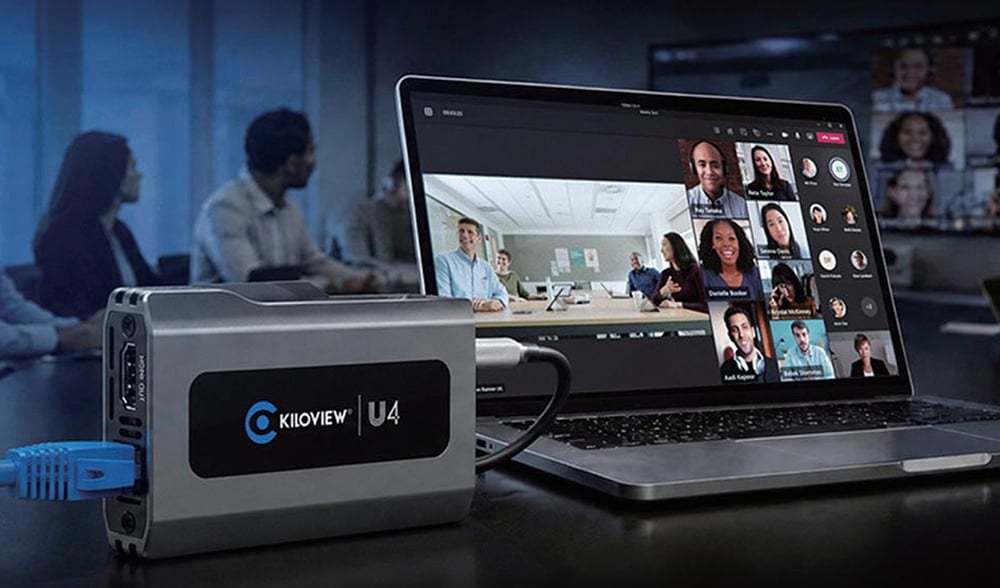
Kiloview’s U4 IP Video Dock IP video decoder and output dock converts IP video into USB UVC/UAC, HDMI, and DisplayPort outputs for unified communication platforms, room displays, and monitoring. HDMI and DisplayPort outputs support up to UHD60 video, while USB UVC/UAC enables plug-and-play integration with services such as Zoom and Teams.
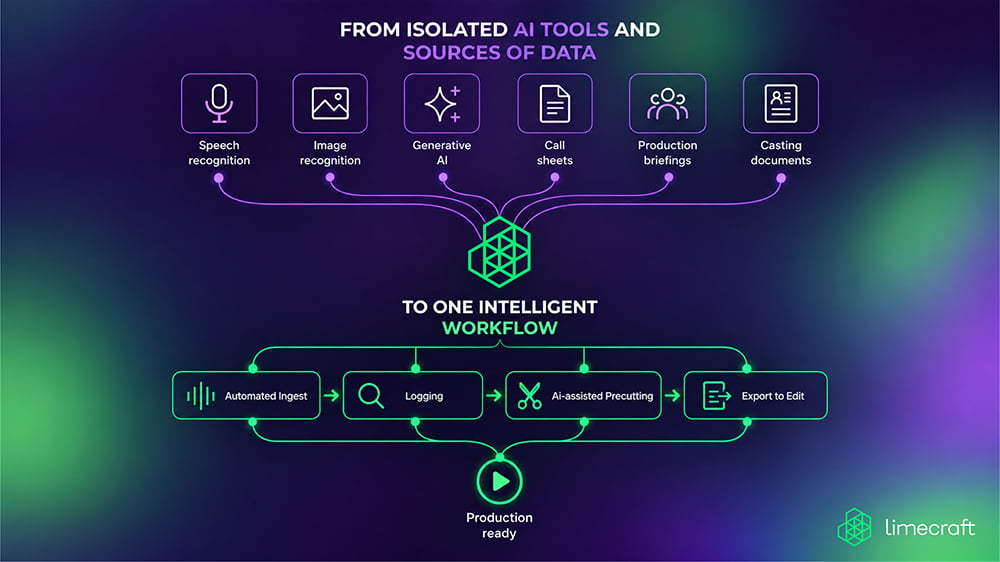
Limecraft demonstrated version version 2026.6 of its AI-powered production platform, extending capabilities for connected media operations. An AI-assisted approach to story editing is also in development. “Media organisations don’t need more tools,” says Limecraft CEO Maarten Verwaest. “The real opportunity is to connect the systems they already use, automate the work that slows people down, and then introduce AI where it genuinely assists the creative process.” The Limecraft Mobile App can now bring content directly into a production workspace, while users working across multiple productions gain more precise control over which workspaces generate notifications. The aim is to keep content, people and operational information connected throughout the production process, wherever the work takes place. Once workflows are connected, Limecraft helps by automating routine tasks between acquisition and delivery. This includes activities such as ingest, media preparation, transcription, metadata enrichment, review, approval, and delivery, reducing the number of manual handovers and repetitive actions required to move a production forward. Limecraft also previewed its AI-assisted story editing technology which is currently in beta and not part of the formal 2026.6 release. It allows editors and producers to explore large volumes of recorded material by describing in natural language what they are looking for. They can then refine the results conversationally, progressively narrowing the material towards the story they want to tell. Rather than attempting to make editorial decisions autonomously, the AI acts as an assistant, helping users move more quickly from an editorial idea to the relevant source material.
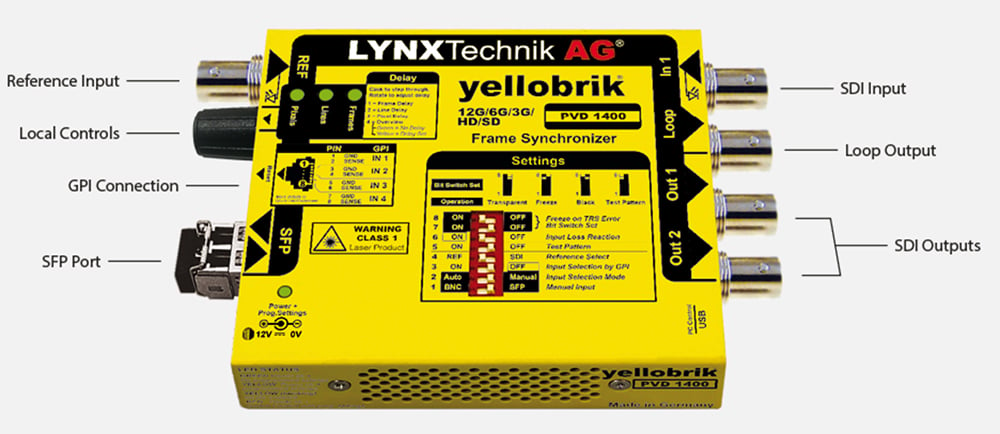
Lynx Technik has enhanced its PVD 1400 frame synchroniser and delay processor now supports video delays of up to 5 seconds (256 frames) for HD-1080 formats and up to 1.2 second (64 frames) for UHD. Video and audio can be synchronized across multiple displays or LED walls where processing latency differs between screens. The maximum audio delay has also been increased to 20 seconds for HD and 10 seconds for UHD video formats.
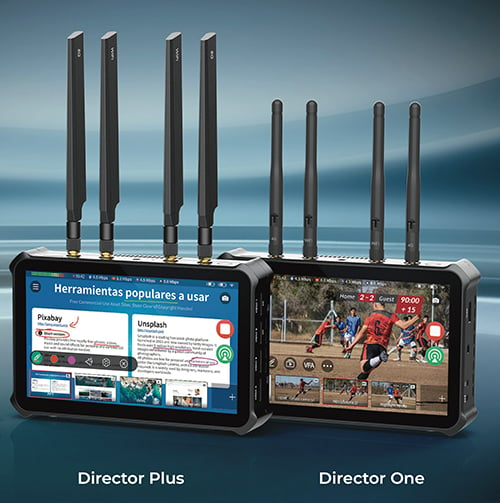
Magewell’s Director Plus brings UHD production and enhanced network capabilities to Magewell’s Director family of portable, all-in-one production and presentation systems. It can ingest up to 6 UHDp60 sources or 16 1080p60 sources from HDMI, USB, and IP feeds, along with media assets from connected devices and third-party software platforms. Director Plus also offers expanded ISO recording capabilities compared to earlier Director models, supporting 4 simultaneous recordings from any of the inputs or the program feed..
Nautel’s new rack-mounting 8 kW VX8 and 10 kW VX10 analog FM transmitters are designed for higher-power main, standby and N+1 FM applications. Modular design separates the transmitter into an exciter/controller, splitter/combiner, and two amplifiers, so each assembly can be installed and serviced individually rather than as a single heavy transmitter chassis. With the amplifier power supplies removed, no individual assembly weighs more than 50 pounds.
Nevion’s new Moxela software can be configured to create applications for broadcast facilities, contribution networks, remote and cloud production. Supporting SMPTE ST 2110, NDI and the Media Exchange Layer, it is designed to standardize real-time, in-memory exchange of uncompressed audio, video, and metadata between software applications.
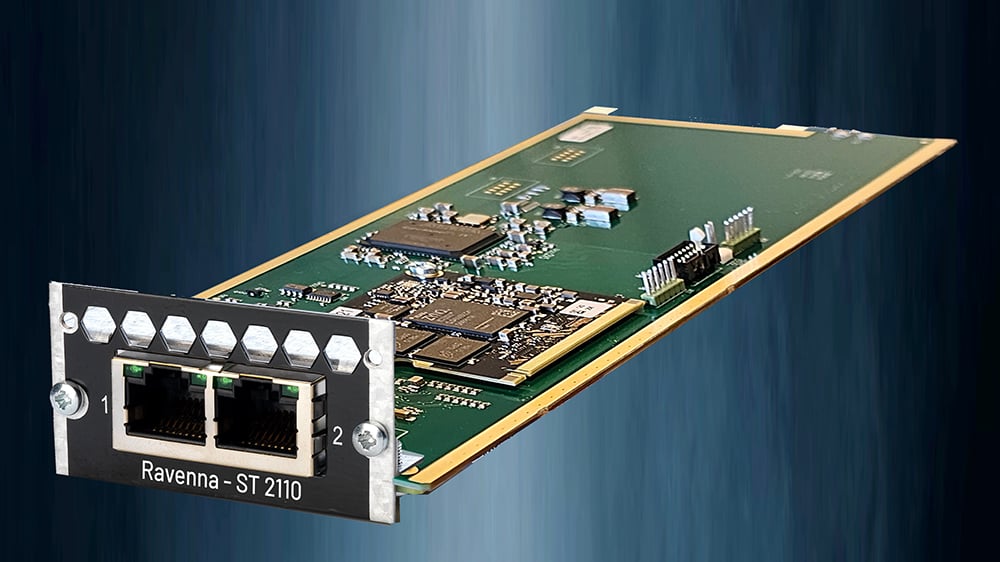
NTP Technology introduced the Digital Audio Denmark ST 2110-30-Ravenna card which makes DAD audio interfaces more compatible with IP Ethernet audio formats in broadcast installations and applications for analog-to-digital and digital-to-analog conversion, remote-controlled microphone preamps, monitor control, routing, format conversion and sample-rate conversion. NTP’s Thunder | Core series, Penta series and AX32 all come with the ability to install optional expansion cards and/or modules. “In combination with our networking capabilities, we can ensure seamless compatibility within AoIP environments and versatile configurations with IP Ethernet audio formats,” summarises NTP Technology COO Mikael Vest. “The resultant product functionality provides strong support for routing, monitoring, format conversion and general audio connectivity,”
OOONA announced the launch of OOONA Go, a ready-to-use management system built for small media localization companies. Designed for teams of up to 20 users, it makes professional localization management accessible to leaner operations by providing a secure and ready-to-use environment within which to manage projects, resources, pricing, and production work. Companies can upgrade to OOONA Integrated at the click of a button, keeping them covered as they grow. “With OOONA Go, we are giving small language service providers a way to get up and running without a complex configuration, allowing them to manage, assign, create, and deliver in a single streamlined system,” says product manager Maya Venturero. “OOONA Go is intentionally focused, removing features that are not relevant to small teams. Initial configuration is handled by OOONA, so companies can get started without delay, while guided onboarding ensures a smooth start.” “Small localization companies do professional work, and they deserve a professional platform,” adds Wayne Garb, OOONA co-founder and CEO. “With OOONA Go, a company can now be up and running in no time, with the same tools and security used by the world’s leading media localizers.”
Remote Camera Tech’s FR-4 Fluid Remote is a pan bar system for applications including remote production. Next generation of the FR-1 and FR-2, it allows the camera operator to follow live action much easier than with a joystick and was designed specifically for ultra-low latency control over IP, critical for live events. The FR-4 uses a PC running Microsoft Windows 11 and includes three Elgato Stream Deck modules. Bitfocus Companion is pre-installed allowing users to customise the system to optimise their workflow.
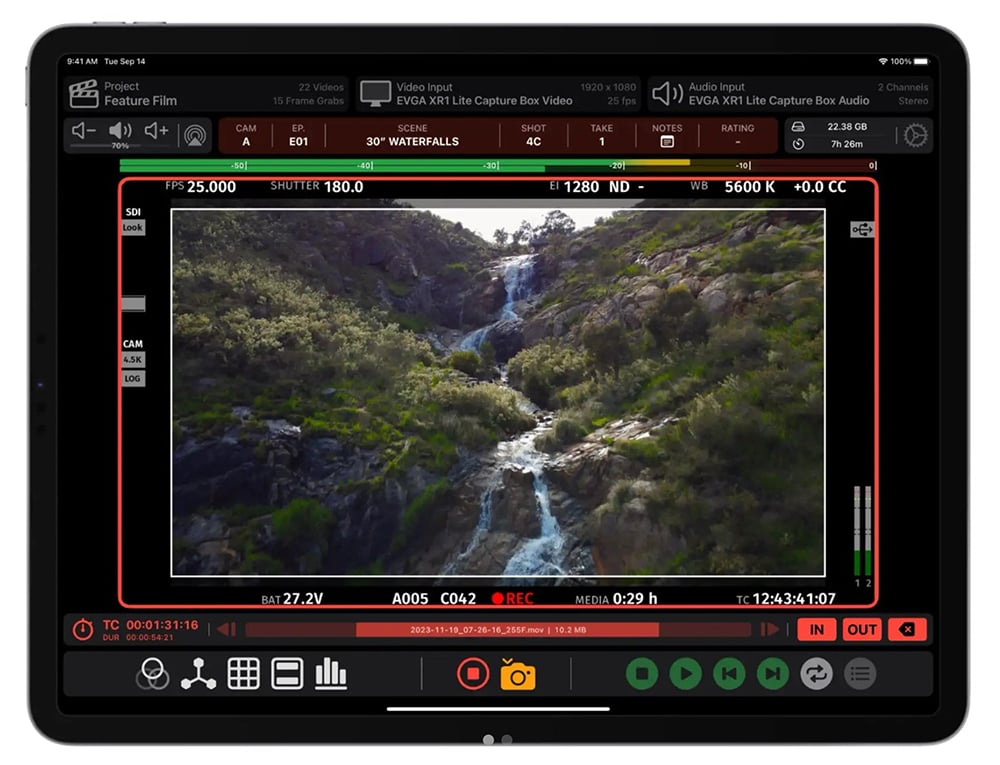
Tentacle Sync’s Video Assist transforms an Apple iPad into an on-set monitor and playback system. It connects to a camera or wireless system via a UVC capture card and includes tools such as LUTs, live compositing, focus peaking, false color, zebras, video transform, grid lines, center marks, frame line masks, anamorphic desqueeze and audio meters. Video Assist 2.2 expands the toolkit further by introducing timecode support. Recorded clips carry the same file name and timecode as the camera and can drop straight into an offline edit. Video Assist 2.2 adds timecode support. Timecode offset aligns video and timecode inputs during recording to account for latency from the USB capture card. Timecode is updated at regular intervals when connected via Bluetooth to ensure that the iPad and Tentacle Sync Device always stay in sync.
Vizrt announced the TriCaster Vizion AI/R, 3Play Vivid, TriCaster Prizm, and LivePanel Pro. TriCaster Vizion AI/R pairs real-time AI keying with augmented reality graphics in one integrated subscription add-on for the TriCaster Vizion; making the creation of immersive visual elements and virtual environments accessible without complex builds or specialist skills.
WinMedia’s WinAI voice cloning engine allows a human voice to captured, analyzed, and reproduced. The system is designed to learn tone, breathing, emotion and micro‑intonation. Users can record their own voice or a presenter’s voice and use it for automated productions such as radio shows, news updates, or visual radio. WinAi forms part of WinMedia Software Suite which comprises WinNews, WinSales, WinAi, WinMedia, WinLogger, WinMam, WinCam, WinStream, WinSafe, WinWeb and WinApps. The suite is designed to cover the entire news and music production chain and facilitate fast content delivery to multiple devices.
XenData announced three data storage appliances that archive to LTO tape libraries and can be accessed simultaneously as a single scalable file system and as S3 object storage. Like any file system, each file has a file name and a path. When it is treated as an S3 object, the object key consists of the same path and file name. The appliances include a fast storage tier based on disk or SSD which provides write caching and intelligent pre-fetching for enhanced performance. They support most LTO library models, including from HPE, IBM, Qualstar, Quantum, Spectra Logic and Symply, providing nearline LTO capacities that scale to tens of petabytes. Each appliance runs a Microsoft Windows Server 2025 operating system.
Zero Density’s Traxis Hub is claimed to be compatible with all industry-standard camera tracking protocols. Features include filters to reduce the noise in tracking data from optical tracking systems plus the ability to attenuate incoming tracking signals at three individual levels. Traxis Hub can make lens calibration even easier by drawing and applying the distortion curves on the screen and real time. Running on a standard Microsoft Windows 11 workstation, the software supports tracking pipelines based on FreeD, Xync and OpenTrackIO. It also works with mechanically tracked cranes, robotic systems and PTZ cameras, bringing data from a wide range of rigs into virtual studio and augmented reality productions.
IBC 2027
The IBC exhibition and conference return to the RAI Amsterdam convention center next year, in its usual timeframe: 10-13 September 2027.
Enjoying the news? Sign up for the Creative COW Newsletter!
Sign up for the Creative COW newsletter and get weekly updates on industry news, forum highlights, jobs, inspirational tutorials, tips, burning questions, and more! Receive bulletins from the largest, longest-running community dedicated to supporting professionals working in film, video, and audio.
Enter your email address, and your first and last name below!

Responses