

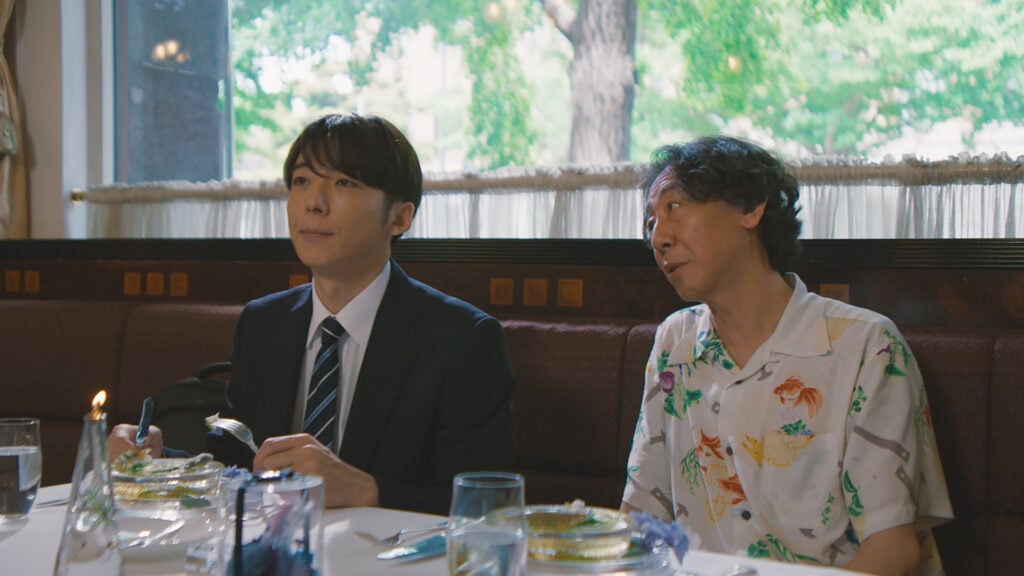
Director Go Riju’s Rhapsody Rhapsody Shot on Blackmagic PYXIS 6K

Anamorphic cinematography and color grading used to capture film’s emotional atmosphere.
Blackmagic Design today announced that the feature film “Rhapsody Rhapsody,” directed by Go Riju, was shot using the Blackmagic PYXIS 6K and the Blackmagic Camera app. The film was also graded using DaVinci Resolve Studio and the DaVinci Resolve Advanced Panel.
Rhapsody Rhapsody is a love story set in Yokohama, the hometown of actor and director Go Riju, who is widely known for his work as a distinguished supporting actor in numerous films and television dramas. The story follows Mikio, a man who never gets angry, who one day discovers that he has somehow been married to a woman he has never met. When he finally tracks down the mysterious Shigeko, he finds that she is an outrageously unpredictable woman who destroys everything she touches.
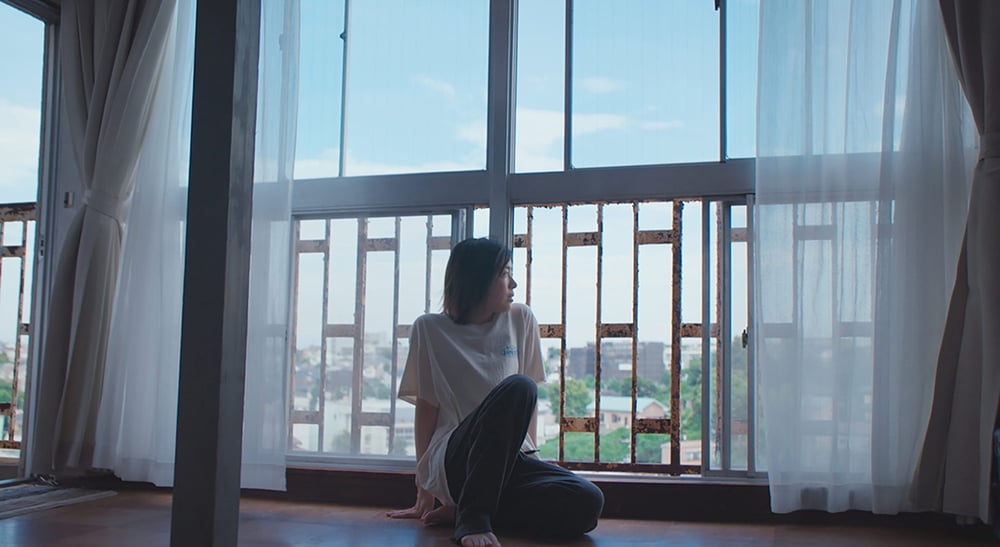
The film marks Go Riju’s first directorial work in 13 years since Sayonara Debussy. Starring Issey Takahashi, the film warmly portrays imperfect adults stumbling through life while continuing to move forward.
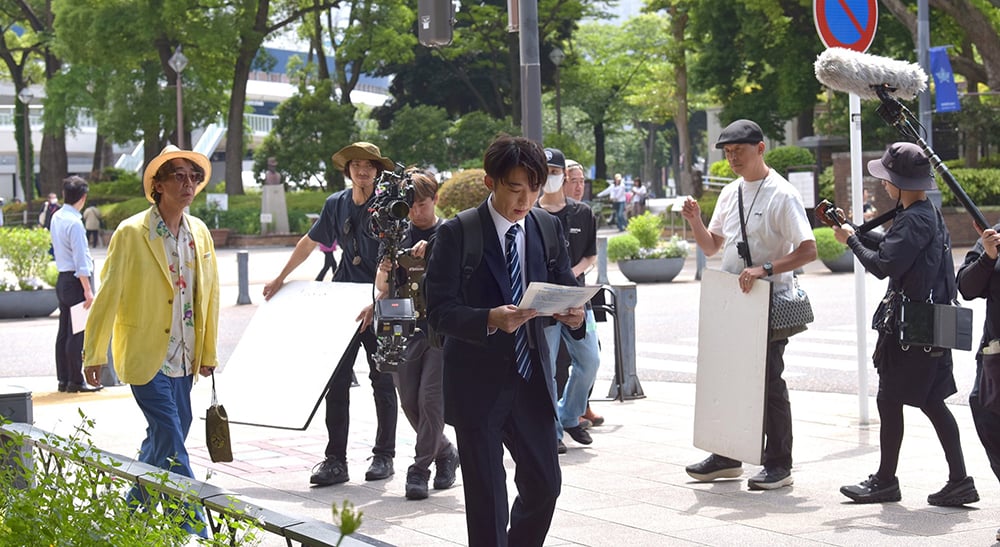
The film’s gentle and heartwarming atmosphere was captured using Blackmagic PYXIS 6K and Blackmagic Camera app. Cinematography was handled by Naoya Ikeda, while color grading was completed by colorist Takeshi Kuramori of Imagica Entertainment Media Services using DaVinci Resolve Studio.
Ikeda spoke about how he first met director Riju: “I first worked with Riju-san while shooting Disney+’s Gannibal, where he appeared as an actor. At the time, I didn’t even know he was also a director. On set, I noticed how carefully he observed the crew, and I remember thinking he was a very interesting person. At the wrap party, he invited me to work on a film together, which made me incredibly happy.”
“For this project, I used two LAOWA anamorphic zoom lenses. Since the lenses themselves were lightweight, I kept the setup simple with minimal rigging and a PYXIS Monitor attached. With some cameras, monitoring can be difficult when shooting with anamorphic lenses because the image appears squeezed. However, the PYXIS has a built in desqueeze function, making it a great match for anamorphic lenses. The camera setup process was also very straightforward, so shooting was stress free. I had some extremely hot shooting days as well, but there were no overheating problems,” he explained.
The Blackmagic Camera app was also used to create dynamic scenes.
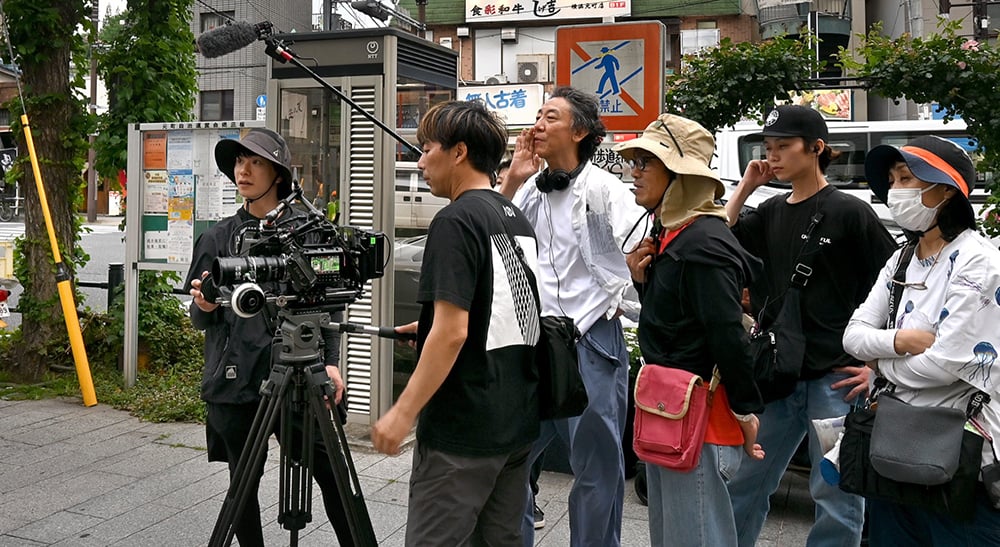
“I had wanted to use the Blackmagic Camera app in one of my projects for quite some time,” said Ikeda. “For a scene where Takahashi’s character Mikio runs through the streets, I attached an iPhone to his body and shot with it.”
The film’s grading was handled by colorist Kuramori, who has collaborated with Ikeda on numerous productions, using DaVinci Resolve Studio and DaVinci Resolve Advanced Panel.
“Director Riju is an incredibly gentle person, and Ikeda asked me to create a look that would convey that kindness,” said Kuramori. “We aimed for colors that felt vivid but not overpowering — soft and charming color tones.”
Ikeda added: “With a story like this, one that portrays ordinary people and everyday life, finding the right visual look is extremely difficult, so I relied on Kuramori to guide the direction. The characteristics of lenses can easily disappear if contrast or shadow adjustments are handled incorrectly. I believe the combination of the PYXIS 6K and the LAOWA lenses created an image with a beautiful softness, and Kuramori always knows how to preserve those qualities.”
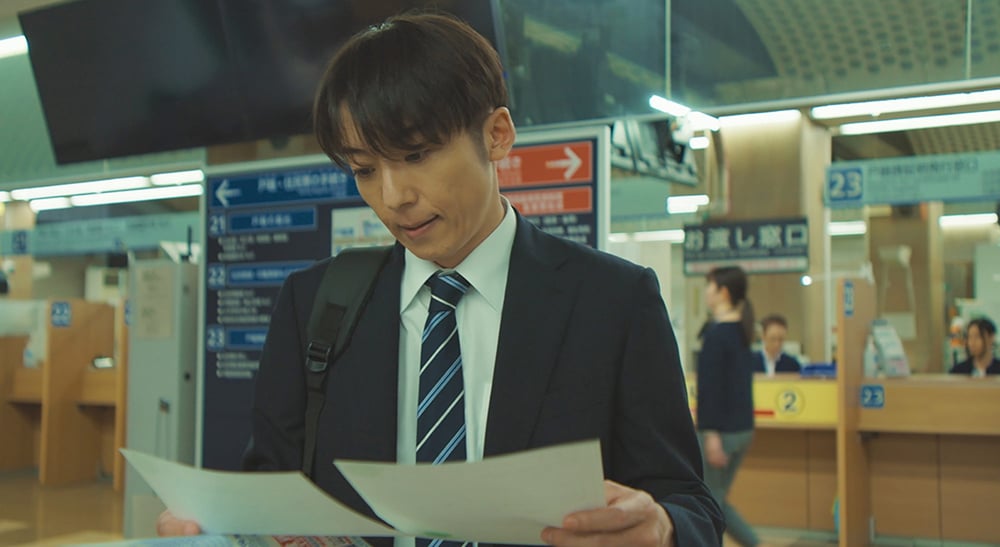
“Since we used lenses that naturally softened the edges of the image, we aimed for a clean look that complemented them well. At the same time, I tried to give the everyday scenes a subtle sense of cinematic unreality through the grading. Both the city hall scene and the argument scene between Mikio and Shigeko at home were lit with fluorescent lights. Instead of neutralizing those fluorescent tones, I intentionally added green to the city hall scene and cyan blue to the argument scene to emphasize the color atmosphere,” explained Kuramori.
Finally, Ikeda spoke about one particularly memorable scene: “When shooting with the PYXIS 6K at ISO 200 — or even ISO 400 at the highest — the image takes on an incredibly ‘creamy’ look. There’s a night scene shot at Yamashita Park where we intentionally set the camera to ISO 400 and used a lens aperture of T2.9, which isn’t especially bright. In the end, even though the environment remained properly dark like real nighttime, the actors were still beautifully lit, and the scene turned out exactly as we had envisioned.”
Enjoying the news? Sign up for the Creative COW Newsletter!
Sign up for the Creative COW newsletter and get weekly updates on industry news, forum highlights, jobs, inspirational tutorials, tips, burning questions, and more! Receive bulletins from the largest, longest-running community dedicated to supporting professionals working in film, video, and audio.
Enter your email address, and your first and last name below!


Responses