

VFX Legion Creates CG Environments for ‘Quantum Leap’ Reboot

The Integration of Unreal Engine into Legion VFX Pipeline Provides Real-Time Compositing and Rendering with the Flexibility Needed to Shorten the Production Cycle and Deliver a Complex Mix of High-Quality Effects on a Tighter Deadline
The international team at VFX Legion (www.vfxlegion.com), the LA and B.C.-based global visual effects company, recently delivered two dozen key shots for the first episode of NBC’s new series, ‘Quantum Leap,’ creator Donald P. Bellisario’s revival of the ’90s sci-fi cult classic.
The show picks up 30 years after time-traveler Dr. Beckett (Scott Bakula) stepped into the Quantum Leap accelerator and disappeared as a new team restarts the project. The story follows lead physicist Dr. Ben Song (Raymond Lee) on an unsanctioned leap through time and space to a succession of locations – navigating new challenges while trying to find his way back to the present.

Legion, an end-to-end visual effects studio specializing in crafting meticulously detailed photo-real virtual locations, was brought on board to create complex digital environments integrating 2D and 3D assets across several episodes.
The ability to efficiently produce large volumes of high-quality digital assets that align seamlessly with the look and texture of practical footage was key to the production. Co-founders VFX supervisor James David Hattin and VFX producer Nate Smalley led the effort, assembling a team drawn from Legion’s local and international collective of artists. Working as an integrated unit, Smalley and Hattin provided creative direction, guiding artists through every phase of the production process.
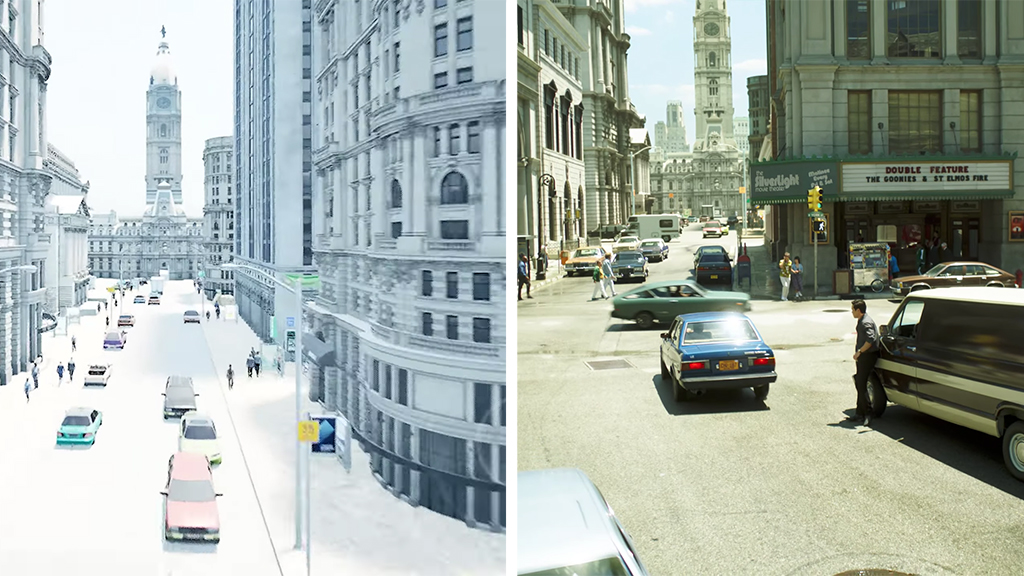
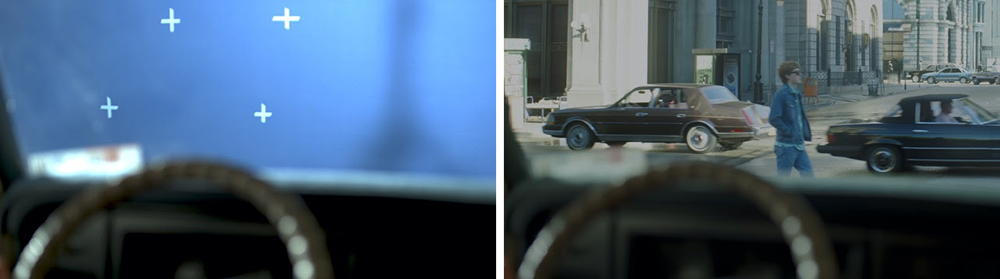
The initial CG work for the first episode, July 13th, 1985,’ called for sets built on a backlot at Universal Studios to be digitally extended, creating expansive cityscapes replicating bustling downtown Philadelphia – circa 1985. To achieve the final shots large green screens strategically positioned at the end of short stretches of fabricated streets were replaced with renderings of historically accurate buildings and signage. Animated pedestrians and vehicles move in sync with the pace of the city.
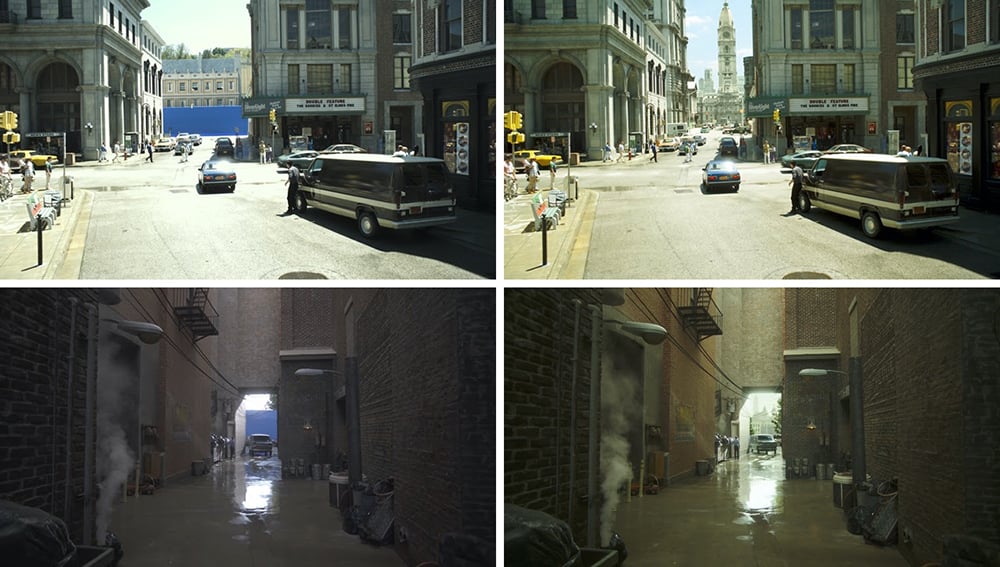
“The pilot was scheduled to premiere September 19th, giving us a three-week deadline – more than enough time for our team to deliver the scope and caliber of shots the show demanded,” says Hattin. “However, that window was cut down to one week when a promo incorporating several of Legion’s visual effects was slated to air during the NFL pre-season games.
“Our team met the even more challenging accelerated deadline with ease, thanks to the flexibility and real-time connectivity of Legion’s cutting-edge remote pipeline – and the caliber and scale of our tightly integrated collective of extraordinary senior talent,” adds Hattin.
“The advantage of real-time remote production remains essential to VFX Legion’s ability to provide films and episodic series with a resource that clients can rely on to meet their visual effect needs,” adds Smalley. “Leveraging exceptional talent, strategic workflow, and tools that accelerate the production cycle enabled Legion to meet the show’s tight deadline while leaving more time to focus on elevating shots beyond the client’s asks.”Legion, a global company with studios in Los Angeles and British Columbia, assembled a custom-tailored team drawing upon the meticulously vetted international pool of talent the pioneering remote visual effects studio began building in 2013 before opening its doors. Hattin immediately reached out to Eugen Olsen, an experienced lead compositor based in Johannesburg, South Africa working with a small team under his banner, Alpha VFX.
The artist used Unreal Engine as his primary tool for ‘the job. Integrated into Legion’s pipeline, Unreal enabled shots to be rendered in real-time – optimizing efficiency and making it easy to adjust workflow and enhance shots further down the pipeline.
Olsen has been a member of Legion’s core remote team for nearly five years. He has collaborated with Legion’s supervisors, producers, and artists on visual effects for dozens of films and television episodic shows over the years – from ‘Scandal’ (2015-2018) to recently released films, including ‘Ambulance’ (2022), ‘DMZ’ (2022), and ‘The Black Phone’ (2021).
Eugen is a top-tier compositor committed to finding innovative solutions that maximize the potential of technology and elevate visual effects,” says Hattin. “He embraced Unreal Engine early on, tapping the efficiency and power of the real-time 3D tool to accelerate the remote production of photoreal visual effects. Eugen’s skill as an artist coupled with a forward-thinking approach to remote visual effects production makes him a great fit with Legion and our company’s ethos – as well as an invaluable to this project.”
VFX Legion is currently working on effects for upcoming episodes of ‘Quantum Leap,’ The first season of the series is currently airing on NBC Television Network and available for viewing on Peacock Streaming Platform.
CREDITS
Title: ‘Quantum Leap’ (2022)
Episode 101, Title: ‘July 13th, 1985’
Category: TV Series /Drama/Sci-Fi
Premiere: September 19, 2022, NBC TV Network – September 20th Peacock Streaming Platform
Production Companies:
Belisarius Productions
Quinn’s House
Universal Television
Universal Content Production (UCP)
Dean Georgaris Entertainment 2.0
Distributor:
National Broadcasting Company (NBC) USA
Created by – Donald P. Bellisario
Written by – Donald P. Belisario, Steven Lilien, Bryan Wynbrandt
Directed by – Thor Freudenthal
Ana M. Amortegui – director of photography
Benjamín J. Bumgarner – editor
Visual Effects by VFX Legion
James David Hattin – visual effects supervisor
Nate Smalley – visual effects producer
Blake Anderson – CG supervisor –
Matthew Noren – senior visual effects coordinator
Joseph Soloway – visual effects QC coordinator
Nolan Conrad – digital compositors
Nick Guth – digital compositor
Eugen Olsen – senior digital compositor
Ruy Delgado tracking artist –
Dylan Yastremski – chief technology officer
Series Produced by
Donald P. Bellisario – executive producer
Tracy Baird -producer by
Deborah Pratt- executive producer
Thor Freudenthal – executive producer
Dean Georgaris – executive producer
Martin Gero – executive producer (showrunner)
Chris Grismer – executive producer
Bryan Wynbrandt – executive producer
Robert Hull – executive producer
Steven Lilien – executive producer
Aadrita Mukerji – co-executive producer
Deric A. Hughes – co-executive producer
Drew Lindo – co-executive producer
Benjamin Raab -co-executive producer
Tim Scanlan – producer
Meg Fister – producer
Ethan Henderson – associate producer
###
Enjoying the news? Sign up for the Creative COW Newsletter!
Sign up for the Creative COW newsletter and get weekly updates on industry news, forum highlights, jobs, inspirational tutorials, tips, burning questions, and more! Receive bulletins from the largest, longest-running community dedicated to supporting professionals working in film, video, and audio.
Enter your email address, a first and last name, and let us know what you’d like to see more of in the message!

Responses