

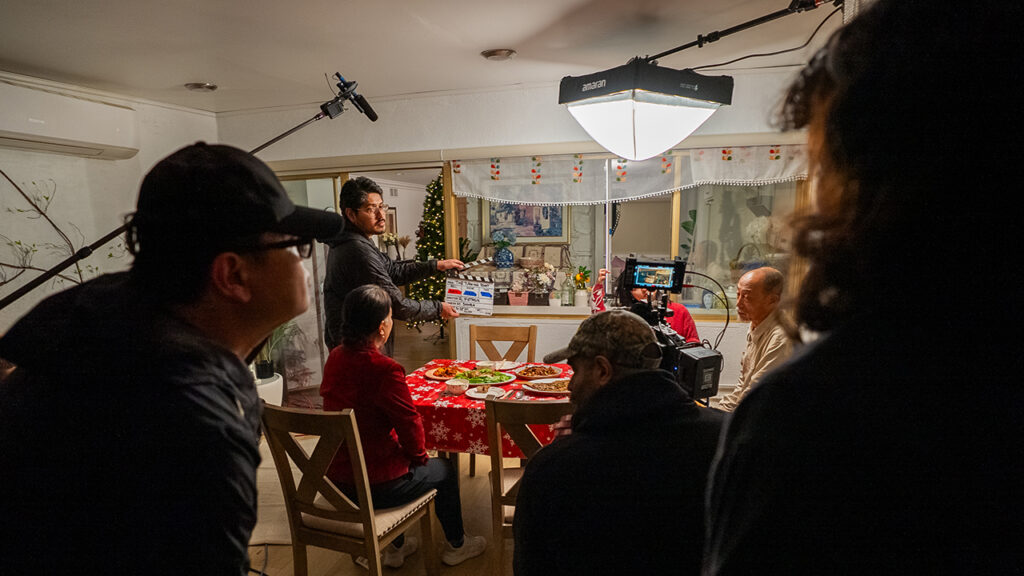
Post-Production as the First Line of Defense: Solving the 3-Day 27-Page Equation

Every editor knows the dread of receiving a drive full of “fix it in post” problems. But when I signed on to edit Turning Point Jesus, I knew that waiting for the drive wasn’t an option. The production parameters were mathematically impossible: a complex, dialogue-heavy 27-page script starring heavyweights Liping Lü and Haiying Sun, all to be shot in just three days.
If I had stayed in the traditional editor’s chair, waiting for dailies, the project would have collapsed. Instead, I leaned on the “Producer’s Mindset” instilled in me by my NYFA instructor Kimberly Ogletree: knowing that a mistake on set becomes a nightmare in the suite. I decided to move the post-production workflow into pre-production.

The “Editing-First” Pre-Visualization
My work began weeks before the camera rolled. I collaborated closely with the director to reverse-engineer the shoot from the edit. We weren’t just shot-listing; we were editing on paper.
I asked questions that usually only arise in the cutting room:
“Do we really need a master shot here, or can we enter the scene directly through the close-up?”
“If we cut the transition in Scene 4, can we save two hours of lighting setup?”
This foresight, which Liping Lü later credited as the reason we delivered feature-level quality, meant that not a single frame was wasted. We shot exactly what we needed to cut. It was a risky strategy—it left little room for error—but it was the only way to survive the schedule.
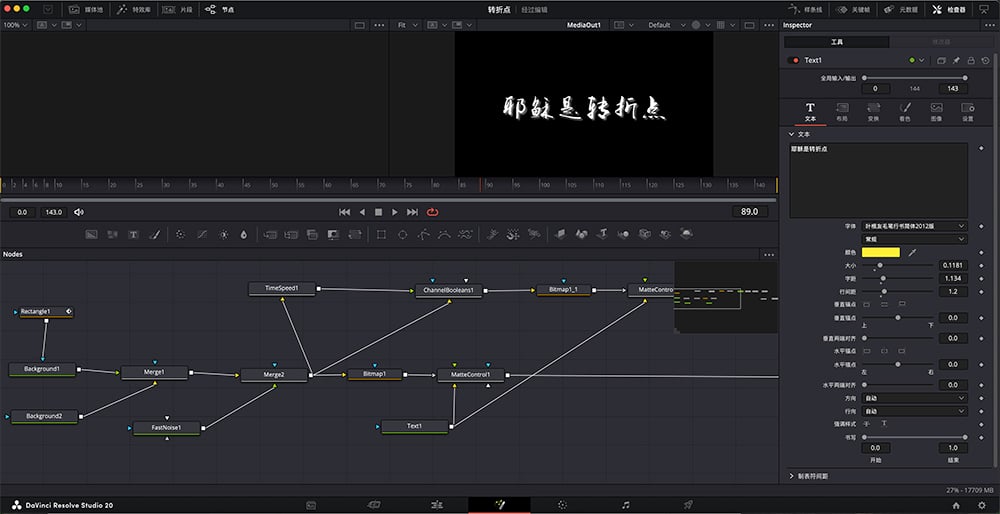
Velocity in DaVinci Resolve
Once production wrapped, the challenge became speed. I used DaVinci Resolve not just for color, but as my primary NLE. The integration was crucial. Haiying Sun, observing the process, marveled at the “speed and precision” of the workflow.
By keeping everything in one ecosystem, I could solve narrative problems visually.

For instance, the script’s original flashback structure had severe logical gaps due to the rushed filming. In a traditional workflow, I might have wasted days locking the picture before realizing the color grades wouldn’t match the mood of the reordered scenes. InResolve, I was able to grade the flashbacks while restructuring them. This allowed me to present “sophisticated creative alternatives”—as noted by the directing team—that fixed the story logic using mood and lighting cues rather than just dialogue.
Color Science as Technical Security
The final piece of the puzzle was preserving the image integrity. In indie filmmaking, the”look” is often destroyed when an offline edit is handed over to a colorist who wasn’t part of the narrative conversation.

I acted as both editor and colorist. Golden Rooster Award-winning cinematographer Rui Zhong, in his review of my portfolio, highlighted this as a layer of “technical security.” Because I understood the color science from the start, I respected the dynamic range and lighting ratios established on set. I wasn’t just fixing exposure; I was ensuring that the cinematographer’s artistic intent survived the post-production pipeline intact.
In the end, Turning Point Jesus proved that in the modern landscape, an editor cannot simply be a technician at the end of the line. We must be strategists at the beginning. By adopting an “editing-first” mindset, we don’t just fix movies; we make them possible.
Enjoying the news? Sign up for the Creative COW Newsletter!
Sign up for the Creative COW newsletter and get weekly updates on industry news, forum highlights, jobs, inspirational tutorials, tips, burning questions, and more! Receive bulletins from the largest, longest-running community dedicated to supporting professionals working in film, video, and audio.
Enter your email address, and your first and last name below!


Responses