

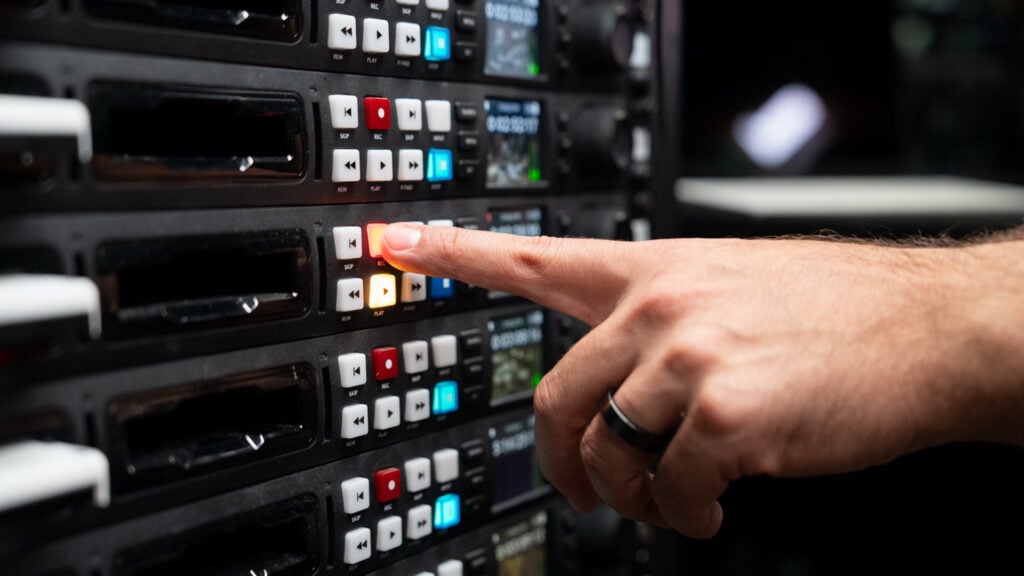
Musora Enhances Online Music Lessons with Blackmagic Design

Director of Production Josh Holliday details workflow providing content to 10 million subscribers from over 100 global musicians.
“It feels like at Musora, we can do anything, it’s just a matter of time.” Words to live by for Josh Holliday, director of production at Musora, a premiere music elearning platform with more than 100 professional instructors offering lessons to over 100,000 active students across five brands: Drumeo (drums), Pianote (piano), Guitareo (guitar), Singeo (singing), and PlayBass (bass).
Driven by two simple goals: create more musicians and keep them playing longer, Musora has grown by leaps and bounds since its inception in 2015. So too has its video production pipeline, keeping pace with new studio builds, an ever growing set of lessons and booming social media content to support the flourishing platform. Musora has 10 million subscribers across its socials, with its viral video of Red Hot Chili Peppers’ drummer Chad Smith, playing along to a Thirty Seconds to Mars song that he’s never heard before, nearing 33 million views.
“With this extra filming cadence and higher camera count, our reliance on a dependable video ingest workflow became vital. Leaning hard into the HyperDeck Studio 4K Pro really unlocked that speed and reliability we need,” said Holliday. “As well as major projects, a lot of refinement has occurred from smaller upgrades. Some include switching from software to the hardware Blackmagic Streaming Encoder 4K for streaming, adding in Blackmagic Cloud workflows and collaborative editing with DaVinci Resolve Studio, outfitting our remote content producers with a dozen ATEM Minis, ATEM Mini Pros and ATEM Mini Extremes, and upgrading video switchers to the latest generation of ATEM Constellation.”
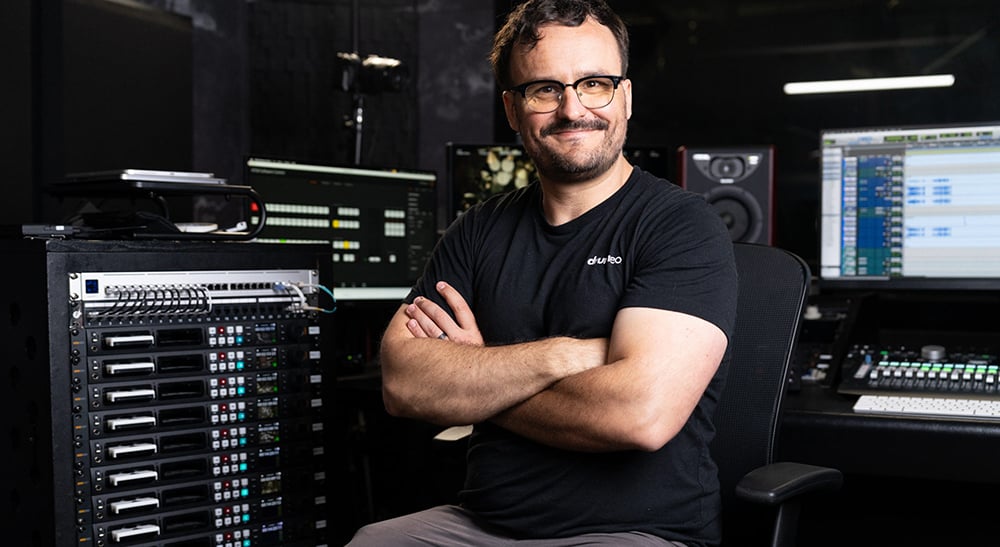
A Production First Approach
Holliday joined Musora with a background in production. “Funny enough, I already had the Pocket Cinema Camera 4K and ATEM Mini Pro at home and used them during my interview. It felt like the right way to introduce myself to a production first company,” he said. “After being hired, I started in an audio engineering role with some video editing responsibilities, which quickly ramped up to studio manager and now director of production.”
In his role, Holliday oversees staff operating three fulltime studios, remote productions across the globe and a post production pipeline for audio and large parts of video, as well as designing and building new studios.
Ingesting 1 Petabyte of Footage in a Year with Automation
“Throughout 2025, we were filming a new play to learn music lessons app. It covers everything one needs to go from having no musical experience to then playing drums, piano, bass, guitar or singing. Naturally, it required a lot of video content, which we filmed almost every day for a year. The content itself features many guest artists and specialists on their instruments,” explained Holliday.
With each lesson featuring up to eight camera angles to ensure students can see the most relevant visual being taught, the data stacked up quickly.
“Leaning into an automated ingest workflow was essential to our success,” noted Holliday. “Not only were we capturing the new content, but we were also still producing our usual content for our YouTube channels.”
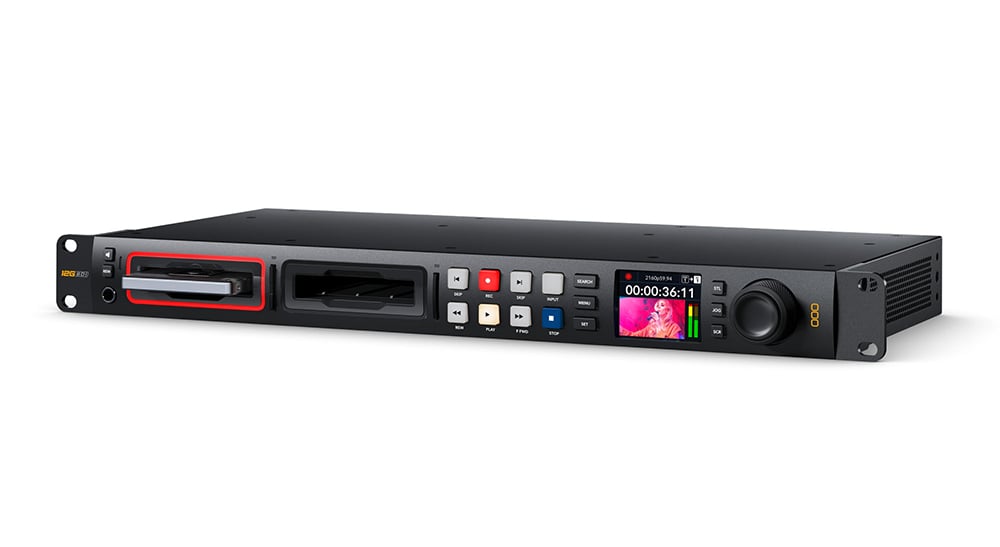
Enter 24 HyperDeck Studio 4K Pro broadcast decks.
“The biggest benefit for us was the HyperDeck’s 10G network connection, accessing it on the network and being able to build the entire automation workflow around it. It really unlocked the speed and reliability we needed,” said Holliday.
Holliday outlined a typical workflow: “A drum lesson on our platform starts with about eight camera feeds. Two main talking angles, an overhead, a footcam and several side shots depending on the content. All signals go first to the HyperDeck for recording, then both the UHD loop out and 1080 status monitor output go to the ATEM 4 M/E Constellation 4K.
“At this point we are recording and seeing every input in the ATEM. The ATEM then feeds all the studio outputs, including the control room TVs, video engineer monitor and director of photography monitor, as well as feeds into the control room for the talent, including confidence monitor, displaying sheet music, an on screen timer or scripts, and teleprompter feed.
“After filming, we simply run our automation pipeline to ingest all the media to our main server, do checksum and playback verification, and provide a report of the automation. This workflow is very impactful and was built custom by Hriman and Tugrul from our in house IT team. We still manually verify content as a last safety measure and to also review any lighting or visual aspects for tweaks before repeating the record process the next day.”
Creating Live On Screen Graphics for Pianote
When teaching piano, a picture in picture (PIP) of the instructor playing is shown to make it clear which keys are being played.
“Originally, we placed a simple graphic above the piano but over time considered whether there was a better way,” said Holliday. “It was one of our engineers, Chris Young, that came up with a unique method to create real time highlights that live underneath the hands of the instructor. This would also reclaim valuable screen space on the image.”
“We originally had another ATEM, but we quickly found that we maxed out the outputs. The ATEM 4 M/E Constellation 4K was a major upgrade for quantity of inputs, scaling on every input, output count and the internal functions we utilize,” explained Holliday. “Now, to achieve our PIP effect, we use several ATEM chroma keys and mix engines to isolate the layers, then recombine them to produce the final image. Given the ATEM has so many features built in, we were able to connect the tech with some creative thinking to make it work.”
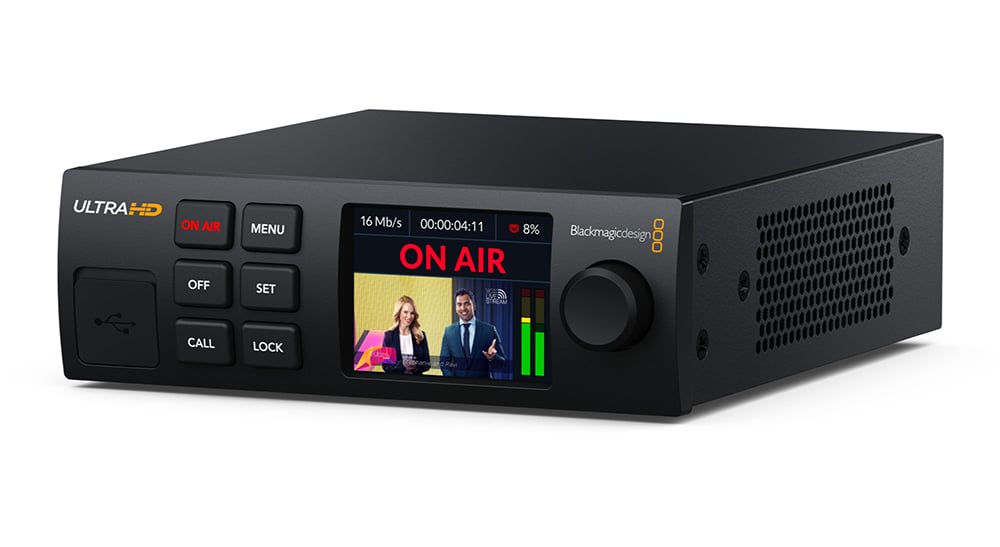
Problems to Solve
With the rapid increase in production came problems to solve. “When it comes to video production, knowing first the problem you want to solve or the client you best want to serve is the first and best thing to answer,” cited Holliday. “Do you want to make content as cheap as possible? Do you want to increase the speed or quality of what you are already doing? Do you need to expand by attracting clients through better quality, access to productions or global workflows?
“Once you know what you’re aiming to do and the limitations you’re facing to get there, it makes it easier to focus and identify the technology to achieve that. The solution you need could be the phone in your pocket with the Blackmagic Camera app, or it could be 40 cameras, a bunch of HyperDecks, 8K switchers and a 3,000TB server, or something in between.”
“Perhaps I have some personal bias given I’ve been working with Blackmagic for many years, but the products themselves solve problems that we need to solve,” he added. “Whether it’s reliability, straight up functionality, or just the approach Blackmagic takes in terms of listening to end users and how they incorporate that feedback into their designs, Blackmagic just makes sense to us.”
On what he’s most excited about for the future, Holliday highlights that despite the accelerated growth and success, this is just the beginning at Musora.
“We just launched a brand new learning platform across all five instruments. We’re working with more of the world’s biggest artists, such as Phil Collins, and even musical celebrities, including John Stamos,” he concluded. “But at the heart of it all is that it’s all in the name of making more musicians and keeping them playing longer. My parents gave me a drum kit one Christmas many years ago. It was totally unexpected, but what was more surprising was the way music changed my life. Being part of a company that seeks to do the same for others is truly inspiring.”
Enjoying the news? Sign up for the Creative COW Newsletter!
Sign up for the Creative COW newsletter and get weekly updates on industry news, forum highlights, jobs, inspirational tutorials, tips, burning questions, and more! Receive bulletins from the largest, longest-running community dedicated to supporting professionals working in film, video, and audio.
Enter your email address, and your first and last name below!


Responses