

Large Format Capture with URSA Cine and PYXIS

How Hangman filmed a one woman show at Wilton’s without losing the room using Blackmagic Design.
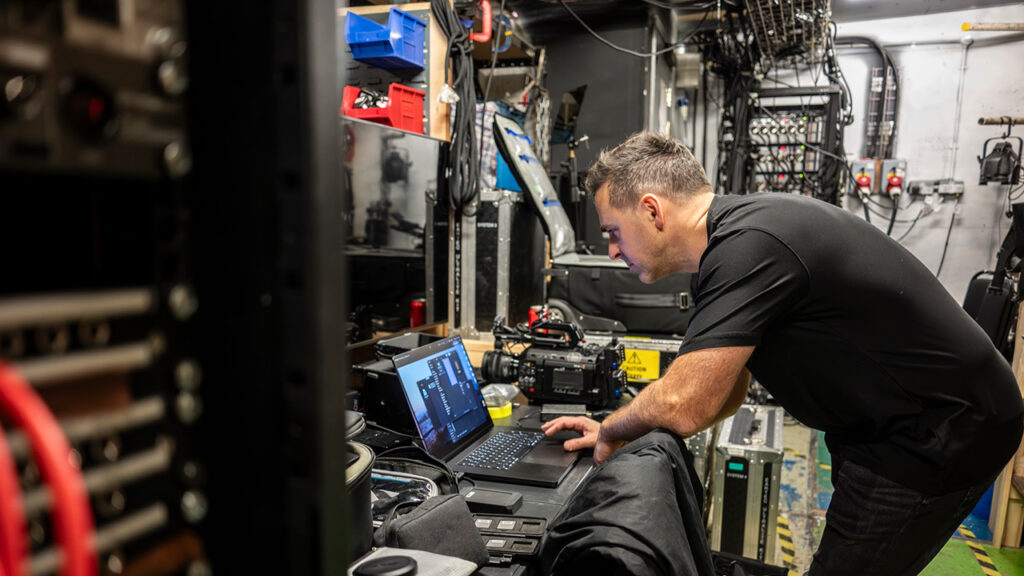
Director of Photography James Tonkin of production and post studio Hangman filmed the stage production “Musik,” employing a multicamera package that included the Blackmagic URSA Cine 17K 65 and Blackmagic URSA Cine 12K LF digital film cameras.
The 60 minute, one woman performance was captured across multiple nights in one of London’s oldest surviving theaters.
“Venues like Wilton’s bring so much atmosphere,” Tonkin said. “If you have a nice venue, you should acknowledge the architecture and make it part of the art of the piece. I’m always looking to make sure it doesn’t decay away into darkness. I want to draw something out of the shadows so you can see the environment you’re in, because I think it becomes art, too.”
Filming across three shows, Tonkin’s goal was to deliver coverage that balanced both spectacle and subtlety. “When working with a one person performance, it’s really about making the viewer feel like they’re in the room,” he said.
As Director of Photography, Tonkin ensured enough coverage for a 60 minute edit of the show. “We needed enough angles to keep the energy alive without losing that sense of presence,” he said. “We had one handheld camera off to the left of the stage to allow a little bit of freehand energy. Other than that, everything else was a combination of tracking or long lens cameras. All the cameras were set so they could move slowly rather than operate too chaotically.”
Across the three performances, Tonkin managed up to 16 unique camera angles, ensuring no overlaps between positions and giving the editor maximum coverage for continuity. “We varied a couple of A and B angles so we were closer for one performance,” Tonkin said. “I shot two cameras one night, eight on the matinee, and then another six on the following shows. That gave us 16 camera angles. It was key to make sure none of those angles were doubling up.”
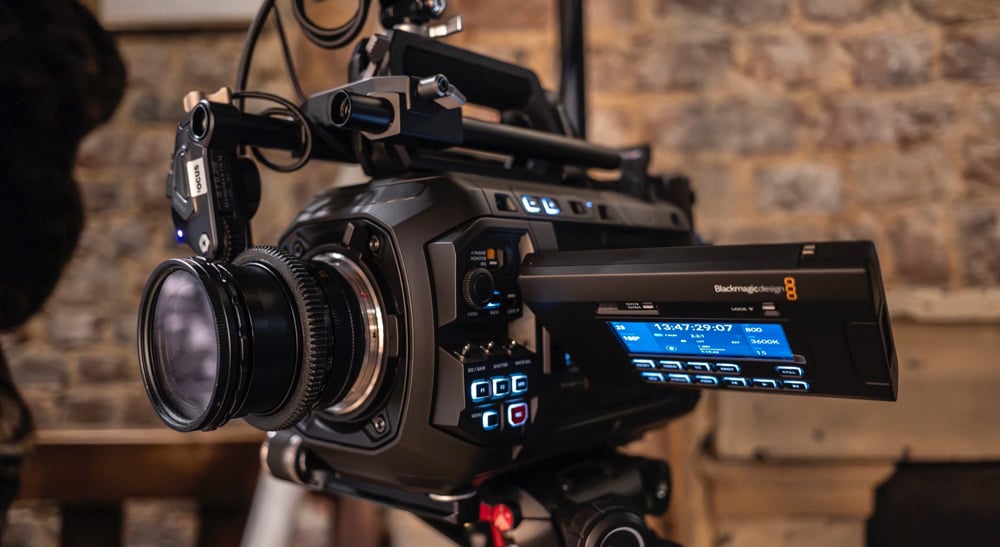
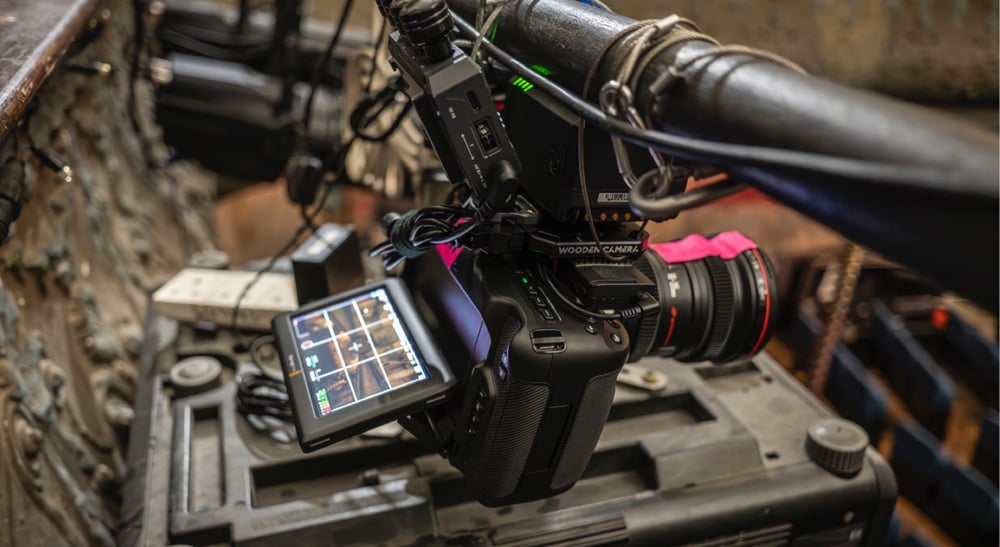
The production deployed an ambitious eight camera package, comprising one URSA Cine 17K 65 and one URSA Cine 12K LF, as well as one Blackmagic PYXIS 12K, three Blackmagic PYXIS 6K, and two Blackmagic Pocket Cinema Camera 6K digital film cameras.
“We were lensing this as a full frame show, so sensor sizing and being able to intercut across cameras was important to me,” Tonkin said. “All of these cameras share the same or similar sensors, which makes intercutting them incredibly straightforward.”
Each body brought a specific ergonomic advantage and was deployed accordingly. “The PYXIS box body is perfect for a slider, a fixed rig or going into a SHOTOVER or gimbal. It can transition and be used handheld, on shoulder or on a tripod. The URSA Cine bodies I like to keep for bigger camera builds, usually on sticks or a heavier grip with longer lenses,” he explained.
Tonkin has a real love for large format. “I’m really, really wedded to it,” he said. “In a small, intimate environment, a larger sensor size can draw you into the performance because you can go closer and tighter with your lensing but still feel a bigger field of view. You still feel the space.”
“On some of the longer lenses we went back to Canon still lenses because they have great sharpness, they cover full frame, and they’re quick to make ergonomic for a live show,” he said. “We also had cine zooms and cine primes where needed, so we had full lens coverage for those full frame looks. It’s more immersive.”
Acquiring in Blackmagic RAW, everything was filmed in Blackmagic Generation 5 Color Science, keeping color management straightforward.
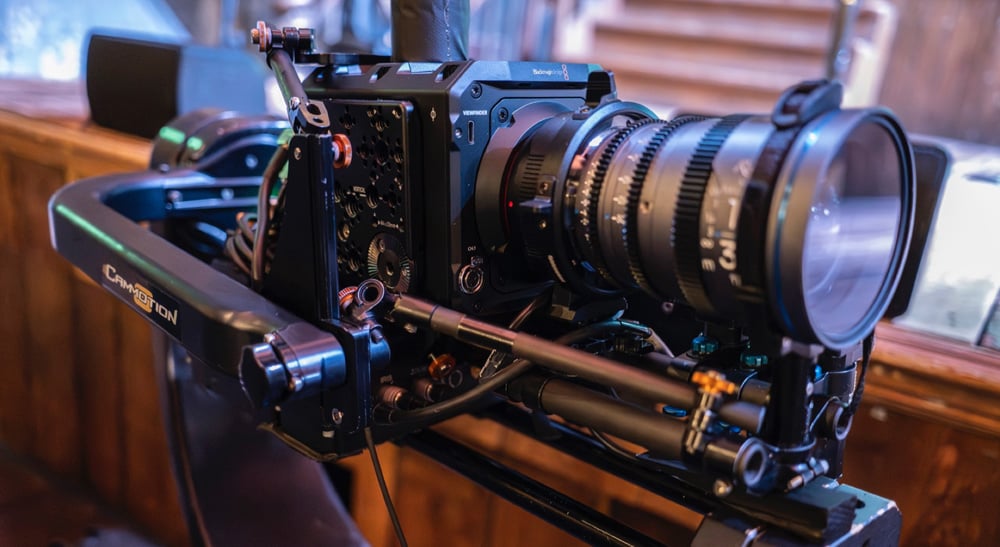
“The RGBW sensor in Blackmagic’s current lineup of cine cameras is one of my favorites I’ve ever worked with,” noted Tonkin. “The images it delivers provide incredible latitude both in production and, most importantly, in post. There’s a quality and consistency that gives me confidence, which is why I push to use these cameras as much as I do.”
“Shooting 17K full sensor used to sound like data madness,” Tonkin said. “But the compression efficiency of Blackmagic RAW keeps file sizes sensible and manageable, even when capturing the full sensor readout. However, the real magic is that I can scale down to 8K in camera when required without any compromises to image quality or the field of view.”
The live performances were monitored using an ATEM SDI Extreme ISO live production switcher, providing a multiview gallery for the director and allowing Hangman to make exposure and color decisions in real time.
“I’ve been getting more obsessed with camera control every time I do a multicam. That has really opened up in the last six months,” Tonkin said. “The URSA Cine and the PYXIS have Ethernet and WiFi, and the Blackmagic Camera app now allows multicam camera control. The surprising ease of integrating is something I’ve enjoyed.”
“We didn’t need to do a live switch for this project,” he continued. “But the ATEM did give us a simple way to build a gallery so everyone could see every feed, both wired SDI and wireless. It was quick to set up, and within hours we had a fully functioning multicam monitoring solution. Most feeds were straight SDI; some were wireless because of the venue, and the ATEM saw everything straight away with no patching problems.”
Hangman ran a 24 inch monitor for confidence to nuance the image. “I could tweak ISO by a stop here or there or dial in the color temperature,” Tonkin said. “It let me see things as we were shooting rather than seeing it two weeks later in post and wishing I could have changed it.”
Looking ahead, Tonkin is excited by the potential of pairing these larger RGBW sensors with new generations of full frame and 65mm cine zooms. “We’re finally pushing live event cinematography into true large format territory,” he said. “The challenge then becomes lens pairing and expanders. The market is moving and more full frame and 65 format cine zooms are coming. It’s exciting because it pushes live event cinematography forward. We’re using much bigger sensor sizes than before, and that changes how the room feels on screen.”
Enjoying the news? Sign up for the Creative COW Newsletter!
Sign up for the Creative COW newsletter and get weekly updates on industry news, forum highlights, jobs, inspirational tutorials, tips, burning questions, and more! Receive bulletins from the largest, longest-running community dedicated to supporting professionals working in film, video, and audio.
Enter your email address, and your first and last name below!


Responses