

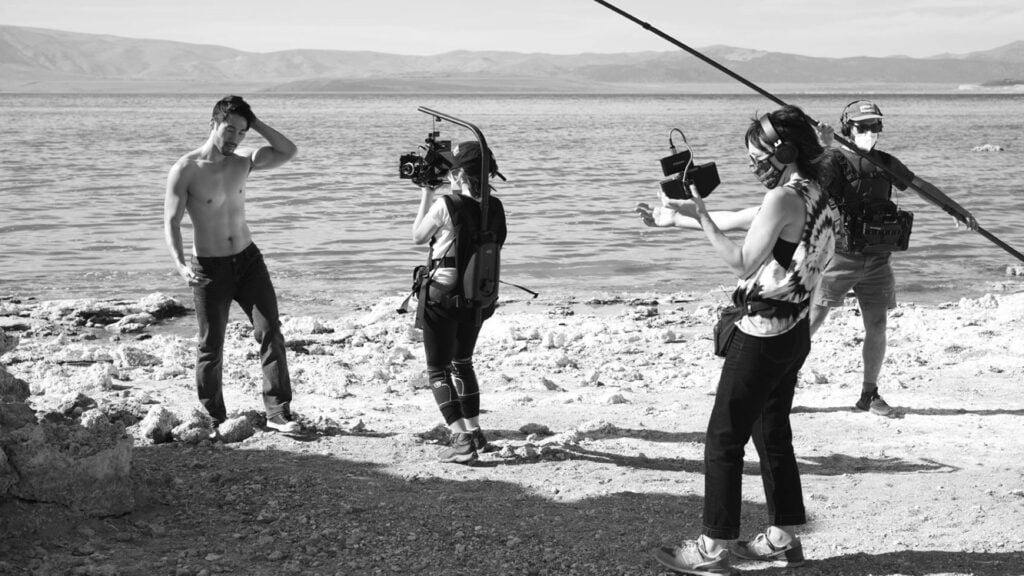
Indie Road Movie Where in the Hell Shot with Pocket Cinema Camera 4K

Colorist blends vintage film looks to shape the desert Western feel.
Blackmagic Design today announced that the independent feature film “Where in the Hell” was shot using the Blackmagic Pocket Cinema Camera 4K digital film camera and graded using DaVinci Resolve Studio editing, grading, visual effects (VFX) and audio post production software.
Directed by Laramie Dennis, “Where in the Hell” follows a pair of defectors from the crumbling Los Angeles film industry who set off on an unlikely road trip to track down a missing girlfriend. The film was born from necessity. Dennis had planned to shoot a different movie in Canada until the pandemic closed the border. “I started from scratch and dreamed up a road movie we could shoot in the US,” she said. She built the production around California desert locations, from a vintage motel in Lee Vining to Mono Lake and the ghost town of Calico, shooting in blocks across 2021 and 2022.
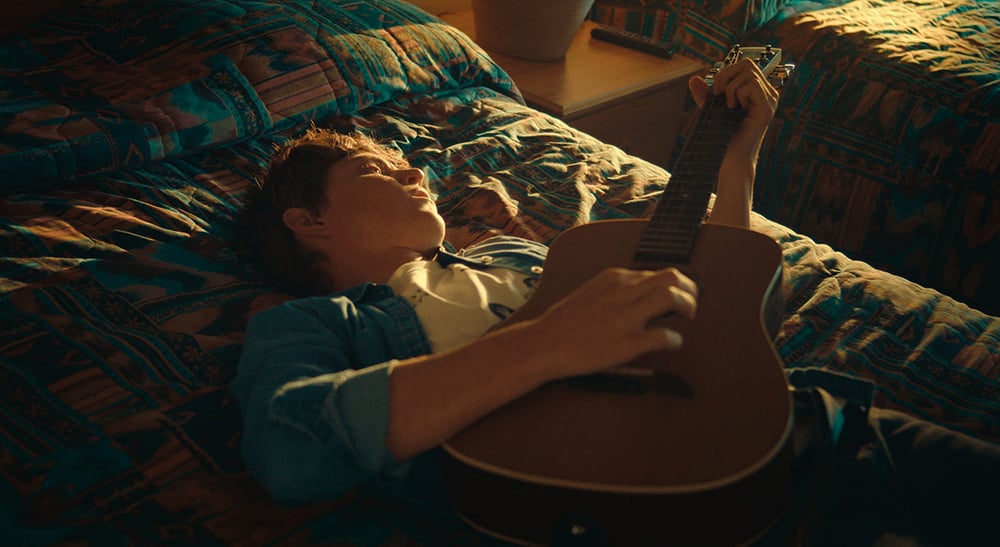
Cinematographer Marilyn Flores shot the film handheld to carry the restless feeling of life on the road. “We didn’t want a Hallmark looking movie. We wanted a modern classic look, and the landscapes to be a huge part of the story,” said Flores. “This film was not going to feel perfect, but rather realistic, raw, and even a bit shaky.” The two leaned on references like “Paris, Texas,” “American Honey,” and “Y Tu Mamá También” to find a tone that felt cinematic but never too clean.
For a shoot with a small crew and no focus puller, Flores needed a camera she could carry all day and rig almost anywhere. “I proposed this knowing we were going to be outside traveling and walking, and I was not going to have a full camera team to help me,” she said. “The advantages of the Pocket Cinema Camera 4K were weight, size, durability, and menu familiarity.” The compact body went everywhere the production did. “Its size and weight helped with mounting it on top of a car, on the side of a car window, or going on a sixteen foot ladder,” Flores said.
On the cut, Dennis’s producing partner and editor Ricky de Laveaga worked in DaVinci Resolve Studio after years spent across AVID, Final Cut Pro, and Premiere. “I love how Resolve respects the craft, the art form, of movie editing,” he said. “Its interface sensibly reflects the history and tradition of both film and video editing.” For an editor who also writes software, the appeal was direct. “This is the highest praise I can offer. Resolve makes sense to me,” de Laveaga said. “Now whenever I use any other editing software, I miss Resolve immediately.”
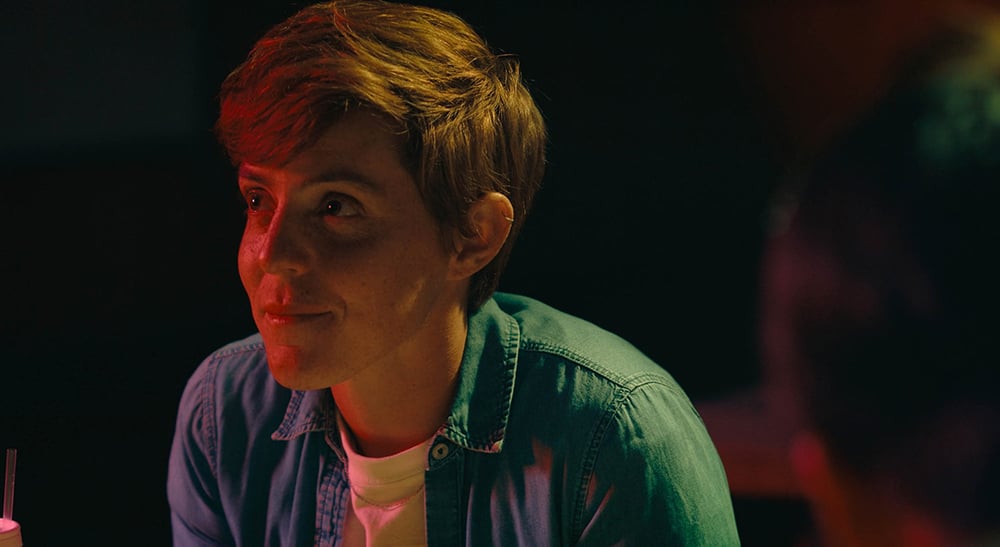
The grade went to colorist Temesgen Gebremeskel at Point360 Post Production Studios, who carved out the film’s look in DaVinci Resolve Studio. “I went through a handful of my custom Kodak neg and print LUTs and found the combination that got us the right foundation,” he said. “The secret sauce ended up being the three strip Technicolor look. I mixed it with the Kodak neg and print LUT until we were getting a lot of beautiful and unique colors that ended up paying homage to old Westerns.” The camera gave him room to work. “The dynamic range and sensor latitude helped the grade in terms of keeping as much detail from the sky to the ground as possible,” Gebremeskel said.
That latitude mattered because of how hard the camera had been pushed on location. “We pushed the Pocket 4K to another level, and even Mesgen and his team were surprised by how much quality had been captured on each take,” Flores said.
Gebremeskel leaned on a couple of DaVinci Resolve Studio tools to move quickly through a feature’s worth of shots. “I absolutely love the Magic Mask. It has been a life saver across all types of projects, from commercials to episodic to features,” he said. “The recent addition of Node Layers has changed my workflow,” he added, describing how it lets him ripple a base grade across a whole scene without the slower work of grouping shots by hand.
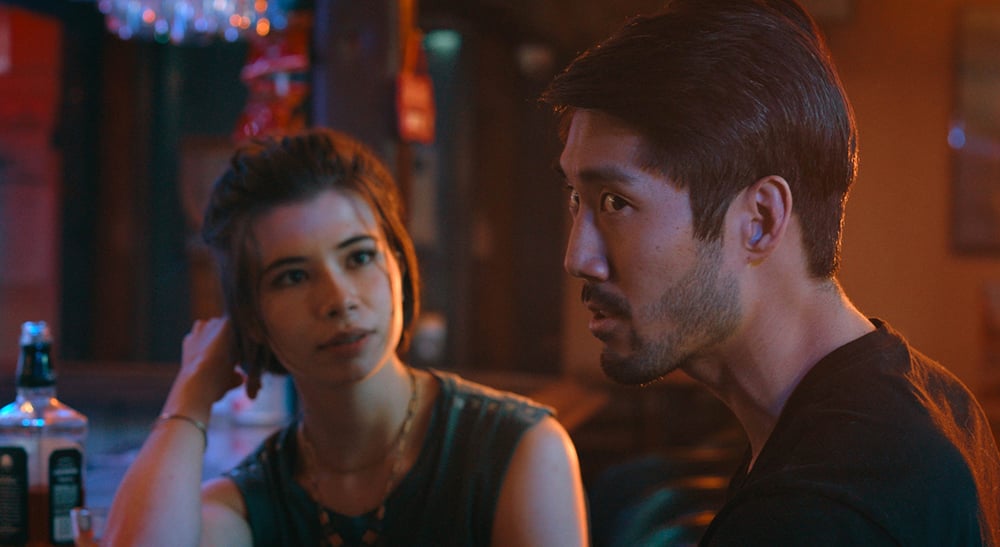
For Flores, the camera was inseparable from what the film became. “I took the risk of shooting my first feature on my own Blackmagic Pocket Cinema Camera 4K to capture the punk, indie, raw, free spirited feeling of the movie,” she said. “‘Where in the Hell’ wouldn’t have felt the same without it. The Blackmagic gave us the best of both worlds, a filmic look and a budget friendly, lightweight package.”
“Where in the Hell” is now available to buy or rent on Amazon.
Enjoying the news? Sign up for the Creative COW Newsletter!
Sign up for the Creative COW newsletter and get weekly updates on industry news, forum highlights, jobs, inspirational tutorials, tips, burning questions, and more! Receive bulletins from the largest, longest-running community dedicated to supporting professionals working in film, video, and audio.
Enter your email address, and your first and last name below!


Responses