

Immersive Studio Metaverse Stage Innovates Storytelling with URSA Cine Immersive

Two new narrative short films captured with URSA Cine Immersive.
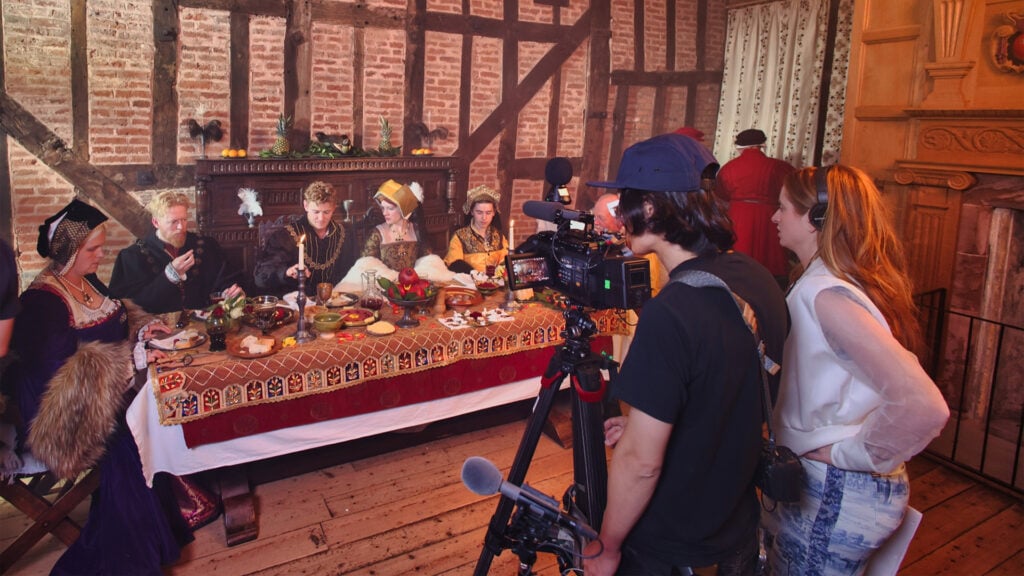
Whether transporting viewers back to 16th century England or into the wild west of Colorado, immersive studio Metaverse Stage, creator of the Spatial Film app for Apple Vision Pro, is using the power of immersive storytelling to connect with audiences. For its two latest narrative projects, “Henry VIII in Warwick” and “Aspen Cowgirl,” Metaverse Stage used the Blackmagic URSA Cine Immersive digital film camera as its tool of choice.
According to Metaverse Stage Producer Hugh Hou, “For both productions, the URSA Cine Immersive proved to be an incredibly reliable and versatile camera system. The high dynamic range and dual 8K RGBW sensors handled the most challenging lighting situations beautifully, from the candlelit interiors of ‘Henry VIII in Warwick’ to the shifting sunlight in ‘Aspen Cowgirl.’
“The URSA Cine Immersive gave us the flexibility of a true cinema camera with the practical usability needed for immersive field production, delivering consistent color, dynamic range and control, even in unpredictable environments.”
Time Traveling with “Henry VIII in Warwick”
“For us, ‘Henry VIII in Warwick’ represents what immersive storytelling does best: not just transporting people to places but through time itself. The real magic of immersive video isn’t simply presence; it’s temporal presence, which allows the viewer to stand inside a moment in history and feel it unfold around them,” explained Metaverse Stage Director Keeley Turner. “For this project, we wanted to use immersive filmmaking to make the distant past feel alive again.”
“Henry VIII in Warwick” begins with the ghost of the British monarch addressing the audience directly, breaking the fourth wall in a Shakespearean monologue and inviting them to take a seat at his table. Through his voice, viewers are guided into the past, where young Henry and his court act out a dramatized story behind a lost Tudor pendant recently discovered in Warwickshire. Turner noted, “It’s a narrative built on real history and unanswered questions, and the immersive format lets us tell it in a way that feels both personal and tangible. Everything you see in 3D, 180 degrees is real because the human eye and brain can tell when something isn’t, especially in 8K per eye HDR.
“We filmed at Harvington Hall, an authentic historical site near Warwick Castle that still carries the texture of the Tudor era. The costumes came from the Royal Shakespeare Company, our cast were classically trained theater actors with screen credits in hit series like ‘Outlander’ and ‘Bridgerton,’ and every dish on the table was real food prepared by a historian chef. Nothing was plastic or for show. The actors ate by real candlelight accompanied by live Tudor music in a real Tudor Hall filled with history. That authenticity anchors the illusion, making the viewer truly believe they’ve traveled through time.”
She continued, “Immersive filmmaking gives us the ability to achieve something impossible in a conventional format. It transforms the viewer from an observer into a participant. You don’t just watch King Henry VIII, you meet him. You share the same space; you feel the warmth of the fire and hear the echo of his voice in the hall. That sense of embodied presence changes everything. It turns history from something you study into something you remember living.
“For us, ‘Henry VIII in Warwick’ isn’t just a film; it’s an experiment in what storytelling can become when technology, history and emotion align. It shows that immersive cinema can do more than entertain. It can preserve culture, inspire empathy, and make the past feel present again.”
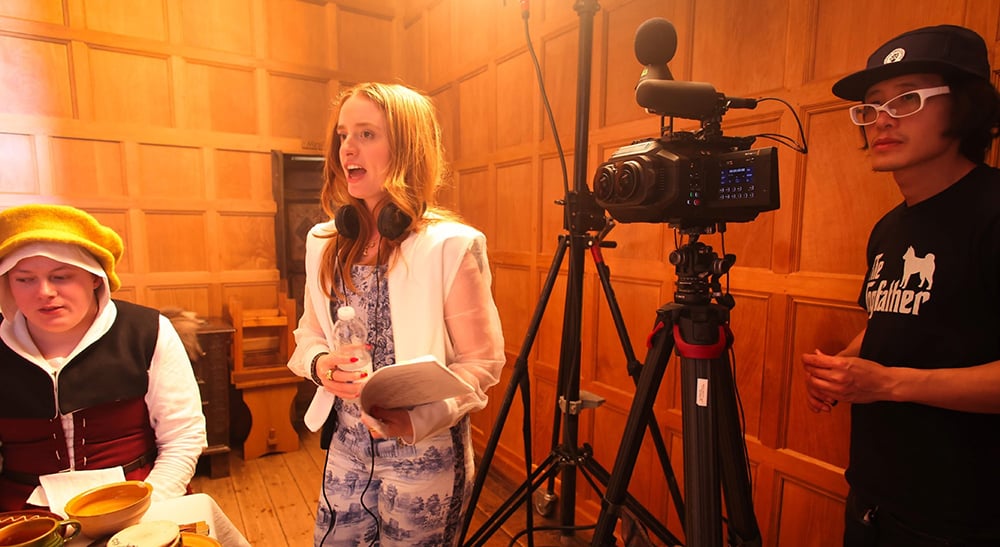
The team chose to shoot the entire dinner sequence at night just as the story unfolds, relying on very limited light sources. Hou detailed, “Because we wanted the experience to feel completely real, we didn’t want to rely on the usual ‘day for night’ techniques that often make historical scenes look artificial or overlit. Instead, we embraced the natural darkness and used only light sources that would have existed in the Tudor period.”
“Filming inside a centuries old hall that had no practical lighting was a real challenge. Our only true practicals were candles and a fireplace, which meant we had to get creative to balance authenticity with visibility in 180 degrees. The dining hall was located on the second floor, and we placed a high powered light outside the window as the key light to create a believable moonlight effect, keeping things soft, cool and natural,” he continued. “To fill the scene, we used two LED panels with custom flicker settings to simulate candlelight movement across the actors’ faces, which added life to the image while staying true to the atmosphere of the period. Since the entire environment was so dim, we shot at higher ISOs, around 800 to 1,000, on the URSA Cine Immersive. The camera’s large format sensor and cinematic dynamic range handled it beautifully, giving us clean shadows and detailed highlights.”
Hou noted one of the biggest advantages during the shoot was the camera’s accurate false color monitoring: “It became an essential tool for communicating with our gaffer on set, allowing us to quickly match exposure levels and achieve exactly the lighting balance we envisioned. Especially when working in mixed light, such as moonlight, candlelight or reflected firelight, having that level of precision gave us full confidence in what we were capturing.”
Visiting the Wild West with “Aspen Cowgirl”
“Aspen Cowgirl” follows Ellie, a young woman searching for meaning, and Wade, a rancher living by old values in a fast changing world. Their friendship unfolds not through words but through shared experiences: open roads, horses, and the rhythm of ranch life. Turner noted, “Filming this story in immersive 3D 180 allows viewers to ride along in the back of the old pickup truck, feel the wind on their face, and see the horses up close as they move through the fall colors of Aspen. It’s about letting audiences experience the freedom, texture and beauty of the West, not as tourists, but as participants.”
She continued, “Immersive filmmaking lets us share that world honestly. There are no green screens or artificial sets, just real people, real landscapes and real moments of connection. You can see the dust kick up from the horses, the sunlight cutting through the aspen trees, the expression on Wade’s face as he teaches Ellie how to handle a horse. That closeness builds empathy and turns the viewer from an observer into someone who feels part of that world.”
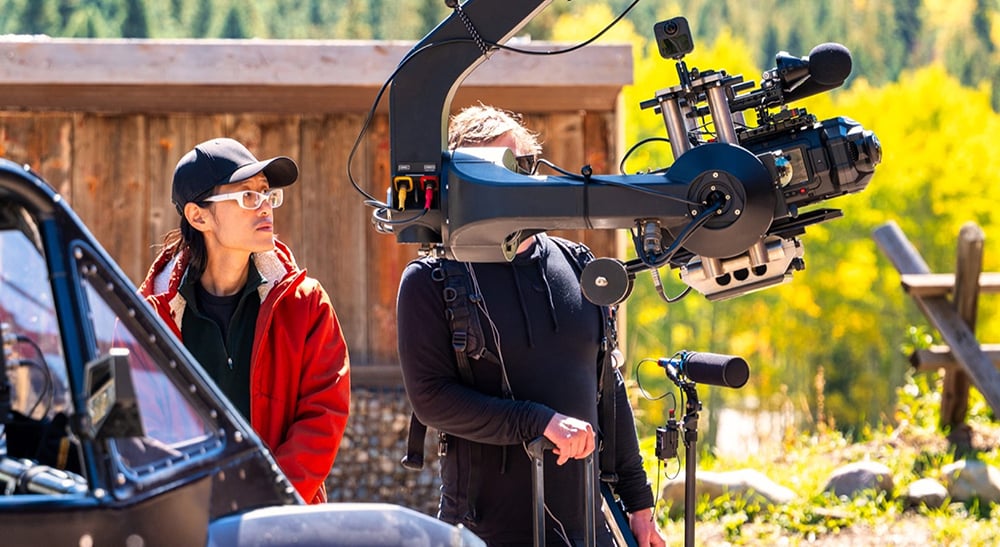
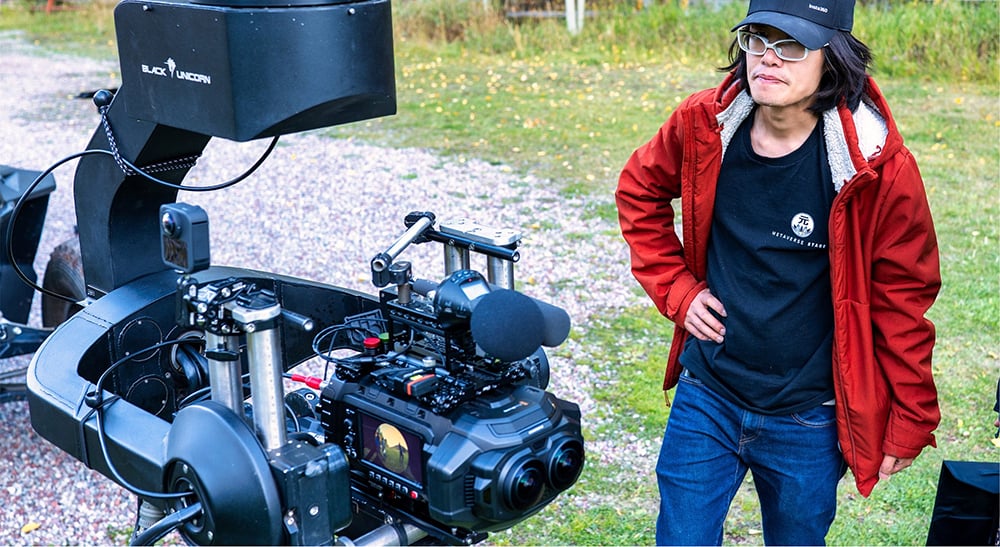
With part of the story taking place on horseback, the Metaverse Stage team faced unique challenges with the camera’s positioning and rigging, needing to shoot elevated for the ideal eye height for the immersive experience and keep everything perfectly smooth while traveling over rough terrain.
“Our goal was to make the audience feel like they were truly part of the journey, riding alongside the characters rather than just watching them. To achieve that sense of presence, we positioned the URSA Cine Immersive camera at the eye level of the riders, so viewers experience the story from their perspective as if they’re on horseback themselves,” explained Hou.
“Since we were filming on rough country roads and narrow horse trails, stability was a huge challenge. To capture the riding sequences, we used an offroad Polaris RZR equipped with a Pursuit Crane, enabling smooth tracking shots alongside the riders while maintaining a natural viewing angle. To eliminate vibrations, we used a special damping system that absorbed every bump and shake, resulting in a smooth, comfortable viewing experience inside Apple Vision Pro without seeing the camera rigging,” he added.
Hou noted that the entire setup was intentionally kept small and agile so the team could travel deep into forest trails and open fields without disturbing the horses or breaking the authenticity of the scene. “Shooting this way allowed us to capture the real environment from a perspective that feels completely immersive. The result is a cinematic yet intimate experience where viewers don’t just see Aspen’s landscape, they feel it, surrounded by its beauty and movement, as if they were part of this timeless Western world,” he said.
He concluded by noting that the URSA Cine Immersive’s built in ND filters were crucial when shooting in the diverse Colorado landscapes: “We were constantly moving between dense forest trails and open fields, where the lighting could change dramatically within seconds. Being able to adjust the internal ND filters on the fly without interrupting the rig, or the flow of the scene, saved a tremendous amount of time and maintained the natural rhythm of the shoot.”
Enjoying the news? Sign up for the Creative COW Newsletter!
Sign up for the Creative COW newsletter and get weekly updates on industry news, forum highlights, jobs, inspirational tutorials, tips, burning questions, and more! Receive bulletins from the largest, longest-running community dedicated to supporting professionals working in film, video, and audio.
Enter your email address, and your first and last name below!


Responses