

Award Winning Filmmaker Carrie Stalk Shoots NYC on PYXIS 6K

Stalk discusses shooting anamorphic and capturing a naturalistic feel on her new film “The Salt Between Us.”
Carrie Stalk is a New York City based award winning filmmaker, director, DP, producer and creative director who has had her films, TV series, commercials and live music productions seen around the world. Her short film “Cyclone” was a winner at the Katra Film Series in 2021 and a three time winner at the Indie Short Fest in 2020.
Known for creating intimate, character driven films, Stalk brought practical technical expertise using Blackmagic Design cameras and DaVinci Resolve Studio, along with comprehensive lighting design experience, to create her latest film “The Salt Between Us.” On the film, she took full advantage of the Blackmagic PYXIS 6K digital film camera’s full frame capabilities to beautifully capture the story of Mia and Eden, two lifelong best friends who reckon with the romantic tension they have long avoided when one finally confesses her feelings.
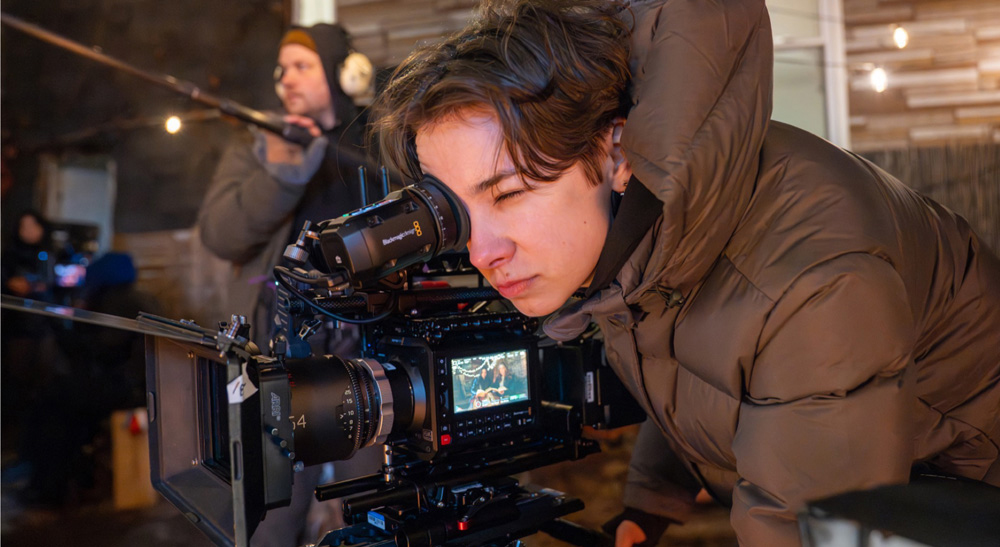
Stalk explained her approach to making her latest film: “‘The Salt Between Us’ was a labor of love for every person involved. Our goal was to put queer longing on screen but avoid the sad ending that it typically comes with in Hollywood.
“Aesthetically, the look we were going for was naturalistic, nostalgic, intimate, mixed hard/soft light and real world color separation based on enhancing the practical lighting (i.e. firelight, sunlight, moon). When I say ‘naturalistic’ I really mean that the environment should feel like one where the characters are candid and unreserved with each other. It was important to me that the audience felt like they were dropped ‘in media res’ (in the middle of things) and that it felt like the scene had been going on for a while before we’re witnessing it.”
To capture that look, Stalk shot anamorphic with the PYXIS 6K. “Making the choice to shoot on PYXIS was an easy one; it has a large format sensor with Blackmagic’s top notch color science, Blackmagic RAW capture, and a true 6:5 anamorphic aspect ratio, built in monitors with optional OLED viewfinder, and an accessible rental price, which opened up the opportunity for us to shoot on more expensive lenses that wouldn’t otherwise be available to us,” she noted.
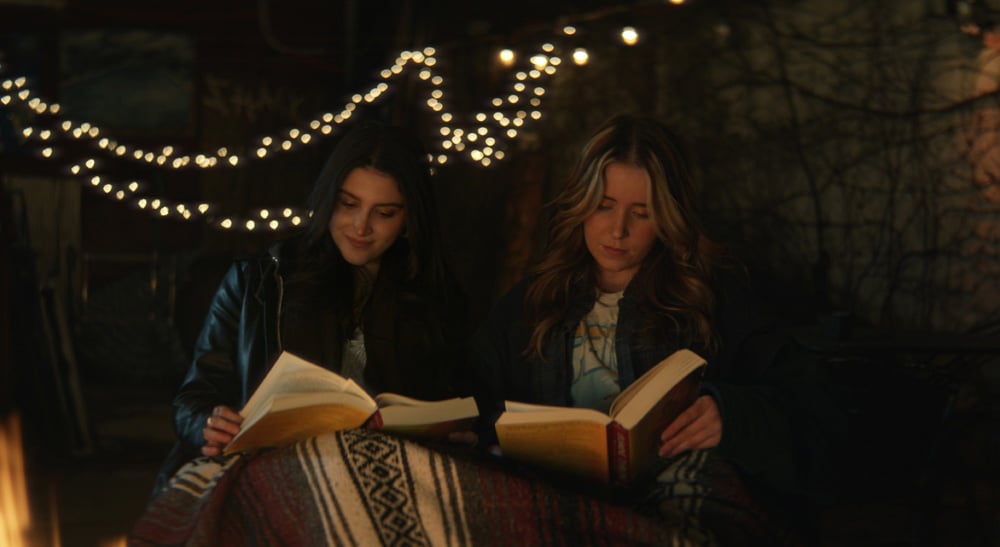
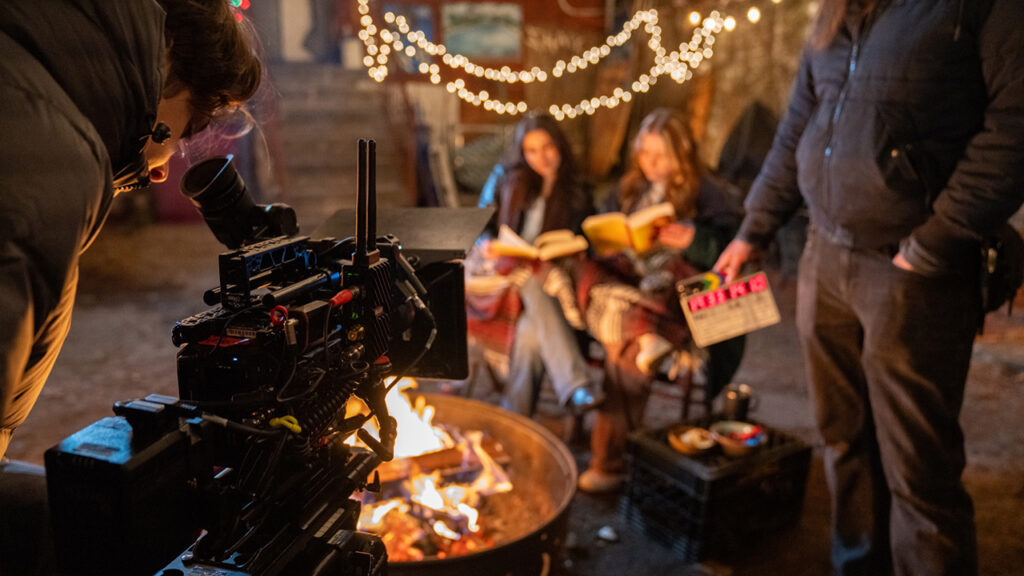
The film’s opening scene was shot outside on a cold winter night in the city by an open fire with colored lights in the background. “The fire pit scene is one of the most emotionally charged in the film, so it was crucial that the camera didn’t get in the way; it needed to feel invisible, like we were eavesdropping on a private conversation between our characters,” Stalk said.
“The PYXIS handled the extreme contrast even better than expected,” she continued. “We were shooting at night, outside, lit primarily by real firelight and some subtle practical motivation, and I needed a sensor that could hold detail in both the highlights of the flames and the shadows of the actors’ faces. The camera’s RAW capabilities and dynamic range gave us that flexibility. We shot on the Atlas Mercury anamorphics which, when paired with the smooth tonal roll off from the PYXIS sensor, created this painterly diffused look that matched the vulnerability between the characters without feeling overly sharpened or polished.
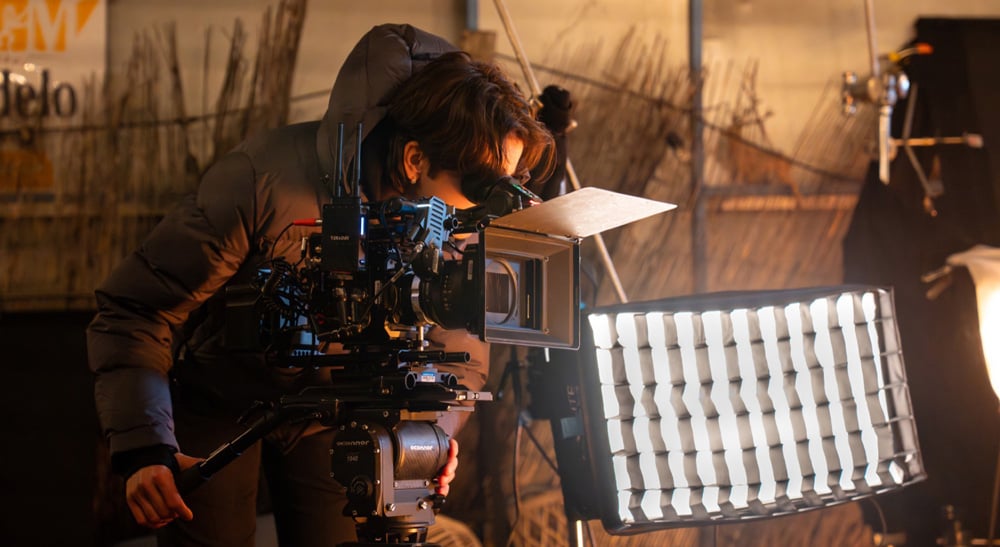
“Shooting in New York City often means that you’re working with small spaces and sometimes, given the space constraints, it can force you to change blocking or choose a focal length that might not be your first choice given the emotion of a moment/scene. Knowing this, and that I wanted to shoot more compressed on this piece, I wanted to maximize space at our smaller locations and give myself more options for lensing that only a large format sensor could give. With the locations in mind, I wanted to give our G&E team (Gaffer Ben Hartzell and Key Grip Steff Berek) and our sound mixer (Blaine Bailey) more space to work above and below frame, so our options were to either shoot with a crop in mind or to shoot anamorphic.
“Enter PYXIS. Ultimately, we were able to dovetail our desired look and our practical limitations, opting to shoot on the PYXIS in Blackmagic RAW with a 3:1 compression ratio in the 6:5 anamorphic format on Atlas Lens Co.’s Mercury 1.5x lenses. With the 6:5 aspect desqueezed by 1.5x being an aspect ratio of 9:5 (1.8) and my desired final aspect ratio being 2:1 (my favorite), we had the best of both worlds, giving us anamorphic qualities with some vertical space to play with reframing in post. Given most of our movie was shot in high dynamic range situations (night exterior with a real fire, day interior with sunlight through windows), choosing to shoot at the low base ISO in Blackmagic RAW at a 3:1 compression ratio was key to ensuring we had as much clean data as possible.”
Enjoying the news? Sign up for the Creative COW Newsletter!
Sign up for the Creative COW newsletter and get weekly updates on industry news, forum highlights, jobs, inspirational tutorials, tips, burning questions, and more! Receive bulletins from the largest, longest-running community dedicated to supporting professionals working in film, video, and audio.
Enter your email address, and your first and last name below!


Responses