

Amazon Prime Documentary Andata e Ritorno Relies on Blackmagic Design

DaVinci Resolve Studio and Blackmagic Cloud help bridge production and post across Rome and Florence.
Produced for Trenitalia and now available on Amazon Prime Video in Italy, the documentary Andata e Ritorno follows real train passengers across the country, moving beyond the journey itself and into their homes, work, training, music and relationships.
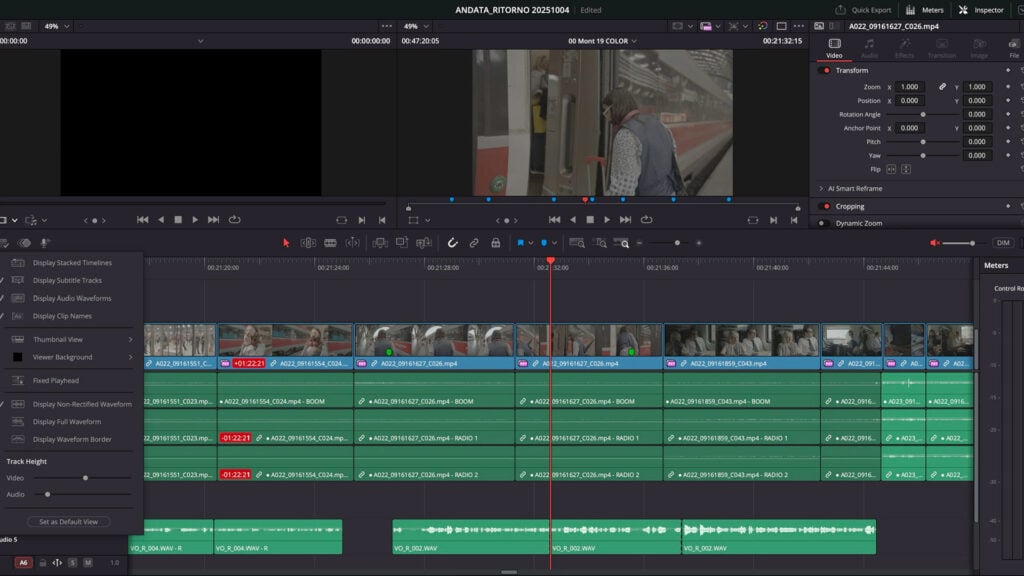
Shot on the Blackmagic URSA Cine 12K LF digital film camera by cinematographer David Becheri, the production generated around 12TB of raw footage, and post production was completed in DaVinci Resolve Studio. With the team split between Rome and Florence, footage was uploaded to a shared DaVinci Resolve project via Blackmagic Cloud, giving Editor and VFX Artist Francesco Franchini access to the in camera proxies before the Blackmagic RAW originals were transferred.
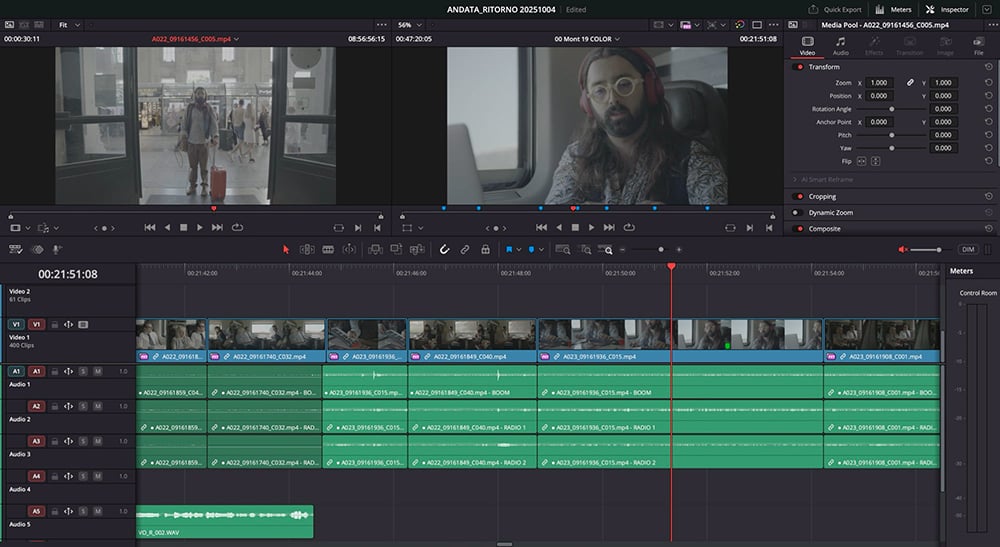
“Receiving the proxies while shooting was still in progress meant I could start editing and relink to the camera original later once they were transferred,” Franchini said. “It also meant we could discuss narrative needs with the directors while production was still moving.”
The material was organized in the software’s Media Pool using Smart Bins and custom metadata tags. Franchini also used Face Recognition to group clips by character, while Audio Transcription helped him search through dialogue heavy scenes. “With so much interview material, the transcripts made a real difference,” he said. “We could jump to specific moments by clicking on words or phrases, instead of manually searching through the footage.”
Image stabilization was another part of the process, particularly for handheld scenes shot aboard moving trains. Franchini used gyroscope metadata recorded in camera to refine selected shots, while the 8K capture gave him room to stabilize and adjust the frame for the 4K master.
Once the offline edit was locked, the timeline was relinked to the camera originals, keeping the move from editorial to finishing inside DaVinci Resolve Studio. The VFX work was deliberately restrained. Most of it involved clean up, continuity fixes and invisible compositing rather than overt effects.
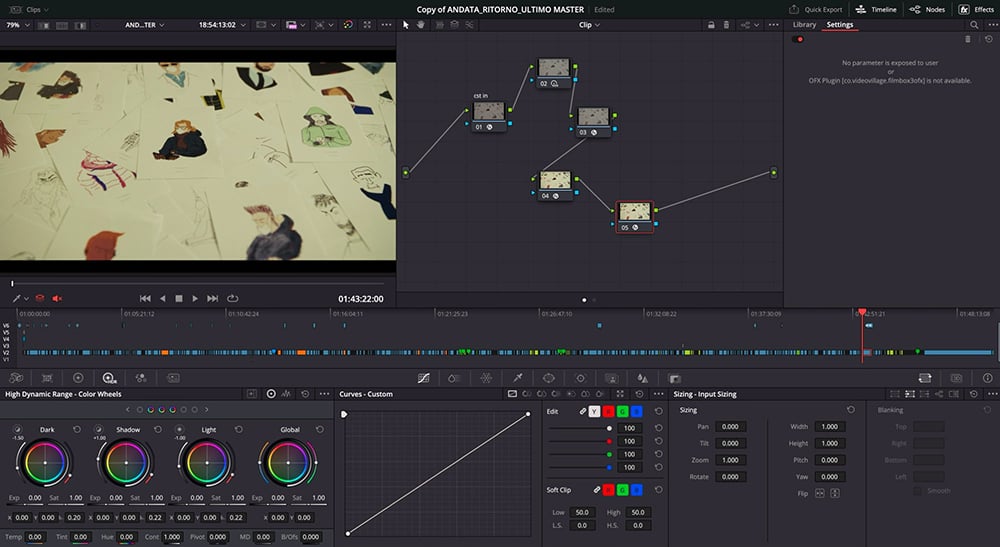
“All VFX finishing was done directly on the log files before color correction,” Franchini said. “That helped the clean up and compositing sit more naturally in the image.”
Some train station sequences required times and text on schedule boards to be replaced for continuity. Franchini used IntelliTrack for the moving shots, with Corner Positioning used to fit the new graphics into the display geometry.
Other fixes were more environmental. In several drone shots along the coast, parts of the crew were visible on the dunes as the protagonists ran toward the sea. Franchini rebuilt sections of the frame from stills generated from the original footage, then used Paint Node and Clone Brush to clean up the shots.
Magic Mask was also used for isolating characters, replacing backgrounds and removing unwanted elements. “It sped up work that would previously have meant much more manual rotoscoping,” Franchini said.
The resolution of the source material also helped during finishing. “In a few cases, we could crop into the image to remove microphones or crew members without losing definition in the final 4K master,” he added.
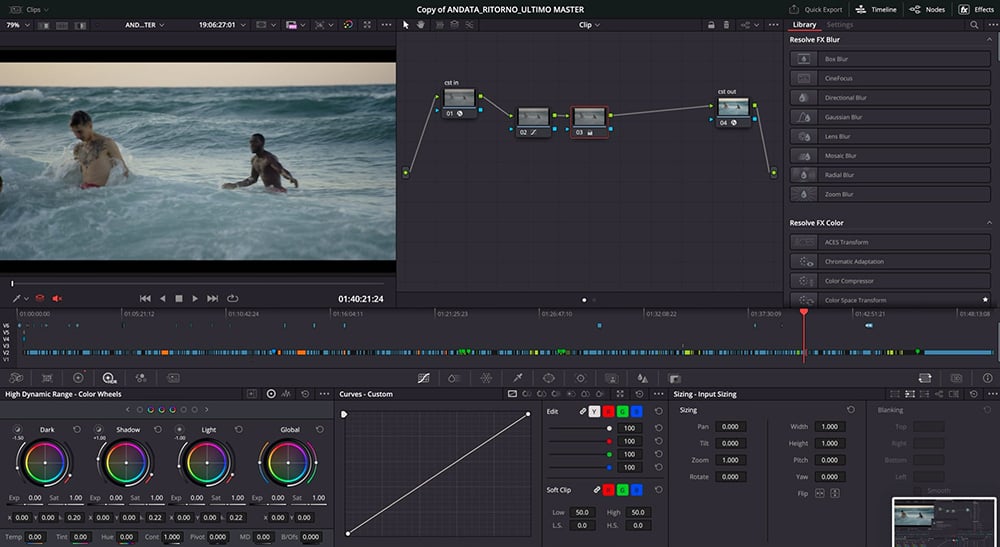
Picture finishing was completed in DaVinci Resolve Studio by Lorenzo Antonioni, working in DaVinci Wide Gamut Intermediate with a final Rec.709 Gamma 2.4 output. The grade had to deal with the same contrast issues that shaped the shoot: darker train interiors, bright windows, changing daylight and faces moving through mixed conditions.
“In many scenes, the windows were several stops brighter than the train interiors,” Antonioni said. “With the information in the raw files, I could recover highlight detail while keeping the skin tones natural. I didn’t have to force the grade.”
One of the more complex sequences was shot in daylight inside a train and later treated as day for night. Sunlight was coming through the windows, with strong contrast between the exterior and the characters’ faces, and no artificial lighting on set.
“Using Depth Mapping and Magic Mask, we separated different layers of the image and made selective adjustments to skin tones, reflections and brightness,” Antonioni said. “The aim was to make the day for night feel believable without flattening the image.”
Antonioni also developed a slightly different palette for each protagonist, while keeping the overall look natural. “We avoided aggressive saturation,” he said. “There are fencing scenes with more turquoise and cooler tones, while Jakuba’s scenes moved toward warmer, golden tones.”
For the final pass, the team used Filmbox to add a softer, more organic texture. “We wanted something closer to a film response,” Antonioni said. “The URSA Cine files already felt balanced, so the idea was not to push them too far.”
The documentary was mastered as a 4K DCI Flat DCP using Kakadu JPEG 2000 compression, with a 2K DCP also created for wider theatrical compatibility.
Enjoying the news? Sign up for the Creative COW Newsletter!
Sign up for the Creative COW newsletter and get weekly updates on industry news, forum highlights, jobs, inspirational tutorials, tips, burning questions, and more! Receive bulletins from the largest, longest-running community dedicated to supporting professionals working in film, video, and audio.
Enter your email address, and your first and last name below!


Responses