

From Graphic Novel to 30-Minute Animated Film: What I Learned Building an AI-Assisted Production Pipeline
When I first created The Lion of God, it was a graphic novel. I knew what the world looked like, how the characters moved, and in many cases I could already see the scenes playing in my head like a film.
What I did not have was an animation studio.

Four years later, I had produced a roughly 30-minute animated fantasy film largely by myself.
The surprising part was not that AI made that possible.
The surprising part was how quickly the process stopped feeling like “AI filmmaking” and started feeling like filmmaking.
The more control I wanted over the finished movie, the more I found myself dealing with the same problems filmmakers and animators have always dealt with: composition, continuity, performance, timing, screen direction, pacing, coverage, sound, and the question of whether one shot actually works when placed next to another.
AI dramatically reduced the amount of production infrastructure required to create the imagery.
It did not remove the need to direct it.
The Project Began on the Page
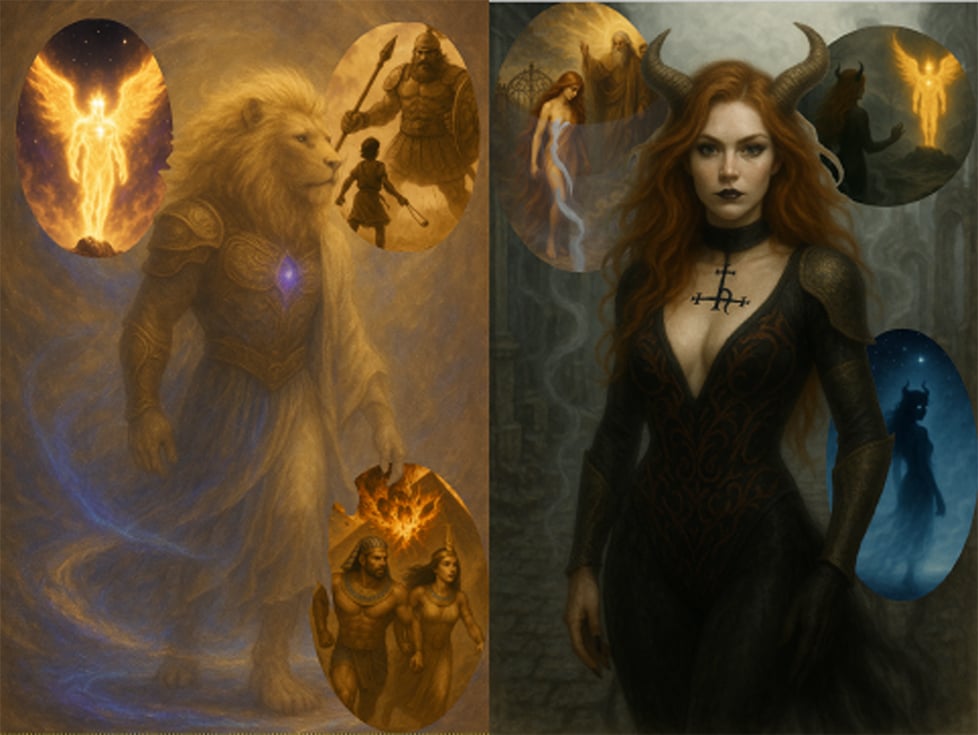
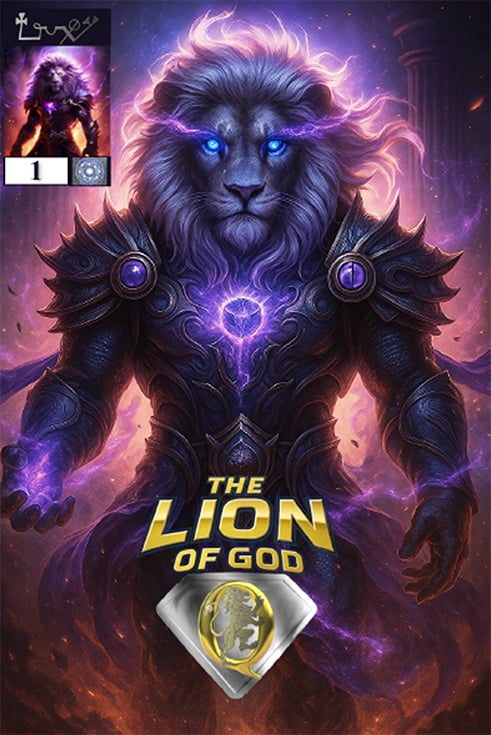
The Lion of God began as an independent graphic novel series combining mythology, metaphysics, anomalous experience, science fiction, and dark fantasy.
The graphic novel format gave me something extremely valuable before I ever tried to animate the work: visual development. Characters and locations already existed. Many major story beats had already been illustrated.
In that sense, the graphic novel became an enormous library of concept art, storyboards, character references, compositions, and visual targets.
That turned out to be incredibly useful once I began experimenting with animation. Rather than starting every shot from a blank prompt, I could begin with artwork that already contained a strong creative decision.
The challenge was no longer simply, “Generate a Greek warrior standing in a forest.” It became much more specific: “How do I make this particular image move without destroying what made the image work in the first place?” That distinction became increasingly important as the project evolved.
The First Temptation: Generate the Shot

Early AI video tools encourage a very seductive workflow: You create an image, you describe what you want to happen, you press a button, and a few seconds later, you have moving footage.
Sometimes the result is astonishing; other times it is unusable. Usually it is somewhere in between.
For short-form demonstrations, social media clips, or dreamlike imagery, that unpredictability can be part of the fun. For narrative filmmaking, it becomes a problem very quickly. A shot does not exist by itself. The actor has to be standing in approximately the same place when the next shot begins. A weapon needs to remain in the same hand. A character who exits frame left cannot suddenly appear on the wrong side of the next composition. Wardrobe, lighting, geography, facial structure, camera direction, and physical action all begin accumulating continuity requirements.
That is where I learned one of the biggest lessons of the entire project:
Generating a good clip and directing a scene are not the same thing.
The longer the project became, the less useful it was to think in terms of isolated generations. I had to start thinking in shots, then sequences, then editorial structure.
Episode 3 Changed the Workflow
By the time I began serious work on The Lion of God #3: Anamnesis, my approach had changed significantly.
Instead of asking an AI video model to invent most of the action inside a shot, I increasingly defined the beginning and ending states myself. I became much more deliberate about keyframes.
If a character needed to raise a weapon, turn, attack, fall, or transition into a different pose, I often found it more effective to create the important visual states first and then use animation tools to bridge the movement between them.
This shifted the process from: “Please make something interesting happen.” toward: “This is where the shot begins. This is where it must end. Help me create the motion between those two decisions.”
That was a major turning point. The more frame control I had, the more the AI became a motion tool rather than a substitute director.
Building a Hybrid Pipeline
The production pipeline for Anamnesis eventually involved a mixture of tools and techniques. Pika and Adobe Firefly Video were used primarily for motion generation and experimentation. EDI Studio / EDImaker became particularly useful for character performance, frame-controlled transitions, voice-driven animation, and lip synchronization. Adobe Premiere Pro remained the backbone of the edit, while Audacity handled voice capture, cleanup, and preparation.
ChatGPT functioned less as a single-purpose production tool and more as a kind of chief assistant throughout the project. I used it for story development, still-image generation, problem solving, and rapid technical research whenever I needed to learn a new workflow or troubleshoot a production issue. It helped me get up to speed quickly on tools such as Premiere Pro and Pika and frequently served as the bridge between an idea I knew I wanted to execute and the technical knowledge required to make it happen.
The final film also involved traditional voice performance, sound editing, music, visual effects, and a substantial amount of manual editorial work. What mattered was never whether a particular shot was “AI-generated” or “traditionally edited.” The only useful question was: Does the shot work? If the answer was no, I rebuilt it.
Where AI Helped Most
The biggest advantage AI gave me was scale; there are shots in Anamnesis that I simply would not have attempted as an independent creator several years ago: ancient environments, large fantasy compositions, creature work, complex movement, atmospheric transitions, illustrated characters moving through cinematic spaces… all of these things always felt impossibly inaccessible to me as a lone software engineer in rural America. AI made it possible to generate raw visual material at a speed and quality that changed what I could realistically attempt.
It also made iteration cheap enough that I could explore multiple versions of a visual idea instead of committing immediately to the first workable solution.
That freedom was incredibly useful, but it came with a cost. The cheaper it became to generate footage, the easier it became to generate footage that I did not actually need. Sometimes I would find myself spending 1,000 or more Pika credits attempting to get a particular shot just right.
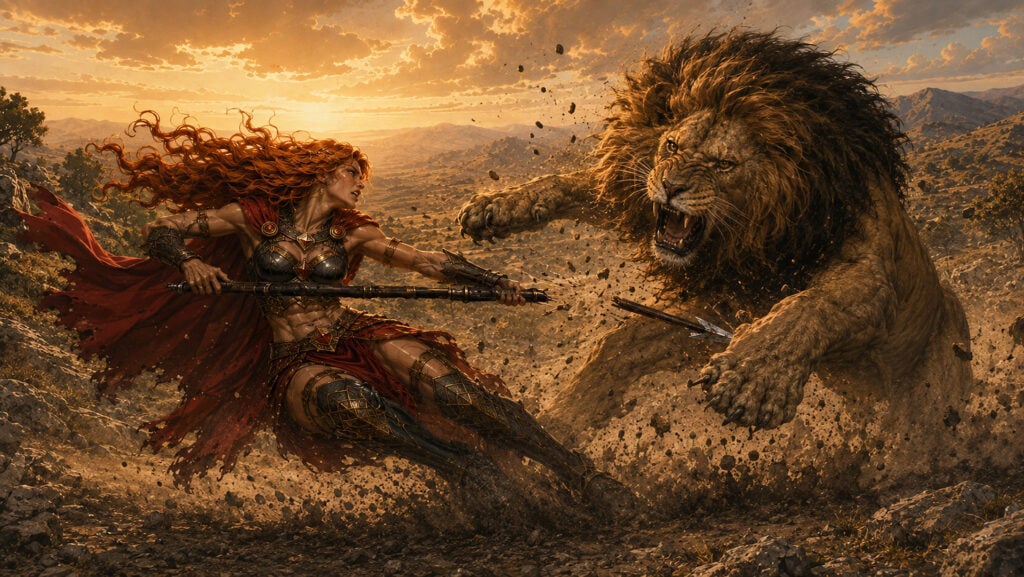
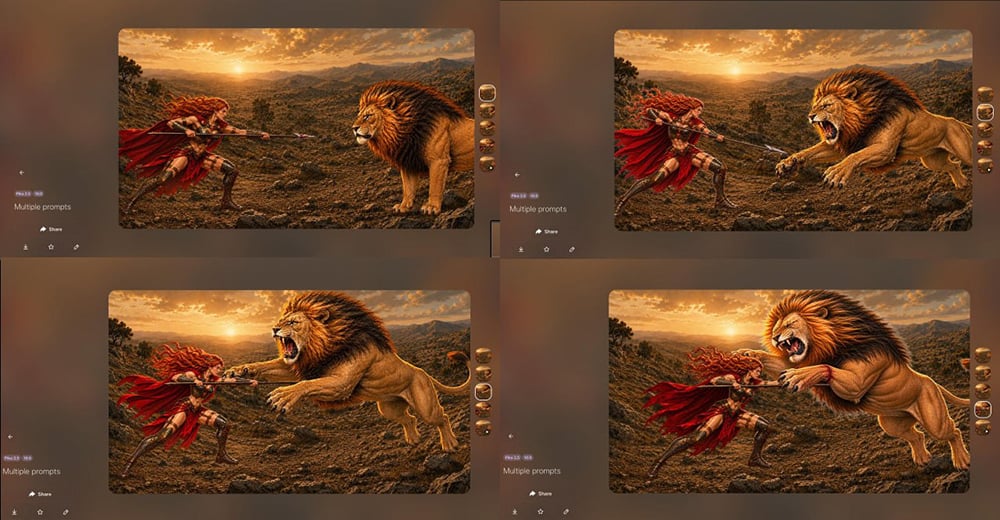
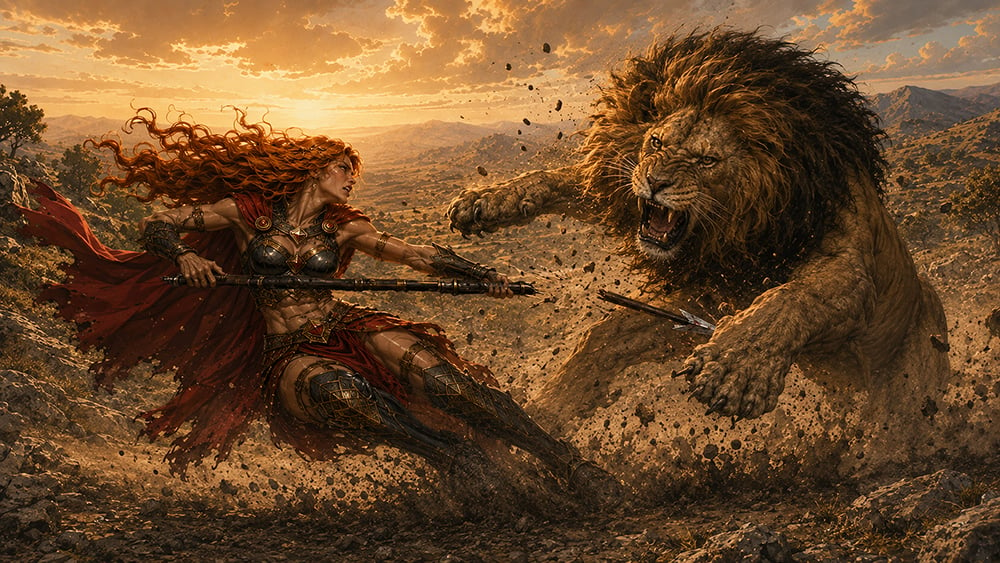
The lion fight became a perfect example of the difference between asking for “action” and directing a specific action. I needed the lion and Cyrene to occupy consistent positions, the spear to move through a very particular arc, the animal’s weight to feel believable, and the resulting motion to cut cleanly into the next shot. A generation could be visually impressive and still fail because the spear entered from the wrong direction, the lion changed scale, the pose drifted, or the action simply did not end in a position I could use editorially. That scene taught me that a good-looking generation is not necessarily a usable shot. I honestly spent probably closer to 2,000 credits on this scene alone by the time it was done.
One of the most important directing skills became knowing when to stop generating.
Where It Failed
AI video still has serious weaknesses when asked to perform precise narrative action. Achieving continuity across extended periods of video can prove to be a tremendous challenge. Character identity can drift; objects can change shape; hands, weapons, clothing, and facial details can mutate between frames.
A model may understand that a character is supposed to “attack,” but not understand the exact choreography required for a cut to work. Motion can be technically impressive while still being dramatically wrong. I encountered shots where the first two seconds were beautiful and the final three seconds destroyed the composition. Other generations produced usable movement but introduced visual errors that became obvious the moment I tried to cut the shot into a sequence.
Export issues created another unexpected problem.
At one point, footage generated through EDI Studio appeared to contain missing or problematic frames when brought directly into Premiere Pro. My temporary workaround was to convert the clips through another editor before importing them. Eventually I discovered that I had been using EDI’s raw output instead of its finalization process. Once I began properly finalizing the clips before export, the issue largely disappeared.
The Camp Battle: From Generation to Direction
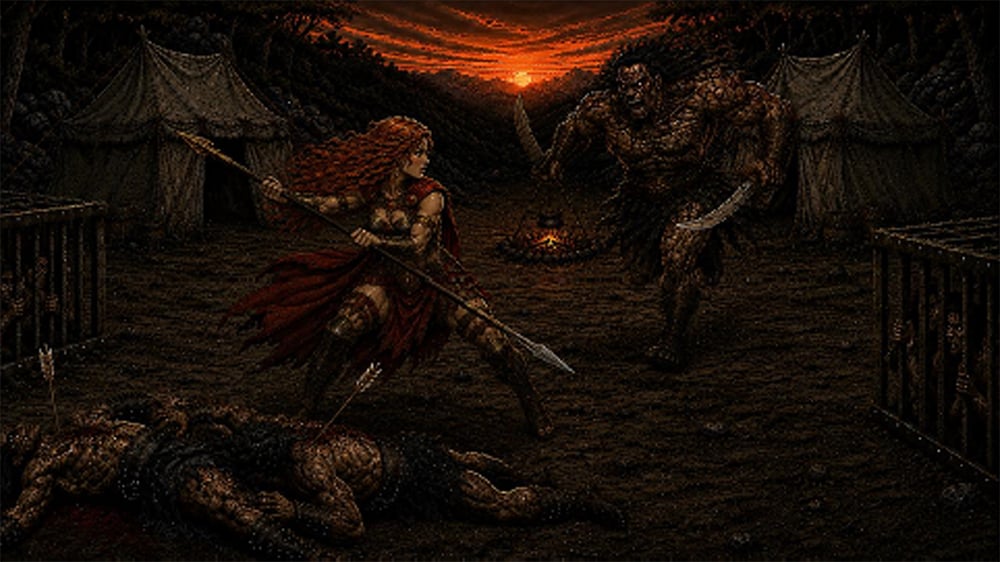
One of the sequences that best demonstrates the evolution of my process is the slaver encampment battle in Anamnesis.
On paper, the sequence sounds simple: Apollo and Cyrene arrive at an encampment, confront armed men, free captives, and discover that the supernatural corruption they have been following extends beyond the immediate attackers.
In production terms, it required far more control. The audience needed to understand the geography of the camp. Characters had to remain oriented correctly from shot to shot. Weapons needed to remain consistent, and the number and position of the attackers mattered because each kill changed the state of the scene.
That meant I could not simply ask a model to “generate a fight.” I needed individual shots to accomplish specific editorial jobs. If Apollo kills one attacker in one shot, the following shot cannot casually restore that character or move everyone to another part of the camp. If Cyrene enters a fight from one direction, the next composition has to preserve enough of that geography for the audience to understand where she is.
Some moments could be generated with relatively little intervention. Others required multiple attempts, new intermediate frames, recompositing, or a complete change in approach. The problem was no longer whether the AI could create convincing violence. The problem was whether it could create the exact piece of action the edit required.
I increasingly found myself asking the same questions I would ask if I had actors and cameras physically on set:
Where is everyone?
Where are they looking?
What action motivates the cut?
What does the audience need to see next?
That sequence convinced me that long-form AI-assisted filmmaking is not primarily a prompting problem. It is a directing problem.
The Importance of the Edit
A generated video model can create motion, but it cannot decide what your movie needs; that happens in the edit.
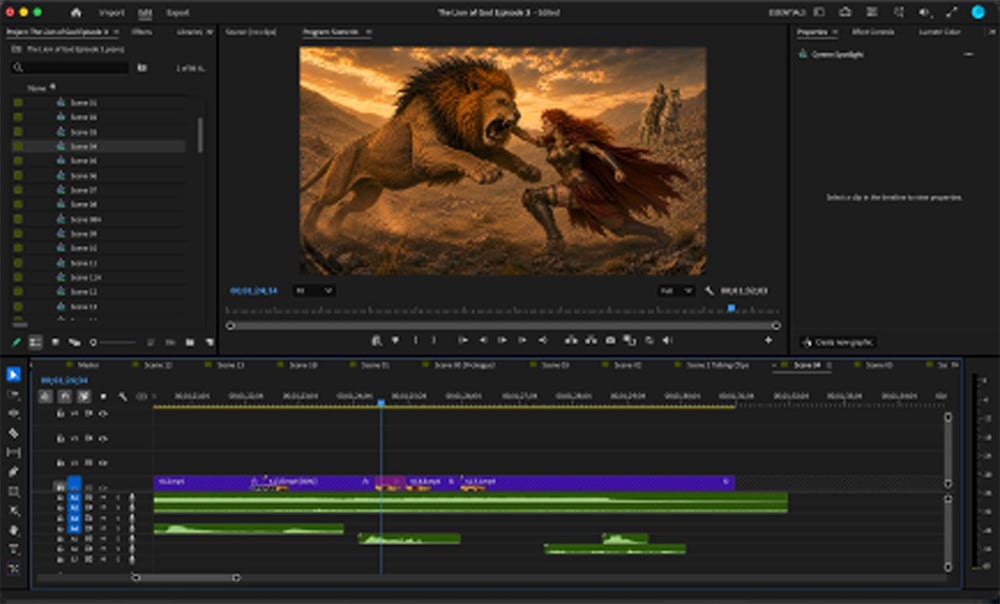
Premiere Pro became the place where the film actually became a film. A five-second generation might become two seconds in the final cut. The best part of one generation might be combined with a different shot entirely. Some motion needed to be slowed down. Some needed to be cut before the model began producing visual errors. The edit was where generated material stopped being a collection of clips and became a sequence with rhythm, geography, and intent.
Some shots only worked once sound effects, music, and performance were added. There were also moments where the strongest editorial decision was simply to hold on a still image. Movement is not automatically better. Sometimes a carefully composed frame communicates more than another generation ever could.
Sound Made the Images Believable
One of the easiest mistakes in visually driven AI filmmaking is to spend too much attention on the image and not enough on sound. The difference between a generated action shot with temporary audio and the same shot with finished sound design can be enormous. Impacts need weight. Footsteps need space. Weapons need physical presence. Voices need to sit correctly inside the environment. Music has to support the emotional movement of the scene rather than merely fill silence. Once those elements are added, the generated imagery begins to feel less like generated imagery and more like a world. In the action sequences, much of the physical weight of the scene came from sound rather than animation alone: impacts, weapon movement, footsteps, creature vocalizations, and environmental ambiance often did as much to sell the shot as the image itself.
AI Did Not Replace the Filmmaker
The central lesson I took from Anamnesis is probably the opposite of what people on either extreme of the AI debate expect. AI did not make filmmaking effortless. It made a certain scale of filmmaking accessible. Those are not the same thing.
It reduced the number of people and resources required to produce raw visual material. But the need for taste, judgment, patience, visual literacy, editing skill, continuity awareness, performance direction, and storytelling did not disappear. If anything, those skills became more important.
When a tool can produce hundreds of possible images, somebody still has to know which image belongs in the movie. When a model can generate five seconds of motion, somebody still has to know whether the motion helps the scene. When a shot fails, somebody has to understand why.
That is the part of the process I increasingly think should remain human.
What I Would Do Differently Next Time
The biggest change going forward is that I would design even more of the animation around controlled keyframes from the beginning.
I would spend less time trying to rescue generations that are almost correct. I would establish continuity references earlier. I would separate characters, foreground elements, and background plates more often when I know a shot may require compositing later, which is a practice I developed about three-quarters of the way through the production of Anamnesis.
And I would treat AI-generated footage as production material rather than finished footage from the moment it is created. That mindset alone changes everything. A generation does not have to be perfect, but it does need to contain something useful.
Where This Goes Next
The tools are improving quickly, but the most exciting development to me is not better image quality. It is control.
The closer these systems get to allowing a filmmaker to define performance, movement, timing, character consistency, camera behavior, and shot continuity with precision, the more useful they become as serious production tools.
For an independent creator, that represents something profound. A project that once required an animation studio can now begin with one person, a computer, a story, and enough stubbornness to keep solving problems until the movie exists.
That does not mean everyone suddenly becomes a filmmaker.
It means filmmakers have access to a much larger canvas.
The Lion of God #3: Anamnesis was the first time I felt that canvas had become large enough to hold the film I had been trying to make.
And once that happens, it becomes very difficult to go back.
Enjoying the news? Sign up for the Creative COW Newsletter!
Sign up for the Creative COW newsletter and get weekly updates on industry news, forum highlights, jobs, inspirational tutorials, tips, burning questions, and more! Receive bulletins from the largest, longest-running community dedicated to supporting professionals working in film, video, and audio.
Enter your email address, and your first and last name below!


Responses