


Streaming Video Can be Tailored to Any Taste, Any Budget

“We do not know why we are here. We do not know who built the Silo. We do not know why everything outside the Silo is as it is. We do not know… when it will be safe to go outside.” – Mayor Jahns, “Silo,” Apple TV+, 2023
With all the bravado they could muster, networks rolled out their “fantastic” fall offerings – contest, reality shows. Cheap to produce, they hope the offerings will keep their dwindling audiences a while longer until they can get some of their scripted series back in production or long enough to figure out the streaming stuff.

We have nothing against Pat Sajak or Steve Harvey, but watching folks guess a bunch of stuff or people pitting their strength/endurance against someone else isn’t something we can’t wait to watch this – or any – evening.
The days of 600 new scripted shows being rolled out by networks/studios didn’t happen because of the strike and probably will never come back as they struggle to meet the demands of Wall Street for better returns and the push to make their streaming services profitable.
Glad the only thing we have left from our cable bundle is the fiber to the home.
The pandemic and recent U.S. writer/actor strike hurt all of the streamers but some more than others.
The one-two punch really hurt the network/studio streamers who largely focused on their home markets in the Americas.
They had to dig into their libraries for movies/shows they shelved for a tax write-off or retired projects they hope consumers don’t remember they saw them a few years ago.
The techies – Netflix, Amazon, Apple, YouTube – who have been global from the get-go were inconvenienced but they had options.
If you want to stream content to the millions of viewers in the other 190 countries around the world you also have to produce a percentage of the content locally.
Shows from Germany, France, Australia, Japan, South Korea, Nigeria and everywhere else were just as interesting and thrilling as those produced in the U.S. studios.
But the money mongers of Wall Street cited studies from organizations such as Whip Media and said all of their investments were going to suffer from the same virus … churn.
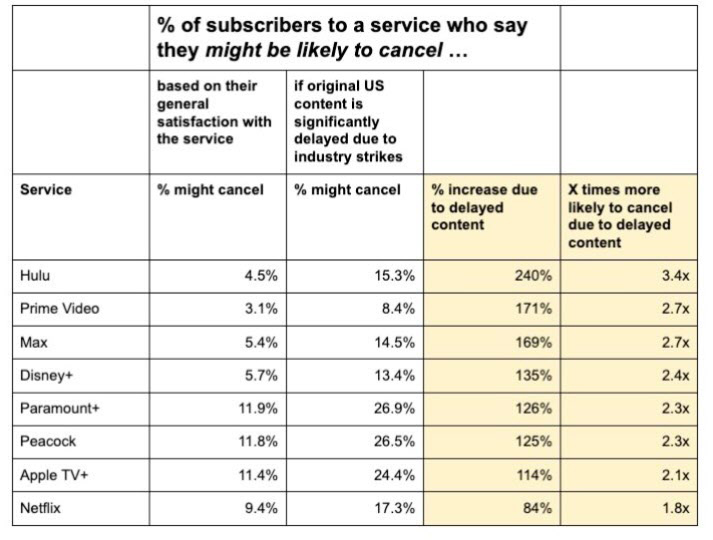
Catching – Churn is the natural order of a subscription economy. People sign up, enjoy what they want, get attracted to something “newer, better” and move on. Maybe they come back, maybe they don’t but churn is more expensive than retention.
Sure, it’s everyone’s fault and no one’s fault.
Movie houses are now only meaningful for tentpoles or projects that need to/want to be considered for a statue.
The cable bundle is only worthwhile for advertisers interested in reaching a shrinking audience of “a certain age” who watch middle of the road stuff that doesn’t make you think too hard.
All of the networks and studios saw the direct connection the tech folks were having with their audience and wanted in on the action.
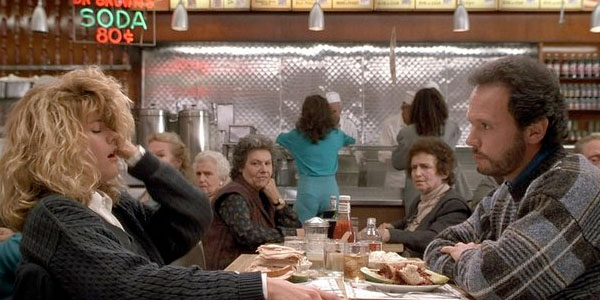
Satisfaction – Breaking out of their pay TV bundle gave folks a new sense of entertainment freedom and when people saw how much others enjoyed it, they wanted the same thing.
They started with the no-hassle subscription offering and offered their best stuff at a monthly charge below the market leader … Netflix.
They added services to take advantage of watching all the new stuff at home and without any ads because additions only cost about $10, the volume of entertainment was awesome and they could drop them in the blink of an eye.
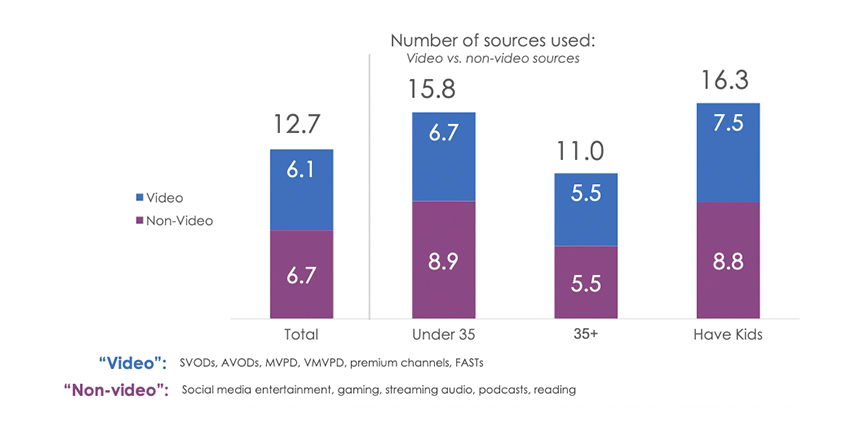
More is Better – While there were basic SVOD services people signed up for, they quickly added multiple other options because what the heck, they’re only $10 +/- and it was okay until it became a burden to find the show/movie you wanted to watch and total budget became a concern.
Folks were like a kid in a candy store adding this one, that one, even the guy’s stuff that looked sorta, kinda interesting. After all, it was only $10.
Of course, adding content cost money … lots of money.
So, they did what any studio/network executive making $20-$30M would do, they raised their subscription fee knowing it was only a couple of bucks and people would see it was still a value.
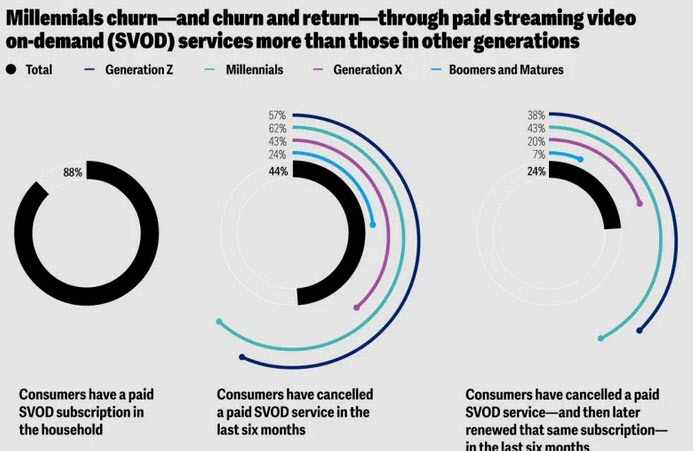
Brand Loyalty – Younger streaming viewers tend to binge-watch their content more than older people and then move on to another service’s content to see what’s new, enjoyable. A constant flow of new content is expensive and difficult for most U.S. focused networks/studios with production on hold.
Unfortunately, it didn’t quite go as planned.
Folks reduced their home entertainment budgets by dropping one or two optional services after they had watched the stuff they wanted to see, added a new list of “gotta see” films/shows, watched them and moved on yet again.
Some people, like our friend Mark, had the add/drop cycle down to a science.
He signs up with a new service that has a bunch of projects he wants to watch, binges through them and before the billing cycle kicks in, he’s gone to the next great set of adventures.
He’s not alone.
Tens of thousands play the game!
But gaming the system takes a lot of work and exquisite timing.
Using the rules that are meant to favor the house (streaming service), they precisely time their entrances/exits to get the most and best entertainment for little or no cost.
However, most folks who escaped the clutches of the pay TV bundle with 20-minutes of ads for each hour of entertainment are first amazed at how much they save, how much really good content is available to them and how much uninterrupted stuff they enjoy.
But in the early stages it’s overwhelming – six-eight services, 100s of shows/movies – almost euphoric … until it’s not.
It’s the primary reason consumers go through a maturation cycle – signing up for every service that is out there, fumbling through the services to find the one show/movie they want and dropping those they seldom/never use then resubscribing when a new project enters the scene.
Ultimately, people will settle into a value viewing routine – selecting a specific set of streaming services that offer them the best range of shows/films that fit their genre/storyline tastes.\
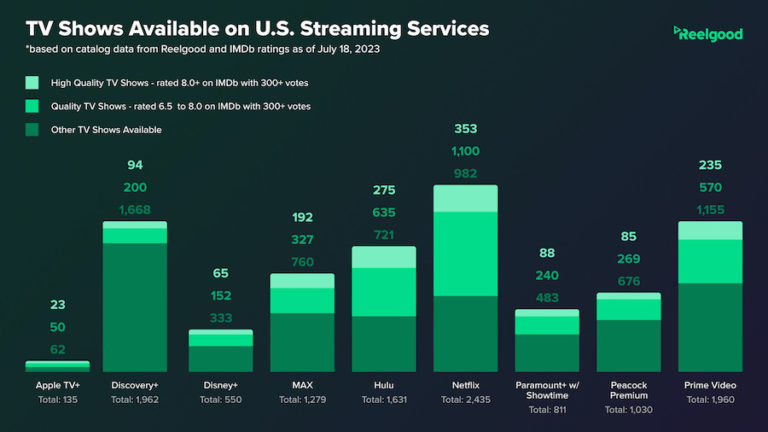
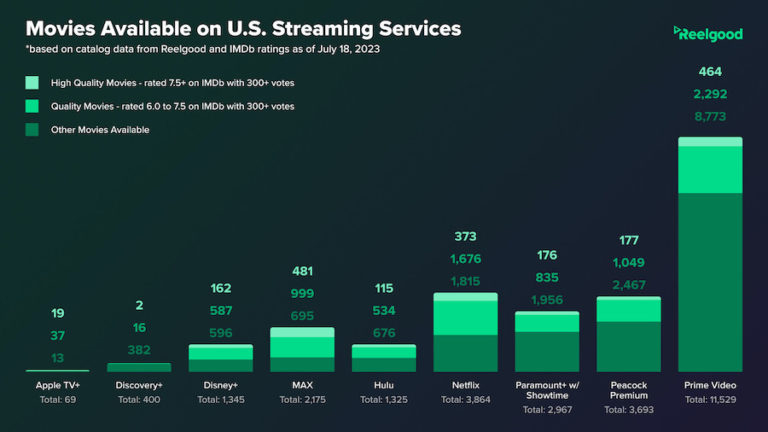
Global Newbies – The early entrants into the streaming video arena invested early in new, fresh content in the Americas and around the globe, greenlighting projects that were in tune with the times. Being global at the outset also enabled them to continue with a steady flow of new films/shows.
According to a recent content study by ReelGood, one of the leading services in the Americas, there’s a wealth of TV shows and quality movies available for deciding which is the best bang for your buck.
Incidentally, it’s also a great tool for all of your streaming services. You can per-screen options by genre, new/rising shows/movies,and release dates plus the ability to post your personal “gotta see this” reminder list.
Incidentally, RealGood is a great tool to use all the time as a front-end to your – and all – streaming services to pre-screen viewing options by genre, new/rising shows/movies and keep a reminder list of what you want to watch … later – of the leading services in the Americas.

Oh yes, and it’s free!
With a presence in 190 countries, Netflix and Prime Video lead the pack in quality and quantity shows/movies.
It shouldn’t come as a big surprise because the two have been in the subscription service the longest which means they have the deepest and broadest database of what people watch, when they watch it and how they watch it.
Capturing, analyzing and digesting all of that subscriber/viewer information isn’t necessarily a bad thing because it helps them, and their content producers do a better job of meeting your entertainment needs with high-quality content.
It also gives them a significant leg up in recommending the right content to you when you fire up your streaming screen(s).
The studio/network entrants have to rely on what worked in the past and hope there’s a good crossover from day/time viewing and any time/anywhere/any screen viewing.
For example, Discovery + has a good roster of shows that carry over from their network days – DIY, cooking, home improvement and mild adventure stuff.
It doesn’t matter what people’s viewing tastes are, there are streaming services that will interest/involve almost everyone on the planet, which is probably why the industry grew to nearly $106B last year. According to MIDiA Research, it is projected to reach $322B by 2030, driven primarily by Asian countries and the global appetite for South Korean content.
The region is expected to account for 56.2 percent of global subscribers and 32.2 percent of revenue this year with a 58.8 percent subscriber increase and 34.5 percent revenue increase by 2030.
With 78 percent of U.S. households already subscribing to one or more streaming services, the Americas will generate only 18.2 percent of global subscribers and 38.6 percent of the revenue this year. By 2030, the numbers will drop to 23.2 percent of the subscribers and 32.2 percent of the revenue.
Even though the streaming video services are still a better value for consumers than their old pay TV bundles, people still toy with the idea that they could do better … get more of what they want at a better price.
In addition, we all know subscription fees will go up – again – especially when most of the AMPAS members decide they’re tired of losing money on their streaming services and need to restart their production engines as well as focus on the global market.
Of course, meeting the creative/production pros’ financial and working condition needs will give them the excuse they need to increase their ad-free fees.
Hey, stuff happens!
Even though Netflix is the only DTC streamer to be profitable, Ted Sarandos, co-CEO, was tired of explaining to Wall Street the comings, goings and comings of subscribers was a part of the business, the company was going to place attention on quarterly subscription increases as well as GRR (gross revenue retention) or keeping subscribers as long as possible.
It turns out, it costs more than twice as much to acquire a new subscriber than it does to retain a viewer. At the same time, the company broke from tradition and introduced an ad-supported tier along with the majority of the other streaming video services.
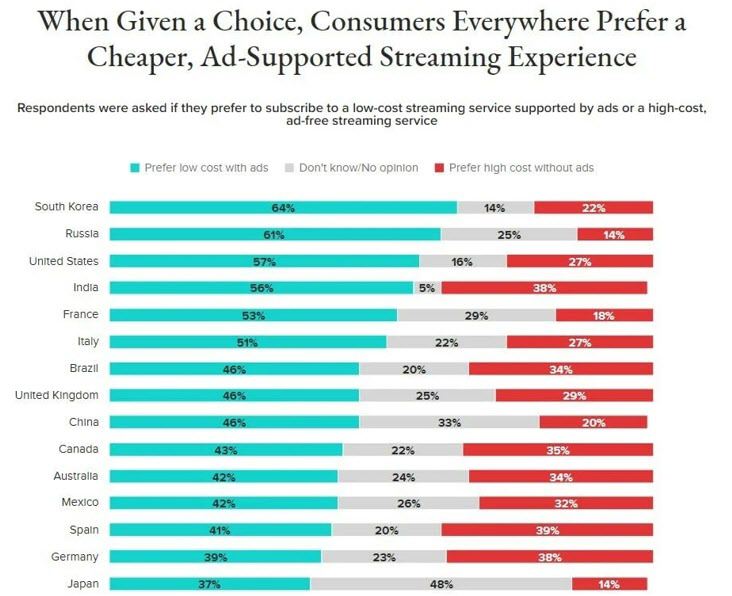
Fair Trade – It’s popular to say consumers don’t like ads but it’s a much different story if it means they get something in return and they aren’t visually abused.
In other words, they listened to consumers –“we don’t mind watching a few ads if our streaming service is less expensive.”
With the exception of Paramount and Hulu, which still follow the old pay TV ad formula, streaming services show three-five minutes of ads per hour.
The two insist on running longer and more frequent ads, which they probably justify by the fact that they are two of the least expensive ad-supported services available.
We’ll see…
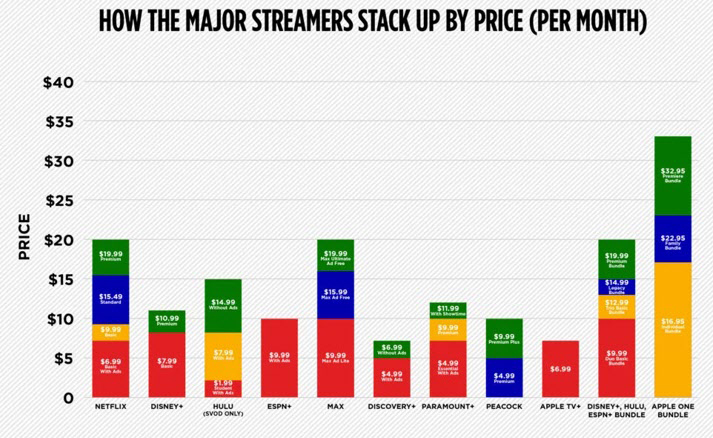
Long Term – Streaming services are learning that consumers like choices and if they are presented/priced right they can produce greater profits in the long-term. Especially when they have depth and breadth in their entertainment libraries.
On average, Morning Consult found that about 45 percent of streaming subscribers around the globe were willing to subscribe to a lower-cost streaming service supported by ads rather than cancel/replace their service.
BAM! our home entertainment budget dropped to $15/mo.
That doesn’t include our Amazon Prime membership because that’s the wife’s “free delivery” service and our daughter poutingly said she just had to have her Apple One bundle so …
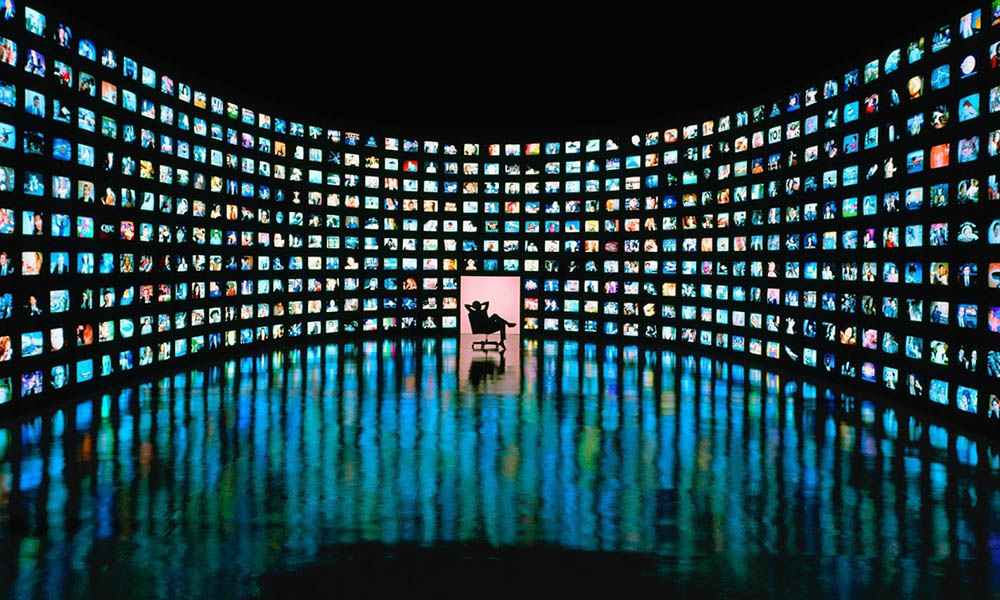
FAST Feast – While free ad-supported services are only slowly entering the unique content production arena, their mind-boggling array of viewing options are increasingly attracting more subscribers and advertisers are slowly beginning how to appeal to the new anytime prospective customer. But in-depth viewer data is improving the experience for the buyer … and the seller.
Just to round out our home viewing options, we also signed up for Tubi and Pluto the leading FAST (free ad-supported services) and have to admit we’ve spent a lot of time “catching up” on content we didn’t even imagine was available.
If we haven’t seen it before, it’s new–at least to us.
How old can it be and still be new?
Wanted to watch some old westerns; you know, like Yellowstone, 1883, 1923.
Rather than signing up/cancelling Paramount +, we went to Tubi and Pluto. Ended up watching some old Gene Autry and Hopalong Cassidy shows.
Sometimes old is new and really old can be really nostalgic!
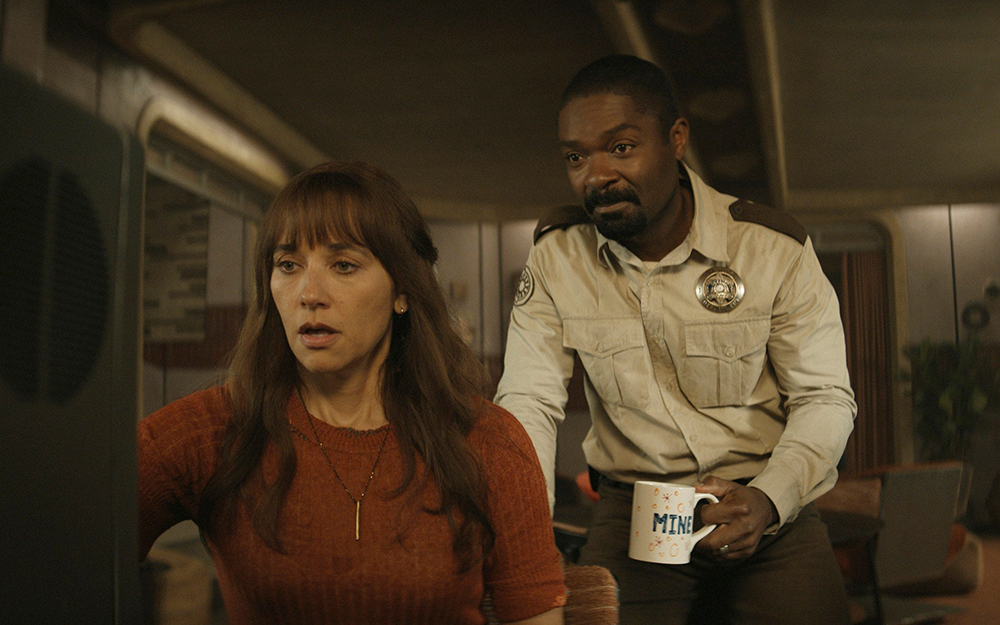
Don’t let the brave new content world fool you. There’s a lot of great content out there you’ve probably never seen.
Just remember what Mayor Johns said, “Any spoken request to leave the Silo is granted, but it is irrevocable. You have been asked to clean and have been provided with materials to do so, but you cannot be forced into cleaning. Once outside the air lock, you are outside the law.”
There’s a world of excellent content out there you’ve probably never been exposed to. Some will be so-so, some will be good, some will be great.
Your opinion is just as good as any movie reviewer’s.
Enjoying the news? Sign up for the Creative COW Newsletter!
Sign up for the Creative COW newsletter and get weekly updates on industry news, forum highlights, jobs, inspirational tutorials, tips, burning questions, and more! Receive bulletins from the largest, longest-running community dedicated to supporting professionals working in film, video, and audio.
Enter your email address, and your first and last name below!

Responses