


Steven Meizler Composes Visual Language with ZEISS Supreme Primes in “White House Plumbers”

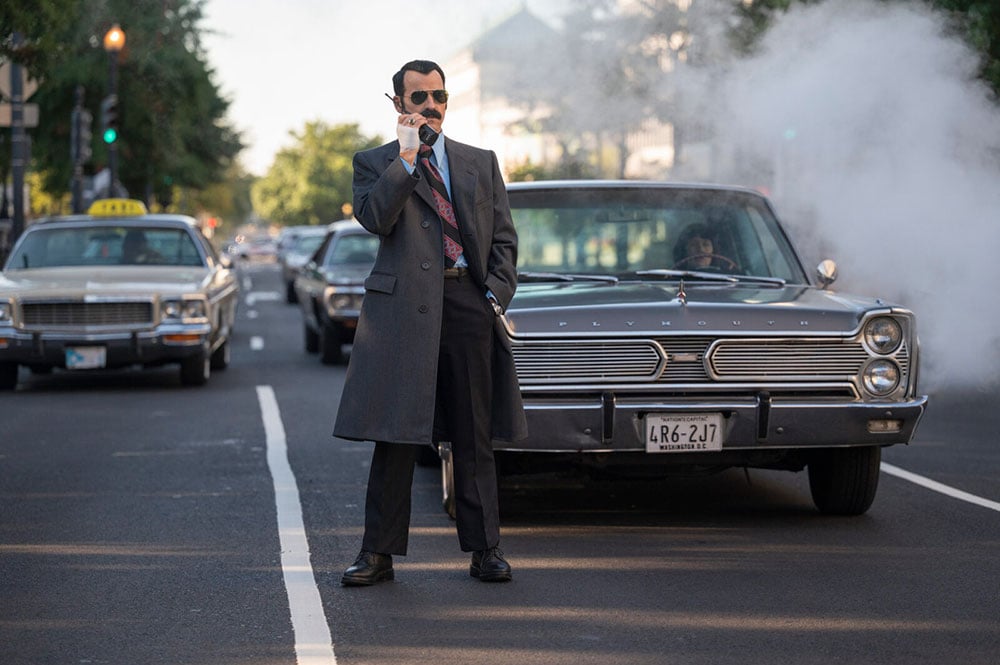
Emmy Award-Winning cinematographer Steven Meizler (“The Queen’s Gambit,” “The OA,” “Godless,” and the upcoming “The Beanie Bubble”) brings his penchant for meticulous thought and planning to David Mandel’s “White House Plumbers.” The MAX limited series showcases Meizler’s determination to execute the best consistent visual language in the re-telling of 1970s Watergate break-in perpetrators E. Howard Hunt (Woody Harrelson) and G. Gordon Liddy (Justin Theroux). The cinematographer is known to plot out lighting, composition and tonality patiently and scrupulously across his work. To help him prepare the visual language of “White House Plumbers,” Meizler once again relied on the ZEISS Supreme Primes.

How did you become involved with White House Plumbers?
Meizler: This project became a victim of the pandemic at first. The original DP attached was Sal Totino. He was already prepping when the pandemic hit, and they shut down the show. When production started up again, Sal was shooting a show in New Orleans. We are friends and he recommended me to the producers.

I interviewed with David Mandel and we hit it off due a mutual love of ’70s political espionage thrillers.
The look had not been established yet. In the original prep they had only just started to look at locations. David had a really good look book but it was mostly different photos of the era… Still that helped give an idea of what our look was going to be.

What is the show about?
It’s about two central characters, G. Gordon Liddy and E. Howard Hunt, who masterminded the Watergate break-in. They were handpicked by Egil Krogh, a member of Nixon’s administration, not just to break into the Watergate, but to also commit underhanded tactics including espionage.
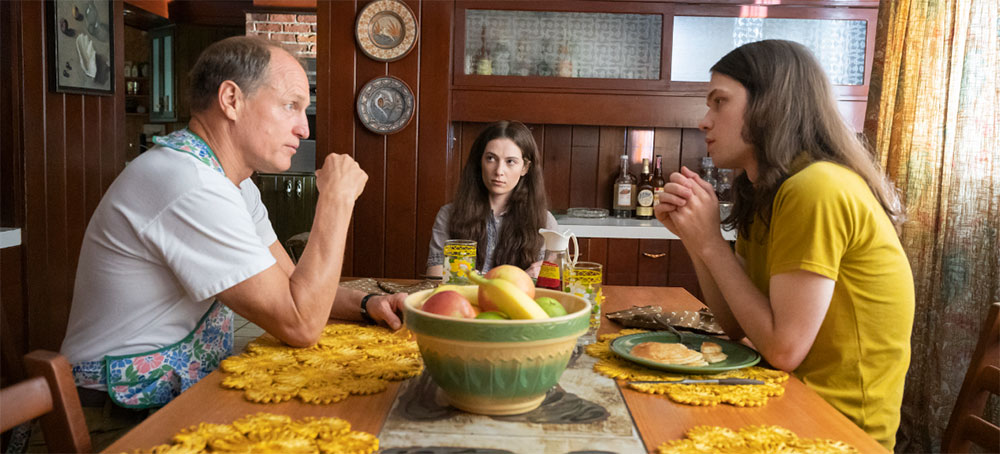
These people were involved in some really, really bad stuff on behalf of the government. Howard Hunt had a background in the CIA invasion of the Bay of Pigs and was connected to the Kennedy assassination. Our story follows Hunt and Liddy through the four break-ins at the Watergate. It goes through each break-in, showing how they formed the group of perpetrators. It also shows their family lives and how the consequences of their decisions affected their families.
We kind of walked a tightrope between comedy and drama; what they were doing is so crazy and so silly that it’s very easy to find humor, but then the consequences are obviously where the drama comes in. It’s a tricky line to juggle. Hopefully we did an okay job.
There are so many locations involved, where did you film the show?
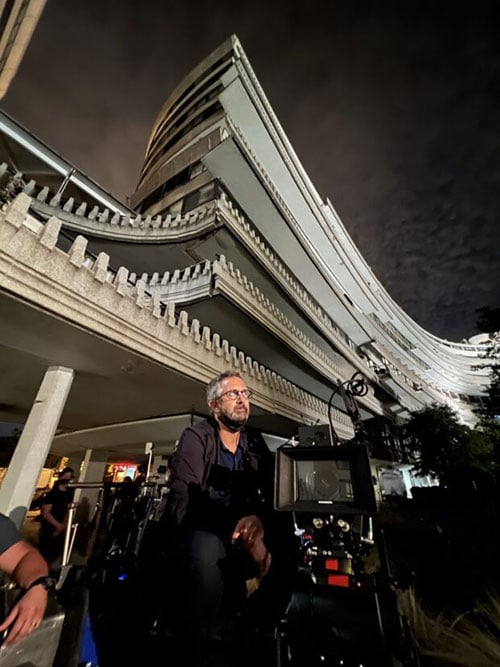
We filmed most of it– almost 90% of it–in Upstate New York in the Hudson Valley. Everything was shot there except for about three weeks at the end when we went down to Washington DC. We shot and even stayed at the Watergate, which was fun. The architecture is such a big part of the show. Specifically with Watergate, I’m so glad we shot at the real location, because one of the things the show does well is really show the geography of the different break-ins. To me ‘Watergate’ was just the name, a part of our culture, but seeing the actual Watergate building and understanding it was an important part of this whole show.
One thing I learned was…I’m sure everyone in DC knows this already, but the Watergate is really close to the DC Mall. It’s right next to the Kennedy Center and within walking distance of the Lincoln Memorial. It very much is part of DC and it has such a unique, almost Gaudiesque architecture. It almost has a life of its own.
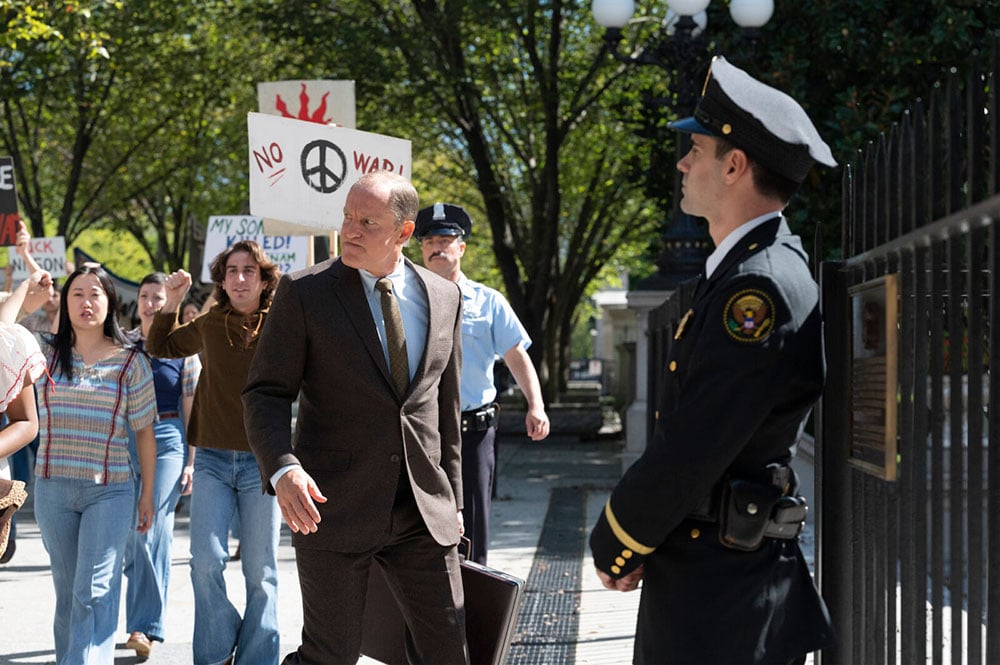
By really showing the break-ins and the geography of the break-ins, you understand what they went through. You understand the hubris of what these men did and how they were able to do such stupid things in broad daylight. [laughter] It also shows how much that you could get away with back then. It was a very innocent time then compared to the heightened security that was in place when we went to scout because of the January 6th attack on the capitol. But Hunt and Liddy were free to commit these crimes in broad daylight basically.
What did it take to get your look for the show? What was the gear package?
I had two RED Rangers as my A&B cameras and a DSMC2 as my C camera, all Monstro Sensors. I paired those cameras with ZEISS Supremes as my prime set and Angénieux as my zooms. One of the reasons I use RED cameras is because of the convenience.
I like that I can break it down to a really small body and take it on location scouts before the show. That way I can shoot stuff and actually go into RED Cine and start coloring myself at the end of the day.
I didn’t test any other lenses. I’ve always liked ZEISS and David was open to us using them, so I just brought those lenses. I personally feel that the cinematic signature I bring to projects are the lenses. I don’t necessarily bring a lighting or composition style of my own. I want that to fit the story.
But at least the lenses can be more of a signature flavor.
To me, so much about getting a period show right comes down to production design and costumes. I’m not a huge believer in putting a heavy LUT on to denote historical period. Personally, I want to see and feel the era, but as if we’ve been thrown back in time, not necessarily that we’re seeing that through whatever the film stock or lens of the time was.
That said, when Ian Vertovec, the colorist at Light Iron who did “White House Plumbers,” and I set up the LUT, we started out with a Polaroid look, to add a little more color separation and let the colors pop. Sometimes in period, you get these monochromatic looks and colors that blend into almost sepia or antique. I was trying to purposely stay away from that.
What other ways did you differentiate the comedy and drama, the personal and professional storylines?
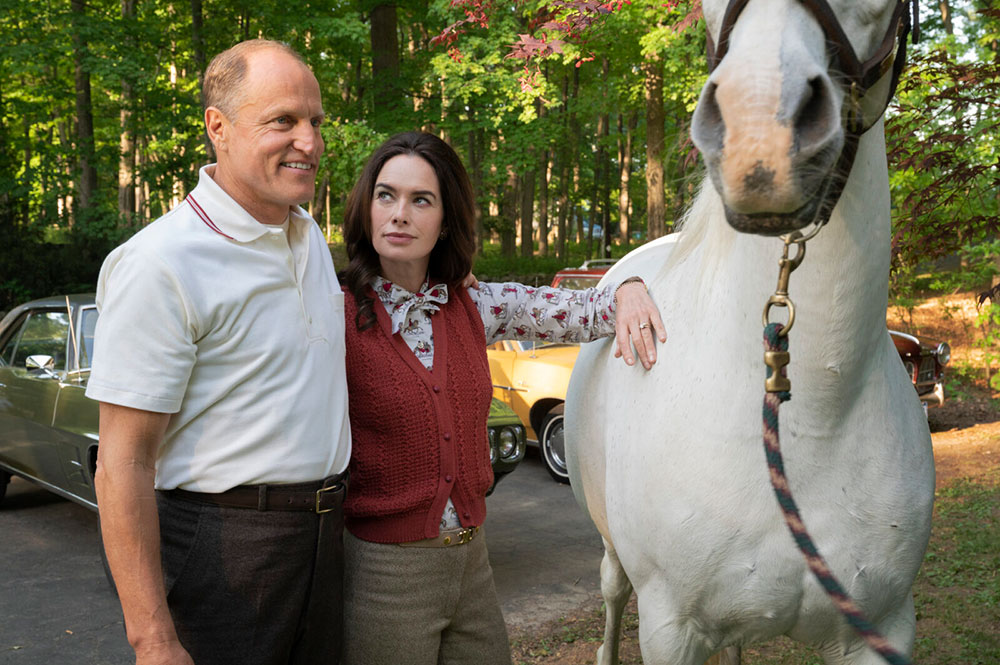
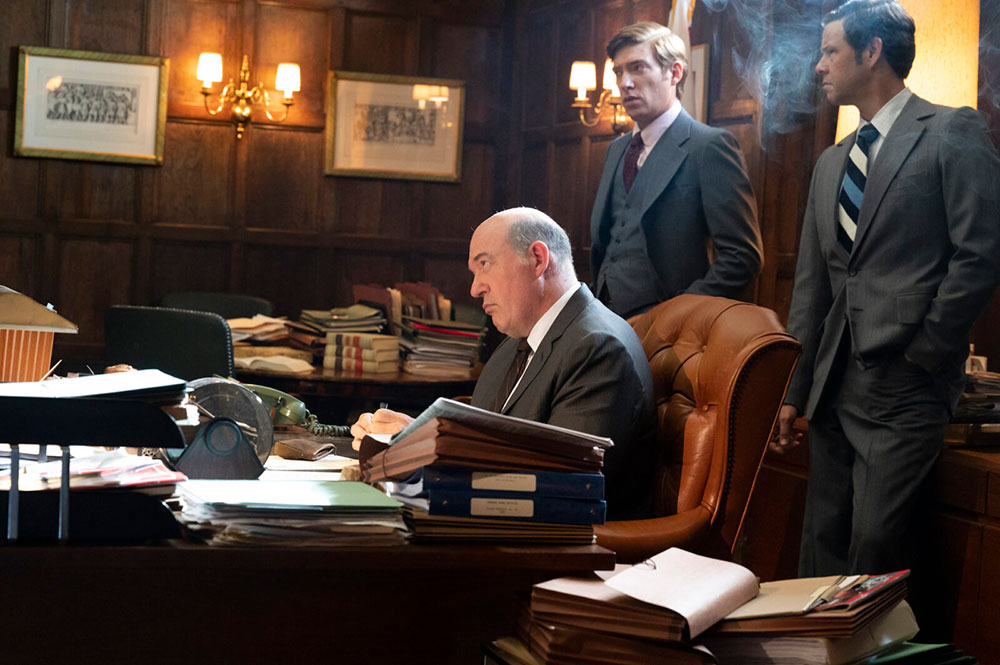
One thing we did was show the difference of Hunt’s life, especially private versus his public life. We used handheld in Hunt’s personal life and very sleek camera moves in his professional life to really show how messy his personal life is versus how his other world is so glorified. It was more about trying to get inside of his head, with earthier tones in his home life, juxtaposed against grayish colors for the city.
For the more comedic stuff, we used somewhat wider lenses closer up than we would if we were filming something more dramatic. Then we also used a little bit longer lens and a little less depth of field. But that was more of an organic thing, rather than something that we set specifically out to do.
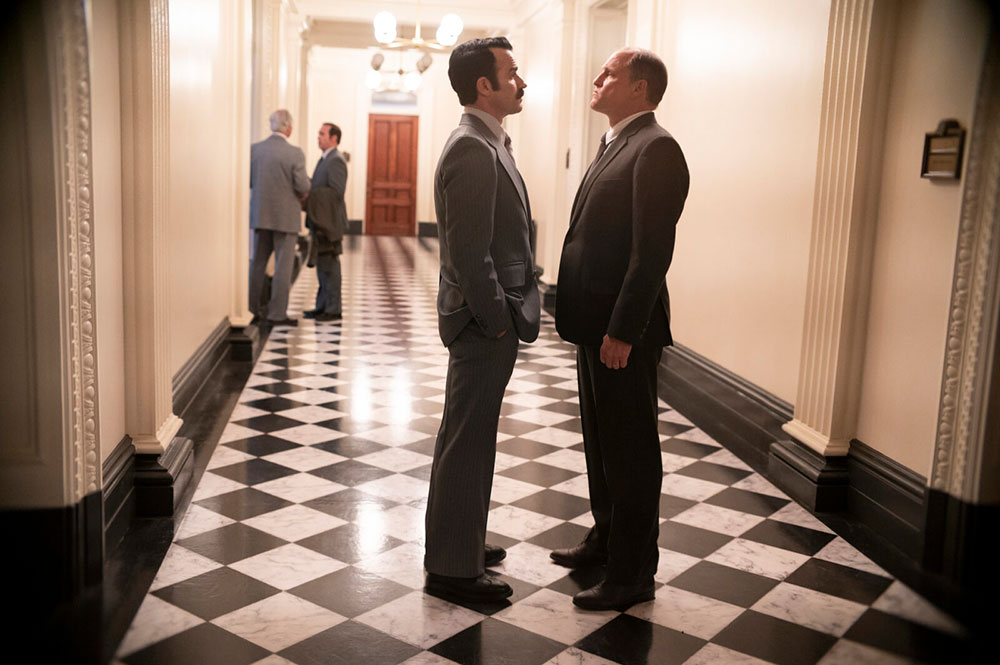
Another of the visual tools we used was regarding the friendship between Hunt and Liddy and how they sort of show the two sides of patriotism. That is their connection, but also a source of tension between them. We decided early on that we would often have them in a two shot in the same frame and that would serve instead of a single for each character. That helped direct us in blocking scenes, to make sure that they were positioned together in the scenes, sitting next to or being next to each other. Especially in rooms with lots of people, they’d be separate from the group. Then you get to see their reactions to the group while still always having the two of them together.
What was your approach to lighting?
We tried to keep things natural, we didn’t want to be too stylized. We were not afraid of going into darkness. During the actual break-in, they mostly just had flashlights, so there’s very little other light to show. The flashlights had to show in the break-in. It was kind of tough.
At the time the exteriors would have used a lot of the sodium vapor lights, producing more yellow in the streets and streetlights. For filming, we changed some lights on the streets. We had a little control of the outside the Watergate office building, but for the lights underneath other buildings, we couldn’t change the them, there were too many. We ended up putting color masks on the lights in post to warm them up a little bit.
Unfortunately, I couldn’t change some stuff, but I don’t think it took away or felt out of place or too modern. It gets tricky. There’s so much LED today especially when you’re shooting exteriors. And you can only change so much. Whenever we were looking down a street, I tried to change as many streetlights as I could.
What was it like staying in the Watergate during shooting?
It was interesting. Room 214 was the actual room that Hunt and Liddy stayed in when they were surveying the last break-in. The thing that I found curious is that Room 214 is the closest room. It’s about 100 feet to the actual door where they broke in, the door where Hunt and Liddy put the tape on, the very door Wills took the tape off… Yet they were actually staying so close to the door while it was happening. These people did such bad stuff in broad daylight and so close by, just thinking that they would get away with it.
It reminds me of when I was a First AC working on Catch Me if You Can. It was interesting talking to Frank Abagnale, the person who Leo’s character is based on, and hearing how different things were from his day. We made that movie in 2002, just after 9/11. But Frank said that back when he was stealing stuff that everything was 90% presentation and only 10% actually checking up on what was presented. Whereas now it’s all 90% checking up and having the proper IDs. Back then you could just get away with things.
How do you approach working on a limited series like this?
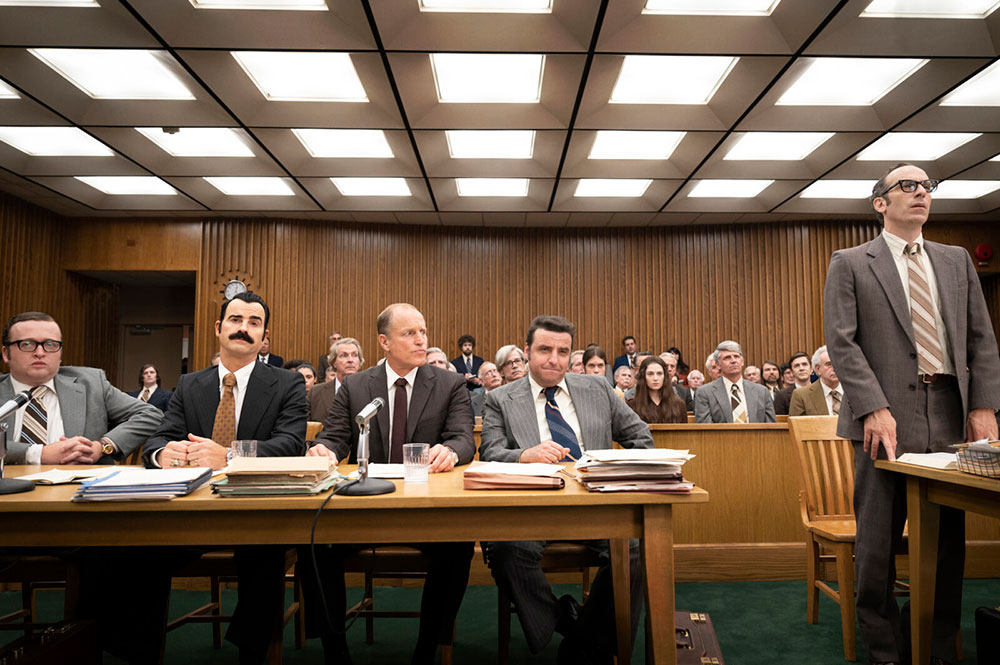
It’s like a five-hour movie, pure and simple. In every limited series that I’ve worked on personally, I’ve approached each one the exact same way: as a full film, all the way through from beginning to end. It feels more like a novel than a short story. I think that it’s important on any project to keep the vision and the visual language the same from the beginning to the end. Not switching, or not diverting from that at any point is the most important part of storytelling.
I always like to do a lot of prep. I like to go over and read the script many times. I like to review the shot list with the director, and not just have a shot list, but to really go through and understand every scene. Where are the perspectives coming from? I make sure that I go to our locations a lot. I don’t just go scout it once with the director and then that’s it. I like to go many times to a location, even before the tech scout.
It’s important not just for lighting studies, but also for visualization of what’s going to happen in the scene. It helps with understanding and knowing where the actors are going to be and what could happen in the space. Then you can come up with ideas to help the actors get going because usually, the day of shooting is the actor’s first time on the location.
I bring my camera and lenses to location with me from the very beginning of the project. That is another reason why I like to use RED. I can get it in a very small, handheld mode, literally just the body with handles and the monitor on top. With that and the ZEISS lenses, I can start mapping the visual language of the scene with the director right then and there.

Anything else about your process that’s unique?
I also operate the A camera and I don’t use a DIT on set. I don’t like to mess around with spending time coloring on set. That’s all happens beforehand. To me, if you’re spending one minute coloring on set, you’re taking away from production or you’re taking away from what you should be doing, which is shooting.
There has to be a trust between me and the director; the director has to trust that what he sees on set does not have the look on it yet and he’s going to have to wait till the end of the day and trust that the look will work properly with it.
To me, the most important thing is to get trust. To get trust from the director, then to get trust from the studio… Usually we do makeup and hair tests two weeks before we have the look established, so we can really show what we’re going to do. We will actually cut together a look piece from those tests. This goes for wardrobe and set dressing too. That to me is where a lot of the confidence comes from–giving the studio confidence to let us get on with what we’re doing because we’ve showed a map of what lies ahead.
The most expensive part of shooting is the actual, the film cost of a shooting day. Why spend one moment doing anything other than shooting? To me that just makes sense.
If you create your visual language, and you’re going through every detail and you really know what you want, then when you’re on set, your choices become very narrow. Your choices become easy, because there is a correct and very organic feeling of, “this is the way we’re doing it because this is the way we’ve talked about it, and it fits.” I’ve been very lucky in my projects that all the thinking beforehand pays off at the end and it becomes a cohesive piece.
Are there any standout parts of this show for you?
There’s one moment, a shot in the fourth episode, with a conversation between John Dean and Liddy. Dean is the White House Counsel at the time, in charge of Hunt and Liddy. He’s also the one who ratted on Nixon. The scene is a long walk and talk that takes place right before Hunt testifies.
We got access to the actual EOB, the Eisenhower Executive Office Building for the scene. Dean and Liddy walk down the steps of the EOB and we planned to shoot it at a specific time of day so that there’s a part of the scene where they’re walking and we’re with them in shadow. I made sure that the EOB was brightly sunlit. Meanwhile they’re walking in shadow to contrast the bright powerful light of government with the dark underhanded things that they’re doing. Being able to shoot it in the very place where they probably had the real conversation was really exciting.
White House Plumbers
Director of Photography: Steven Meizler
Director: David Mandel
White House Plumbers is available to watch on MAX.
Enjoying the news? Sign up for the Creative COW Newsletter!
Sign up for the Creative COW newsletter and get weekly updates on industry news, forum highlights, jobs, inspirational tutorials, tips, burning questions, and more! Receive bulletins from the largest, longest-running community dedicated to supporting professionals working in film, video, and audio.
Enter your email address, and your first and last name below!

Responses